Indian diaspora: soft power in the Indo-Pacific
The Indian diaspora has played a significant role in deepening the country's engagement with the Indo-Pacific nations. India can leverage this soft diplomacy to play a constructive role in the region.

 Courtesy: The Independent News & Media
The Indian diaspora has played a significant role in deepening the country's engagement with the Indo-Pacific nations. India can leverage this soft diplomacy to play a constructive role in the region.
 Courtesy: Financial Times
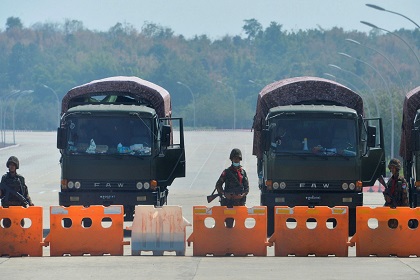
It has been a year since the democratically elected Myanmar government was overthrown in a military coup. Since then, economic instability and the pandemic have taken a toll on the nation. ASEAN's mediatory endeavours and Western sanctions have shown limited results. New Delhi's diplomacy must support ASEAN, while remaining pragmatic and protecting its interests in the country.
 Courtesy: The Maritime Executive
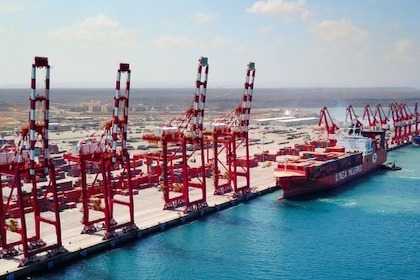
China is rapidly expanding its influence in the Indian Ocean Region, as its massive investment in ports starts to materialise. From smaller investments of $78 million in Djibouti to large ones like $1.6 billion in Gwadar, these are funded largely by Chinese state-owned enterprises. This infographic shows the 17 ports being built by China, which are now important strategic, economic and political outposts for the country.
 Courtesy:
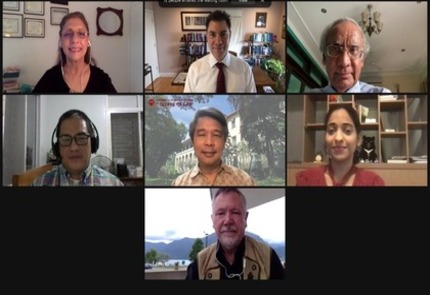
On 15 July, Gateway House co-hosted a webcast with Konrad-Adenauer-Stiftung (KAS) on 'Countering China’s Maritime Grey Zone Activities'. The panel discussed the potential strategies that smaller nations in the region can adopt to overcome the challenges of Chinese maritime grey zone activities, and the role of regional maritime powers in capability-building of maritime law enforcement agencies.
 Courtesy: Gateway House
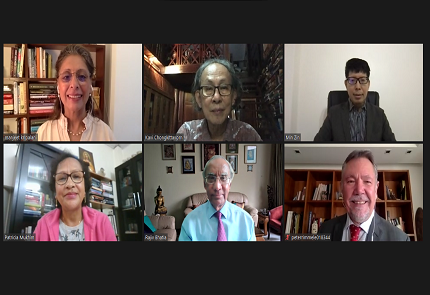
We hosted a webcast with Konrad-Adenauer-Stiftung on, Myanmar: Hundred days after the coup on 13 May 2021 at 5:30 PM IST. This webcast discussed the conflict in Myanmar, the pulse of the protesters’ fight for democracy, the ominous presence of China as well as Russia and multilateral measures that the neighbouring countries including India can take towards restoring democratic processes in Myanmar.
 Courtesy: Shutterstock
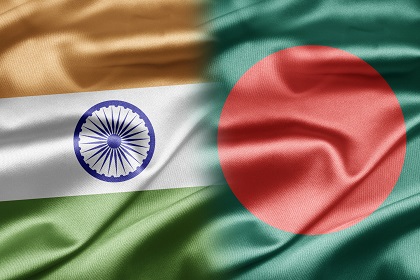
This month marks the beginning of triple celebrations in Bangladesh, including the 50th anniversary of its independence, for which Prime Minister Modi will be traveling to Dhaka as the guest of honour. There is much to celebrate: A country that began as a case study for development is now on top of the global GDP charts. The springboard was achieved through a thriving textiles industry, women's workforce participation, micro finance, liberal investment policies. There is much to learn from this neighbour.
 Courtesy: The Hindu/Handout
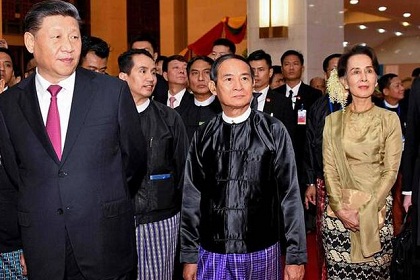
Chinese president Xi Jinping’s visit to Myanmar on January 17 highlighted the economic aspect of the two countries’ bilateral relationship. China has been Myanmar’s top partner for years. But more than the 33 agreements signed, the visit threw light on the region’s changing geopolitics and Myanmar’s own compulsions in growing closer to China
 Courtesy: The Wall Street Journal
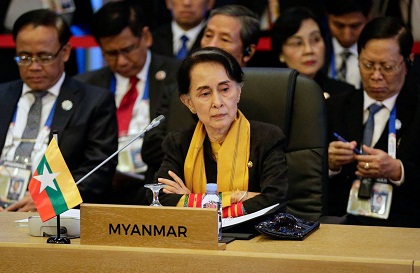
The Aung San Suu Kyi-led National League for Democracy, which has been in power for three years, has shown a modest score card, winning more censure than praise. Suu Kyi’s civilian-military equation has been good, but not her reluctance on the Rohingya issue. What chances does her party have of winning in Myanmar’s elections in 2020?
 Courtesy: Pacom
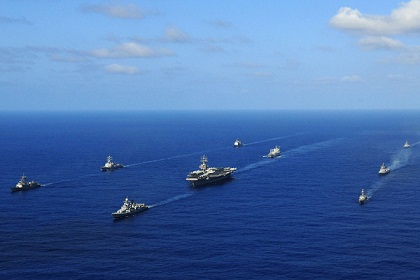
Canada, which has been slow to respond to a changing trans-Pacific neighbourhood, can join India and the ASEAN member states to embark on a trilateral dialogue on the Indo-Pacific’s importance in terms of political, strategic and other domains. An alignment in outlook can strengthen the security and prosperity of a region, currently mired in U.S.-China rivalries
 Courtesy: GMA Network
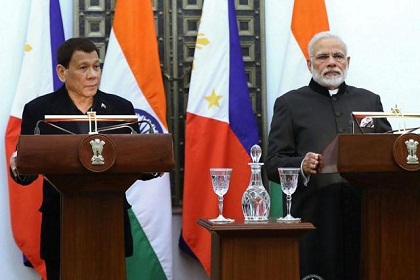
Rodrigo Duterte, President of the Philippines, is a popular, yet controversial figure in a complex country, battling a mix of challenges. In external relations, he has followed a careful balancing policy, giving primacy to China, U.S. and the ASEAN