News on Air (4) Courtesy: DD News
29 January 2026

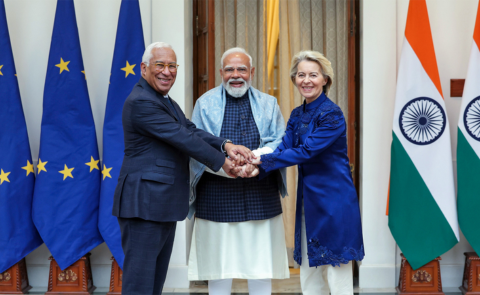
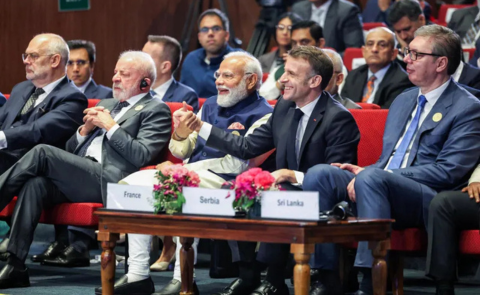
The European pivot to India

By signing the EU-India Free Trade Agreement on January 27, the ties that bind India and the European collective have been re-energised. They are now set to reach new heights, while overcoming past hesitations and divergences.

News on Air (3) Courtesy: Gateway House
29 January 2026

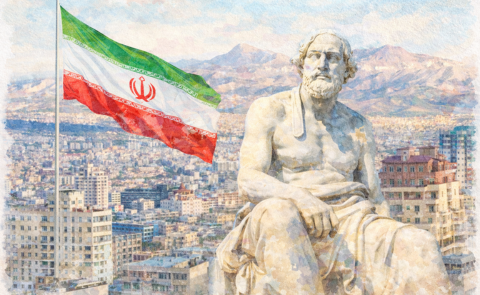
Iran: away from the Thucydides trap?

Iran has often stood at the crossroads of social and political metamorphosis and regional geopolitical recalibration, from the Islamic Revolution of 1979 to the attrition of the Iran-Iraq War. The current landscape reflects the convergence, once again, of internal pressures and sharper deterrence postures, that the social compact—from a Lockean and Rousseauian perspective—needs a new edition, and that timely diplomacy to prevent escalation is required.

Website articles  (32) Courtesy: Gateway House
15 January 2026

Reviving U.S.-India high school exchange programmes

The new U.S. Ambassador to India, Sergio Gor, has much to do – and reviving high school exchange programmes stalled due to funding shortages is one important task. Students are a significant element of the bilateral: 300,000 Indian students study in the U.S., but barely 1% of that comprises U.S. students in India. The exchange programmes can bridge the gap - and India can pick up some of the tab.

Website articles  (31) Courtesy: BBC
15 January 2026

Venezuela and the Donroe Doctrine

U.S. action in Venezuela has resurrected the 200-year-old Monroe Doctrine which sought to prevent foreign interference in the Western Hemisphere. Originally intended to keep European colonial powers away, it has been reinterpreted over the years beyond that. Donald Trump has reasserted and updated it to the “Donroe Doctrine,” to revitalise U.S. regional hegemony – and through it, some reduction of Chinese and Russian influence.

Website articles  (29) Courtesy: Somaliland Presidential Office
15 January 2026

Somaliland recognition strengthens alternative diplomacy ecosystem

Israel’s recognition of Somaliland as an independent state in December 2025 is not merely a diplomatic gesture toward a long-marginalised polity; it is a strategic act with implications for Somalia’s territorial integrity, regional security dynamics, great-power competition, and the evolving politics of recognition in a fractured international order.

News on Air Courtesy: News on Air
8 January 2026

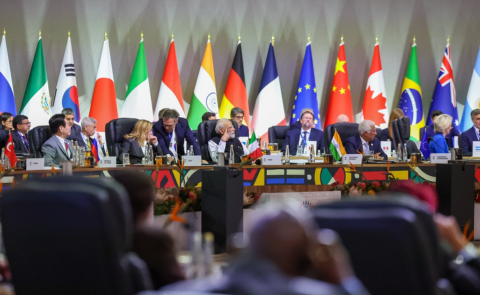
2026: India’s foreign policy challenges

In the shifting sands of contemporary geopolitics, terms such as ‘fluid multipolarity’, ‘multiplexity’, ‘tripolarity’, and ‘bipolarity with multipolar characteristics’ are replacing the old dogmas and orders. But what is driving the world today? How does India plan to protect its vital interests in the current age of ongoing polycrisis? The road ahead is challenging, marked by risks and uncertainty.

Website articles  (27) Courtesy: Gateway House
8 January 2026

Unfolding Geopolitics Episode 26|India-Oman CEPA: what it means?

India and Oman signed the Comprehensive Economic Partnership Agreement (CEPA) on December 18, 2025. The agreement reflects India’s approach to engaging with trusted partners while rediscovering its historic trading ties. Ambassador Anil Wadhwa explains what CEPA means for India: it is less about becoming a global gateway and more about anchoring a strategic economic partnership in a geopolitically sensitive region.

@narendramodiX Courtesy: @narendramodi/X
18 December 2025

Ethiopia is a key ally in Africa

Ethiopia's importance as an African country that has played a vital role in advancing the vision of African unity and integration, and as a nation that killed its own demons of dictatorship to emerge as a successful democracy, is remarkable. In this upgraded frame, Prime Minister Modi’s visit to Addis Ababa is significant, with India as a partner offering economic and technological engagement.

9feb9c42-5bb4-16f6-4358-f21cbb0992ff Courtesy: Gateway House
11 December 2025

Ambedkar the forgotten internationalist

As global conflicts intensify and global leadership falters, it is time to look back 75 years to Bhimrao Ramji Ambedkar - not only the father of India’s Constitution but also an internationalist whose foreign policy vision remains overlooked. He warned against aligning with China, upheld Tibet’s sovereignty, advocated U.S. ties, rejected non-alignment, and championed India’s UNSC seat. How different would the scenario have been if Ambedkar had led India’s foreign policy?

Getty (2) Courtesy: All India Radio News
9 December 2025

Putin’s visit sends a signal

India and Russia have a time-tested relationship, which was evident during President Putin's state visit to New Delhi last week. Its success lay in the warmth the leaders of the two countries share and in its timing: geopolitically, just after discussions of the U.S. and China as the G2, and commercially and strategically, at a time when India’s needs match Russia's capabilities.