PM 5 nation visit (1) Courtesy: Gateway House
7 August 2025

India becomes strategic with Latin America

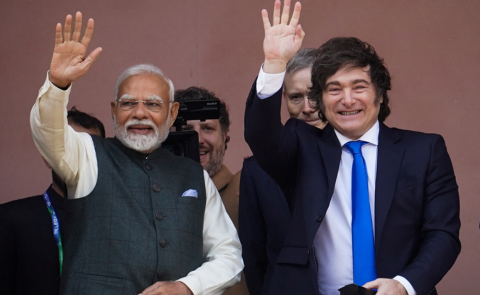
India’s engagement with Latin America is gaining momentum, marked by PM Modi’s recent visits to Brazil, Argentina, and Trinidad & Tobago. Amid rising Chinese influence, sustained political engagement and targeted investments are key to unlocking Latin America’s potential for India’s benefit. India needs a multifaceted strategy that blends economic engagement with public diplomacy and more official visits at higher political levels.

indo pacific  (2) Courtesy: Getty Images
24 July 2025

India’s footprint in the Indo-Pacific region

India is strategically expanding its influence across the Indo-Pacific region, positioning itself as a key player in regional affairs. Three elements anchor the effort: development aid, trade and the diaspora. The country now has 20 Free Trade Agreement partners in the Indo-Pacific. The 21.8 million-strong Indian diaspora across the region is a significant source of soft power for India.

Global South World Courtesy: Global South World
17 July 2025

Argentina-India grow the strategic partnership

Prime Minister Modi’s visit to Argentina is a boost to the growing bilateral. Modi and Argentinian President Javier Milei are committed to their countries’ economic and political advancement, and see trade with each other as key. Argentina being in the lithium triangle gives India access to critical minerals.

guyana Courtesy: Revolutionary Communist Group
14 December 2023

Unfolding Geopolitics | Episode 2, Essequibo dispute: colonial shadows and resource riches

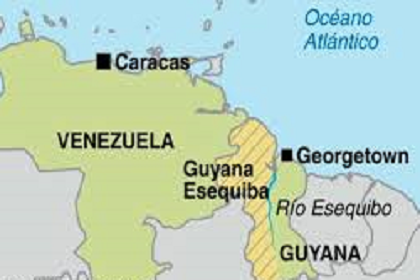
Venezuela's claim to the Essequibo region of neighbouring Guyana has focused world attention on yet another colonial-era border dispute. With elections coming up, the declining Venezuelan economy laying claim to newly-discovered rich oil and mineral deposits in Guyana has some traction. For Guyana, the claim to its land is non-negotiable as this developing country looks forward to accessing its own wealth. Purvi Patel, Visiting Fellow at Gateway House and Latin America expert, offers her insight.

IBSA 1 Courtesy: PTI
20 October 2022

IBSA, G20 and the Global South

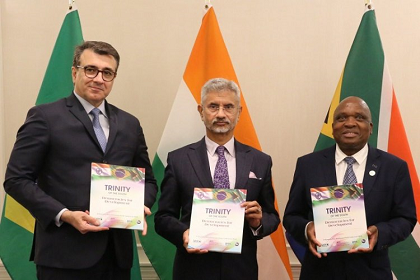
The consecutive Presidencies of the G20 for India, Brazil and South Africa provides a rare, unique opportunity to forge an agenda common to both the G20 and IBSA. The timing is coincident: with Russia and China consumed by conflict and zero-Covid respectively, BRICS has receded. IBSA can convert both crises into an opportunity and become relevant to the Global South’s current and future challenges.

Bolsi and Lula Right left Courtesy: Reuters
13 October 2022

Brazil elections, looking ahead

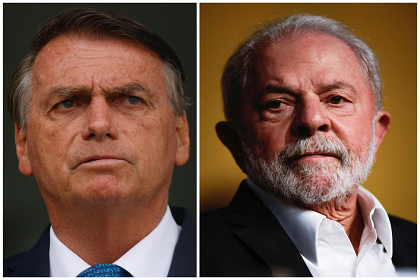
Brazil will head to the polls in a runoff this month to choose its next president. Will it be incumbent Jair Bolsonaro, or former president Lula da Silva? Both are popular with their voter bases, but both have hurdles to overcome, most notably the economy, and have differences on their global political alignment – particularly important as Brazil will be the G20 President in 2024.

G7GS Courtesy: telegraphindia.com
13 July 2022

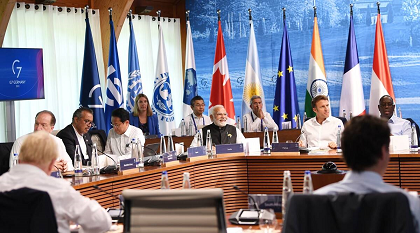
The G7 woos the global south

The G7 has reached out to emerging economies which have, of late, been facing challenges on the economic front, brought on by the lingering pandemic and the mismanagement of the Ukraine crisis. They are also seeking, from the global south, a broader acceptance of their world view. Will it be forthcoming?

Securing India's energy needs Courtesy: Shutterstock
8 July 2021

Securing India’s energy needs

India’s oil consumption and imports are likely to resume their upward trajectory as the economy opens up, after a temporary drop due to the pandemic. To secure its energy needs, the country should shift course from investing in oil and gas assets of emerging economies to those of developed nations. The oil-rich Organisation for Economic Co-operation and Development (OECD) countries, such as Canada, Norway, and the U.S. can be given special consideration.

00_fa_mj2020_cover Courtesy: Foreign Affairs
27 April 2020

China’s Coming Upheaval

The U.S.-China relationship, which has wavered between cooperation and competition, has, over the past few years, veered more sharply towards confrontation – possibly because of China’s own more assertive stance. Now, Beijing’s confidence is under test, not only by these fractious relations, but also COVID-19 and an economic slowdown. Will these factors reveal its weaknesses?