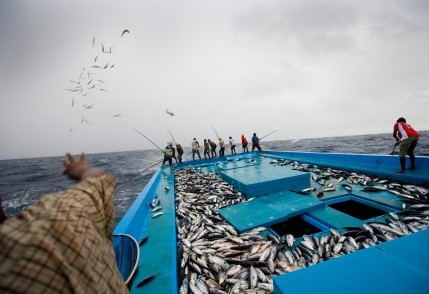
Fishermen release bait fish during pole and line fishing practice to catch skipjack tuna. Pole and line fishing is a selective and therefore more sustainable way to catch tuna as only fish of a certain size are caught, leaving juveniles to grow to spawning age and replenish the stock in the future. Small bait fish are thrown over the side of the boat to lure the tuna to the water surface. The fishermen use the acceleration of the fish as they race to get their prey, hook them and fling them onto the ship's flat deck. Courtesy: Wikimedia Commons
19 January 2017

‘Blue Diplomacy’ to boost Blue Economy

The first ever summit of the Indian Ocean Rim Association, to be held in Indonesia in March 2017, will cast light on how India and other like-minded nations can develop oceanic resources sustainably. This event offers scope for India to mould outcomes
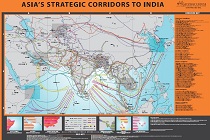
corridorsmap2 Courtesy: Gateway House
11 July 2013

Asia’s Strategic Corridors to India

The map – Asia’s Strategic Corridors to India – has emerged from Gateway House’s study of India’s strategic links with other parts of Asia. It highlights the progress India has made in forging multiple links with six strategic regions – Central Asia, West Asia, East Africa, South-East Asia, East Asia, and our immediate neighbourhood

piracy piece Courtesy: BlatantWorld.com/Flickr
27 June 2012

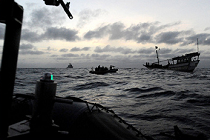
Piracy: A dangerous eco-system

The concern with piracy is in our waters is three-fold: the threat to Indian-owned vessels and Indian citizens; the difficulty in dealing with piracy and hostage-taking on the high seas; and finally, squeezing the organized industry. Can India play a leadership role in this effort?

John L. Beeman Courtesy: John L. Beeman
30 September 2010

Mechanics of a Maritime Governance Authority

The second part of Admiral Bharathan’s piece on the importance of maritime governance in India. In this part, the author highlights the creation of institutions and adaptation of rules and regulations towards governance and management of the nation