Website articles  (56) Courtesy: Gateway House
19 March 2026

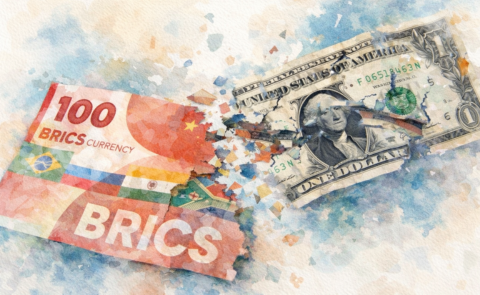
BRICS CBDCs can lead to financial multipolarity

India’s proposal to link the digital currencies of the BRICS nations could alter how emerging economies settle trade deals. It is necessary to examine the reasoning behind such a move, its effort to reducing dollar dependence, and the benefits that accrue to India.
Website articles  (9) Courtesy: Bloomberg
5 March 2026

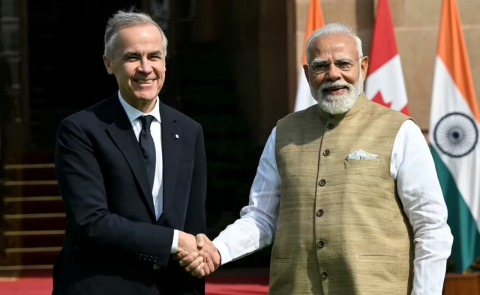
Canada-India reset gathers momentum

Canadian Prime Minister Mark Carney’s visit to India from February 27 to March 2, though sandwiched between the AI Impact Summit and the outbreak of the U.S.-Israel war against Iran, produced concrete outcomes with long-term impact. The visit announced a multidimensional roadmap aligning India’s ‘Viksit Bharat’ vision with Canada’s ‘Build Canada Strong’, to ensure the bilateral relationship does not drift apart again.

Website articles  (43) Courtesy: Reuters
25 February 2026

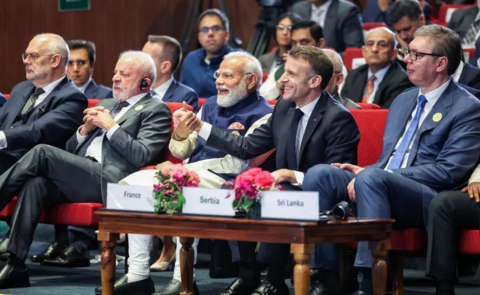
Macron, Modi, Lula: the emerging troika

A new troika is on the rise: India, France and Brazil, led by Modi, Macron and Lula. They were present at the AI Impact Summit in New Delhi on February 20, representing the three largest democracies in Latin America, Asia, and Europe. Can their mutual understanding and global influence bring prosperity and resilience to their economies and strengthen their cooperation in addressing global challenges?

Website articles  (41) Courtesy: ANI
19 February 2026

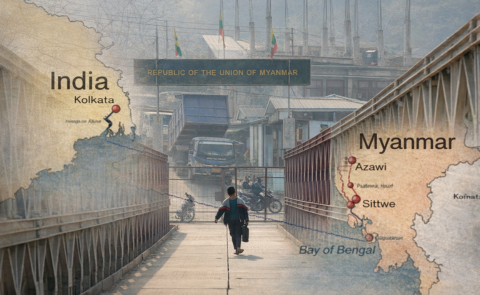
India and Myanmar after the military Coup

The Myanmar military coup of 1 February 2021 derailed a decade-long experiment in limited democracy, triggering violent resistance, armed conflict, fragmentation, and humanitarian crises. As instability deepens and global attention wanes, Myanmar’s turmoil carries significant implications for India, particularly along the border regions. With China’s growing footprint and ASEAN’s limited mediation, India must carefully navigate its Act East and Indo-Pacific strategies while sustaining people-to-people ties.

2 (8) Courtesy: ANI
11 February 2026

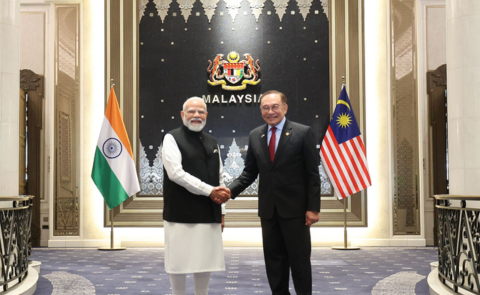
Modi brings momentum with Malaysia

From 7-8 February, Prime Minister Narendra Modi visited Malaysia to review the current state of bilateral ties and explore new avenues of cooperation. The focus was to deepen and diversify the economic dimension of the engagement. Two factors will help achieve this: Malaysia’s role in the ASEAN–India Trade in Goods Agreement review, and India’s enhanced negotiating weight following the signing of recent Free Trade Agreements. Both sides must now translate intent into action.

News on Air (4) Courtesy: DD News
29 January 2026

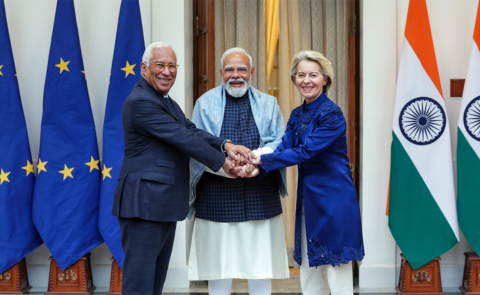
The European pivot to India

By signing the EU-India Free Trade Agreement on January 27, the ties that bind India and the European collective have been re-energised. They are now set to reach new heights, while overcoming past hesitations and divergences.

Website articles  (29) Courtesy: Somaliland Presidential Office
15 January 2026

Somaliland recognition strengthens alternative diplomacy ecosystem

Israel’s recognition of Somaliland as an independent state in December 2025 is not merely a diplomatic gesture toward a long-marginalised polity; it is a strategic act with implications for Somalia’s territorial integrity, regional security dynamics, great-power competition, and the evolving politics of recognition in a fractured international order.

Getty (2) Courtesy: All India Radio News
9 December 2025

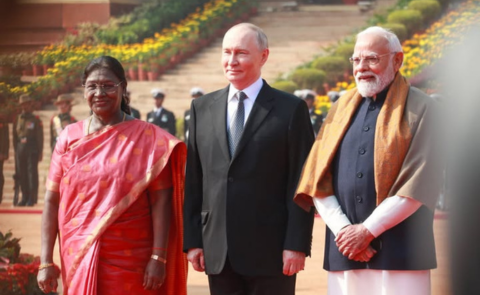
Putin’s visit sends a signal

India and Russia have a time-tested relationship, which was evident during President Putin's state visit to New Delhi last week. Its success lay in the warmth the leaders of the two countries share and in its timing: geopolitically, just after discussions of the U.S. and China as the G2, and commercially and strategically, at a time when India’s needs match Russia's capabilities.

Reuters Courtesy: Reuters
27 November 2025

Japan and China row over Taiwan

China’s attempt to discipline Japan over Japanese Prime Minister Takaichi’s statement on a Chinese attack on Taiwan threatening Japan’s security, may instead strengthen the very alliances Beijing hoped to fracture. By using symbolic economic instruments, invoking the UNSC, and amplifying nationalist messaging while avoiding mass public mobilisation, China signals displeasure without risking internal instability. Yet these same measures push Japan ever deeper into U.S.-aligned networks.