TDB_car_151021 Courtesy: TDB
24 February 2022

Enhancing Regional Financial Intermediation in the Indo-Pacific

Financial intermediaries are critical lubricants for business, growth and development. The Indo-Pacific countries are industrializing, but smaller nations lag behind economically. The Quad countries can aid the advancement of the financial architecture in the Indo-Pacific by helping to develop an ecosystem, modelled on the examples of Japan and India.
amb saurabh kumar Courtesy: Ministry of External Affairs, Government of India
3 February 2022

India’s Indo-Pacific vision

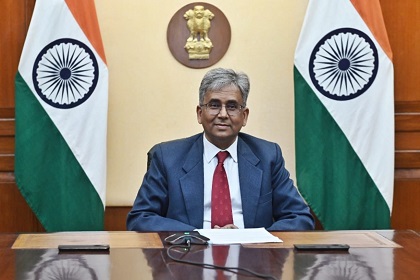
Saurabh Kumar, Secretary (East), Ministry of External Affairs, Government of India, delivered the keynote address at the panel discussion on India in the Indo-Pacific: Pursuing Prosperity and Security, organised by Gateway House and the U.S. Embassy, New Delhi, on 1 February 2022. He outlined India's vision for a free and inclusive Indo-Pacific, and the initiatives undertaken to further cooperation among nations in the region.

india central asia Courtesy: ANI
25 January 2022

Quantum leap forward with Central Asia

India hosted a summit with five Central Asian states on January 27, marking 30 years of diplomatic relations with the region, and an important step forward to pursue greater connectivity between India and Central Asia. New Delhi's engagement holds promise for ambitious bilateral agendas including security in Afghanistan, the revival of dormant projects, and potential collaboration in renewable energy, space and information technology.

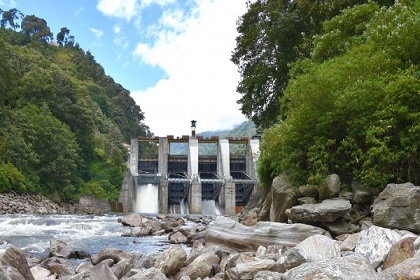
DRUK HYDRO DAM Courtesy: Druk Green Power Ltd
18 November 2021

Bay of Bengal connectivity

The Bay of Bengal is gaining relevance as a significant sub-region within the Indo-Pacific. Despite its importance to regional security, there is inadequate financial, physical, and energy connectivity. India must use its strategic and political pre-eminence and influence in the sub-region to pursue deeper connectivity with Bangladesh, Myanmar, Thailand, Nepal, and Sri Lanka and to block China's growing influence.

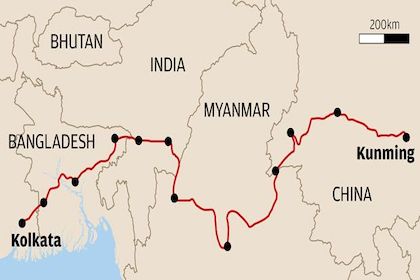
bcim corridor Courtesy: Institute of Peace and Conflict Studies
9 November 2021

Physical connectivity in the Bay of Bengal

China is a clear winner in the physical connectivity stakes in the Bay of Bengal, and there's a reason a why: Its projects are connected to one another, from rail to road to port. While India also has some successful cross-border road and rail infrastructure projects, they are often an extension of an existing railway line or highway, not specific to the connectivity needs of the region. India can win by focussing instead on building infrastructure to maximise the vast maritime potential of the Bay of Bengal, especially the Andaman and Nicobar Islands that give India access to critical sea channels and trade routes.

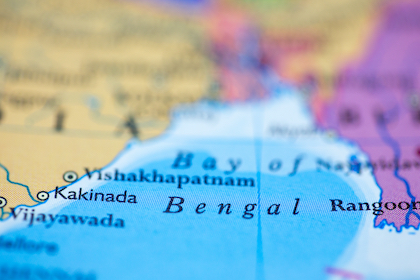
The Bay of Bengal: The next battle Courtesy: Shutterstock
28 October 2021

Bay of Bengal: Building tech connectivity

The Bay of Bengal is a natural bridge between South and South-East Asia, which New Delhi seeks to optimise. But progress on India's Act East policy has been slow, creating a space for China's Belt and Road Initiative to step into. While India cannot match China’s cheque-book diplomacy, it can use its start-up industry to pursue a combination of physical, technological and financial projects to improve regional connectivity.

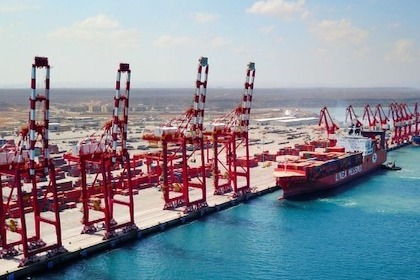
Chinese Port invesments Courtesy: The Maritime Executive
19 August 2021

China’s ports in the Indian Ocean

China is rapidly expanding its influence in the Indian Ocean Region, as its massive investment in ports starts to materialise. From smaller investments of $78 million in Djibouti to large ones like $1.6 billion in Gwadar, these are funded largely by Chinese state-owned enterprises. This infographic shows the 17 ports being built by China, which are now important strategic, economic and political outposts for the country.

sanctions and counter-sanctions Courtesy: Shutterstock
15 July 2021

Sanctions and counter-sanctions

For years, Western countries have used sanctions as a means of economic warfare against their adversaries. Now, China and Russia are utilising the same tactic against the West. The United Nations Security Council is paralysed by differences between the five permanent members, leaving the tools of unilateral sanctions and counter-sanctions to proliferate at the cost of UN-approved multilateral sanctions.

Source: Shutterstock Courtesy: Shutterstock
3 June 2021

The Quad hits its stride

As China’s global competitive edge is sharpening across the military, economic, diplomatic, and technological domains, it is clear that the extent to which the Quad countries (Australia, India, Japan, and the United States) can collaborate across all four domains will be an important factor in determining whether China’s hegemonic designs on the Indo-Pacific will succeed.