Gateway House Courtesy: Telegrafi
6 November 2025

U.S. Sanctions on Russian oil giants

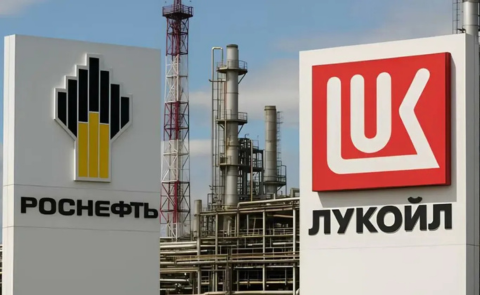
On October 22, 2025, U.S. President Donald Trump imposed sanctions on Russia’s oil giants, Rosneft and Lukoil. The move has clear geopolitical motives—to remove a major supplier from an oversupplied oil market. Indian oil companies, key buyers of Russian crude, now face pressure to cut imports, undermining India’s energy diversification and shaking global oil markets, including the U.S. economy.

shutterstockAllahfoto Courtesy: shutterstock / Allahfoto
17 July 2025

EVs to Hydrogen?

The embargo on rare-earth magnets by China reflects a gap in India’s critical mineral supply chain. India should reduce the need for these minerals by promoting green hydrogen.

Website articles  (22) Courtesy: Getty Images
3 July 2025

Diversifying supply chains for critical minerals

The Quad Foreign Ministers’ Meeting in Washington on 1 July, 2025, underscored the importance of diversified and reliable global supply chains, especially for critical minerals. A Gateway House report shows how to strengthen supply chains for rare earths by creating deep financial markets similar to those that exist for bullion and oil.

New Spotlight Magazine Courtesy: New Spotlight Magazine
19 June 2025

A case for South Asia energy connectivity

Building a robust engagement with India on energy can help offset some of the economic and political crises that most of India’s neighbours are facing. Smaller South Asian neighbours will benefit from cheaper electricity and oil, paving the way for greater regional economic cooperation.

edf energy Courtesy: Reuters
25 January 2024

Delhi-Paris energy engagement

India and France are both large energy importers with a shared interest in stable prices and decarbonisation. They have much to offer each other. France is a leader in nuclear power and green hydrogen, and can help India with the technology it needs. India, with its large and growing market, can help bring down the cost of these technologies and mainstream them.

LNG Terminal Courtesy: Shutterstock
22 September 2022

“There is a lack of coherence between environmental policy and energy security”

The global energy market has been disrupted since the Ukraine-Russia conflict. Energy security is now a core concern for most countries and offers the chance to fix the structural problems in the energy generation sector. The interaction between energy security and environmental policies must be reassessed so policies can be consistent for the long term. Gateway House’s Saeeduddin Faridi speaks to Robin Mills, energy expert and CEO of Qamar Energy, about the state of energy markets.

CBR Courtesy: Central Bank of Russia
15 September 2022

‘Russia is not doomed…’

Russia, the founding member of the Shanghai Cooperation Organisation (SCO), has been hit by Western sanctions on its energy exports and financial system. Still, Ivan Timofeev, Director of Programs at the Russian International Affairs Council, sees new opportunities to be seized. Deepening India-Russia business engagement is one, and the SCO as a constructive and accommodating force is another. K.A. Dhananjay from Gateway House spoke to Timofeev who visited Mumbai recently.

subnational action Courtesy: Hardik Joshi
16 June 2022

Activating sub-national climate plan in India

City-level climate action is gaining pace in India. This is crucial, given the country’s climate vulnerabilities and growing carbon footprint. Its success depends on mobilisation of climate finance, targeted devolution of central resources, inter-agency data-sharing and of course, public participation.

renergy crisis photo Courtesy: Economic Times
26 May 2022

India in the global commodity shock

The warning signs were visible long before the Ukraine conflict. Years of insufficient investment into oil and gas production resulted in high price, and shortages. With investors keeping away from traditional fuels, the conflict in Ukraine precipitated the inevitable. Energy-dependent India must now insulate its supply chains.