Reuters Courtesy: Reuters
27 November 2025

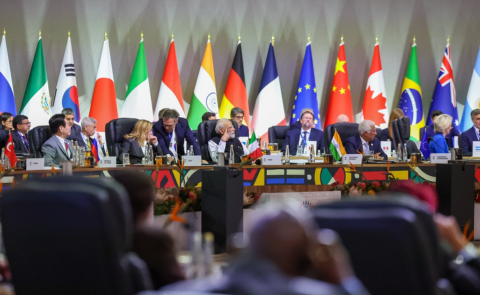
Japan and China row over Taiwan

China’s attempt to discipline Japan over Japanese Prime Minister Takaichi’s statement on a Chinese attack on Taiwan threatening Japan’s security, may instead strengthen the very alliances Beijing hoped to fracture. By using symbolic economic instruments, invoking the UNSC, and amplifying nationalist messaging while avoiding mass public mobilisation, China signals displeasure without risking internal instability. Yet these same measures push Japan ever deeper into U.S.-aligned networks.

Kyodo News (1) Courtesy: Kyodo News
20 November 2025

Sanae Takaichi’s strong start

The rise of Sanae Takaichi, Japan’s first female prime minister with firm conservative credentials, carries both symbolic weight and political controversy. Her early decisions suggest clarity of intention but also highlight the structural weaknesses and diplomatic sensitivities that will shape her tenure. To keep her ratings high, she has to stabilise her minority government at home, and manage the China, U.S. and ASEAN relationships with tact.

Gateway House Courtesy: Gateway House
3 July 2025

China Plus One and global supply chains

A slowdown of the Chinese economy, and the shift, particularly by MNCs, from China to other more competitive locations has opened up business opportunities for latecomers to supply chains in the developing world. Evidence suggests that Southeast Asia and some South Asian countries like India, Sri Lanka, Bangladesh, could be beneficiaries of the supply chain shift, particularly in labour-intensive segments.

Getty (1) Courtesy: Gateway House
15 May 2025

The New Geopolitics and South Asia’s Trade Architecture – What Next?

Geopolitics is increasingly intertwined with the economic destiny of South Asia. Even before the U.S. tariffs were rolled out, growing polycrises had hit the global economy, which has been struggling since the pandemic. South Asia seems a relatively bright spark of regional trade and growth. This paper analyses South Asia’s trade architecture in the backdrop of a sluggish world economy in the 2020s, and makes recommendations for closer regional economic integration.

Screenshot 2024-08-29 at 10.38.15 AM Courtesy:
29 August 2024

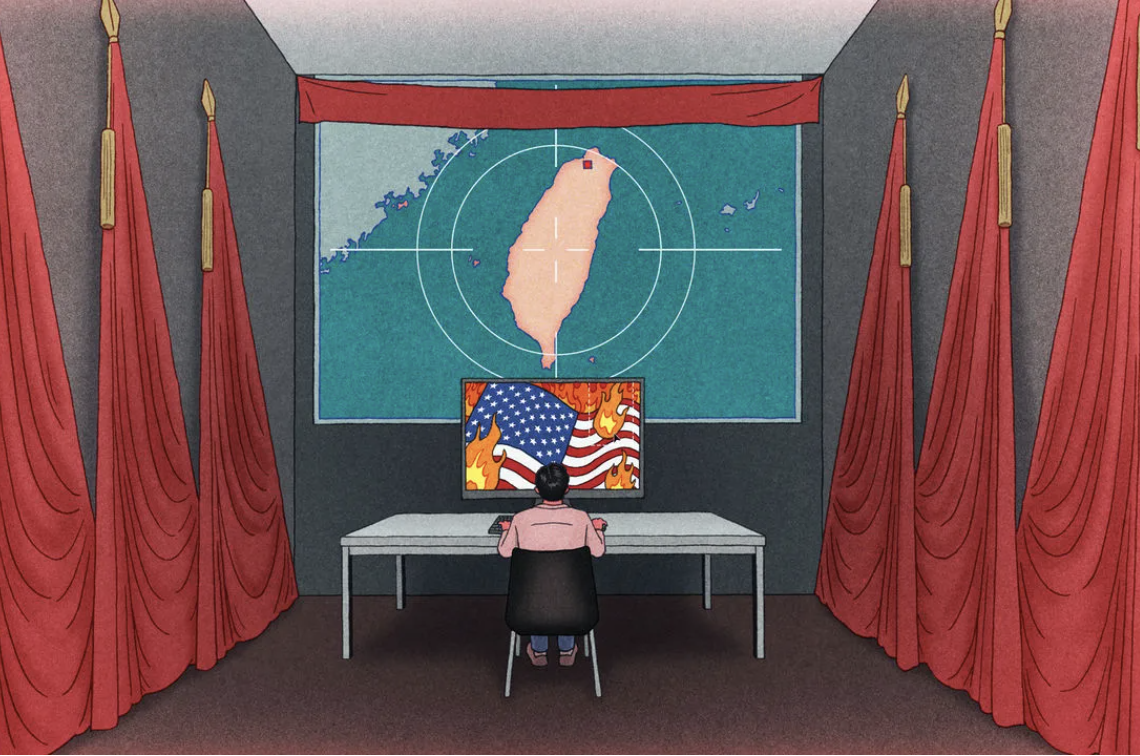
Learning from Taiwan to Counter China’s Disinformation

Chinese state media and other outlets are increasingly using disinformation to undermine Taiwan's political stability, sway public opinion, and erode national unity. The government in Taipei mitigates this threat by employing a range of high- and low-tech solutions. Other countries will benefit by using the Taiwan model to fortify their democratic institutions and enhance their readiness against an advanced arsenal of disinformation tools.

crosswinds Courtesy: Amazon India
14 March 2024

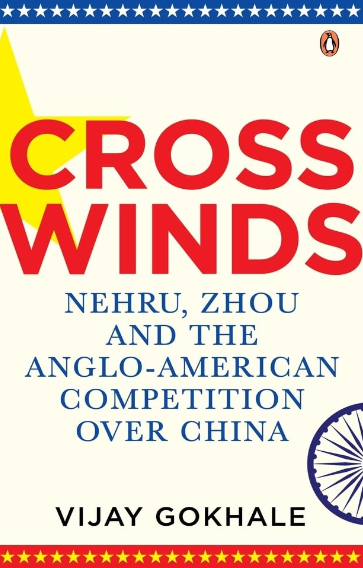
Crosswinds: Nehru, Zhou and the Anglo-American Competition over China

In his new book, former Indian Foreign Secretary and Ambassador to China, Vijay Gokhale analyzes how newly independent India navigated Anglo-American competition and the Cold War ideologies of China in the 1940s and 1950s. The author focuses on key events from the recognition of the Peoples’ Republic of China to the two Taiwan Straits crises. His insights of the period resonate with today's U.S.-China rivalry, and highlights India's evolving role in the Indo-Pacific.

GIGA_map_of_Indo-Pacific_Kontur_resize Courtesy: Science Po
28 July 2022

India’s blue economy and the Indo-Pacific’s future

The Indo-Pacific region envisages the Indian and Pacific Oceans as a continuum and stands on two central pillars – maritime security and economic development. The public discussions, however, are focused on maritime security, strategy and geopolitics, while economic development has received less attention. This imbalance can be corrected by creating an awareness on how to harness the potential of the region's Blue Economy and its vast resources and opportunities.

7396fefe-aba2-49fe-a3e5-33b8cea9ebf1 Courtesy: WWF
30 June 2022

Can the WTO Agreement Stop Unsustainable Fishing?

Hailed as historic, the new global rules to curb harmful fishing subsidies is a step towards sustainable fishery practices. The negotiated deal, however, is fraught with concerns over overcapacity in fisheries, deep-sea fishing legislations, and blue finance. It may be better for developing countries to formulate their own regulations and set up mechanisms to prevent illegal fishing within their territorial waters – and hold the WTO agreement to its word.

CRN_Services_Portfolio_Technology_696 Courtesy: CRN India
1 June 2022

Emerging and Critical Technologies in the Indo-Pacific: Opportunities and Challenges

On 31 May 2022, Amb. Rajiv Bhatia delivered keynote address at the panel discussion on Emerging and Critical Technologies in the Indo-Pacific: Opportunities and Challenges, organised by the Kalinga Institute of Indo-Pacific Studies. Amb. Bhatia elucidates on usage of technology in modern warfare, especially the Ukrainian war, while also stressing those critical technologies in the Indo-Pacific can provide a fillip to sustainable development in the region.

1984F5F8-939B-4A8C-9F74-2C80D3D60F66 Courtesy: TIME Magazine
30 May 2022

The Quad deepens strategic commitment

After its fourth summit on May 24, the Quad has emerged stronger and clearer in its initiatives which are aimed at addressing the Indo-Pacific’s geopolitical challenges. India now has a chance to work with like-minded democracies on an equal footing, with much to contribute. The Quad’s strategy for the Indo-Pacific is to deepen internalised cooperation for continued peace, prosperity, and stability.