Screenshot 2025-10-13 103335 Courtesy: Körber-Stiftung
13 October 2025

Bandung at 70: Multilateralism in a New Era of Multi-Alignment

The world is facing multiple crises which are shaking the foundations of multilateralism. The West’s structures are faltering, and the need for effective and equitable cooperation is greater than ever. Seventy years after the 1955 Bandung Conference, its principles of sovereignty, territorial integrity, cooperation and solidarity remain vital. This report revisits Bandung’s relevance for today’s reform efforts, urging renewed Global South–Europe collaboration for a sustainable global future.

Getty (1) Courtesy: Gateway House
15 May 2025

The New Geopolitics and South Asia’s Trade Architecture – What Next?

Geopolitics is increasingly intertwined with the economic destiny of South Asia. Even before the U.S. tariffs were rolled out, growing polycrises had hit the global economy, which has been struggling since the pandemic. South Asia seems a relatively bright spark of regional trade and growth. This paper analyses South Asia’s trade architecture in the backdrop of a sluggish world economy in the 2020s, and makes recommendations for closer regional economic integration.

Report Courtesy: Körber-Stiftung
17 April 2025

Momentum for Middle Powers: Emerging Middle Powers Report

The world is undergoing profound transformations that are not being driven only by the United States, China or Russia. Small and medium-sized States are carving out a legitimate place for themselves in the emerging new order. This second edition of our annual Emerging Middle Powers Report is a reminder that the signs of the times are showing a new momentum for middle powers.

15-Patel-Prakash Courtesy:
5 December 2024

Applying a multi-sector analysis to financing forced displacement response

Conversations on forced displacement in many cases still centre on the climate versus conflict dichotomy, but multiple factors including social inequality, poor infrastructure and weak governance, often combine as triggers for displacement. A more analytical approach to financing forced displacement response is necessary to enable humanitarian actors to work more effectively in the allocation of resource and disaster preparedness.

Screenshot 2024-11-06 at 3.04.26 PM Courtesy: Gateway House
7 November 2024

India-Indonesia: Companion Souls in a New Era

India and Indonesia have a comprehensive strategic relationship built on their ancient and modern histories, and a flourishing relationship sustained by trade, economic exchange and people-to-people contact. The India-Indonesia Track 1.5 Dialogue, hosted by Gateway House and the Centre for Strategic and International Studies, Indonesia, aims to provide policy recommendations to promote innovation and navigate evolving governance issues through bilateral and multilateral cooperation.

The_Future_of_Digital_Public_Infrastructure-_A_Thesis_for_Rapid_Global_Adoption Courtesy: Carnegie India
28 March 2024

Synergising DPI and digital commons

Digital Public Infrastructure (DPI) and digital commons have the potential to accelerate achievement of the sustainable development goals. Both India and the European Union recognise this: India is a pioneer in DPI, while the concept of digital commons is gaining better attention within the EU. The partners must now work towards a joint understanding of the core principles that govern digital resources.

Report Photo Courtesy: Körber-Stiftung
18 March 2024

Listening Beyond the Echo Chamber: Emerging Middle Powers Report

Divergent global reactions to major crises such as those sparked by the war in Ukraine and NATO’s Afghanistan withdrawal have widened the chasm between Western countries and emerging middle powers. This survey, conducted among nearly 1,000 experts from India, Brazil, South Africa and Germany, examines key foreign policy priorities in these countries, and reveals that despite differences, dialogue is possible.

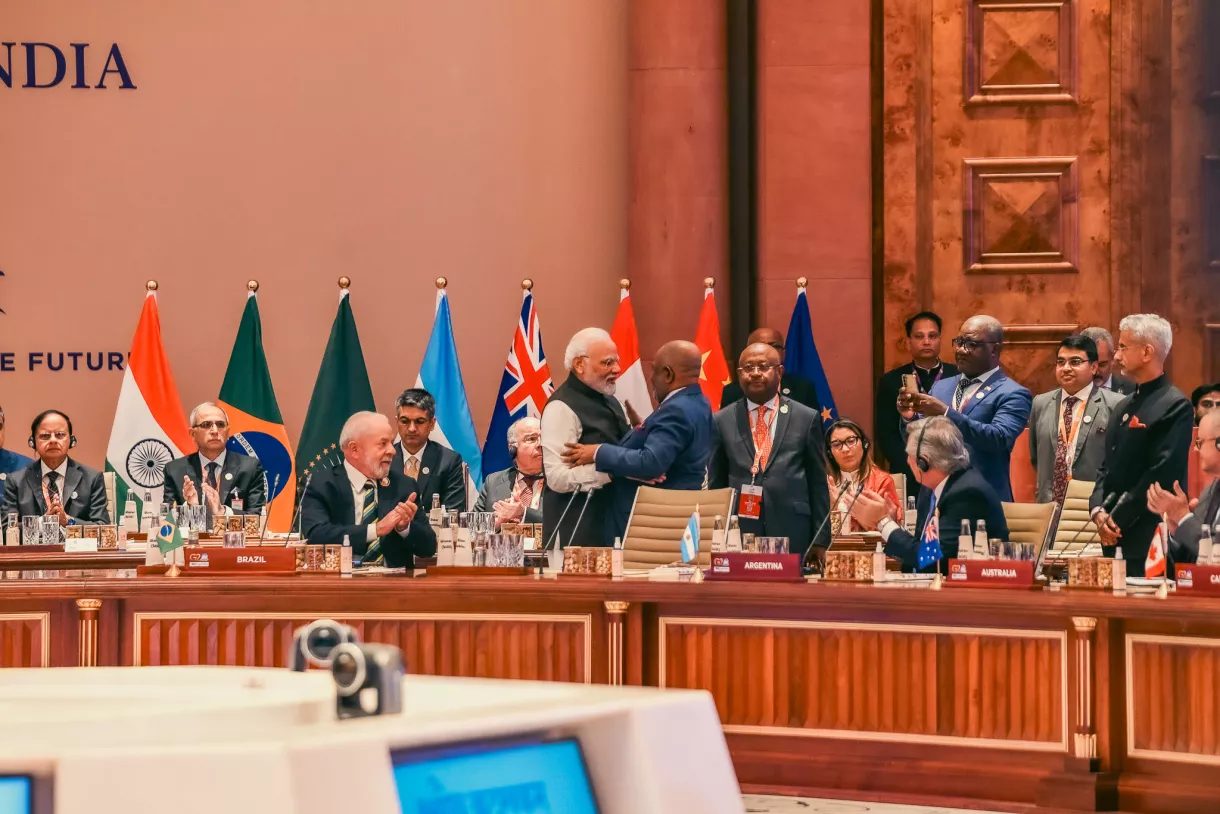
india's g20 hbs Courtesy: Heinrich-Boll-Stiftung
14 December 2023

India’s G20 Presidency: Policy Prescription to Impact

India’s G20 presidency was effective in insulating the forum from geopolitical turbulence and placing the spotlight on the Global South. Although the G20 stands strengthened today due to India’s creative and forward-looking presidency, member nations confronting inter-state contestations, domestic elections and concurrent economic crises in the coming year will have to muster the political will to ensure a sustained commitment to the grouping's promises.

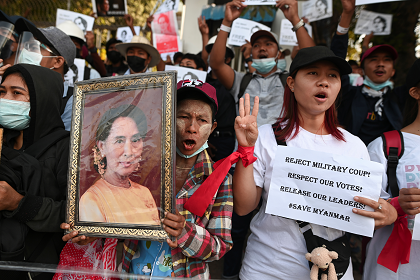
military coup myanmar website Courtesy: Brookings Institution
2 August 2023

Myanmar’s Decade of Hope and Gloom: Implications for India

Two years on since the military coup in 2021 and the continued absence of security and stability has only worsened the political and economic situation in Myanmar has only worsened in the absence of security and stability. India's long-standing strategic and economic interests in Myanmar will not be achieved if it doesn't proactively step up now to prevent the from becoming a flawed polity or a dependent of China.

AI-agriculture v1 Courtesy: Billionphotos.com
11 August 2022

Artificial Intelligence for India’s Agriculture Security

Agriculture has been integral to India’s food security and employment. While salient policies are in place, India has yet to achieve its food security and farmer-income goals. Artificial Intelligence (AI) offers innovative solutions for the agriculture sector. AI technologies will help India take the necessary leap forward to enhance agriculture productivity, farmer income and food security.