global-commons-870_0 Courtesy: Global Environment Facility
15 August 2018

India in the Global Commons

Since Independence, India has been consumed by its domestic priorities. Now, with increasing integration with the world and a huge stake in global stability, it is time to focus on the global commons. India has a seat on the hightable to design and shape the rules for the governance of the global commons. In this special Independence Day Briefing, Gateway House examines India’s engagement with four global commons – technology, outer space, cyber and the oceans – and makes recommendations on how best they can be governed for our collective future.


Cyber-paper-cover-709x1024 Courtesy: Wikimedia Commons
15 August 2018

India’s lead on cyber space governance

Cyber space is a new global common that defies formal governance. Its interconnectedness makes it full of opportunity, yet vulnerable. Attempts to regulate it have seen setback due to the differing visions of major powers and developing countries. India, an emerging economy with a sophisticated technology industry, is well positioned to shape the governance of this global common

Fort Cochin, India Courtesy: Wikipedia
9 August 2018

How India can keep the oceans prosperous

The notion of the oceans and seas as a global common is under severe test. National and regional interests are winning over the urgency to maintain their well being while competition to exploit the many commercial opportunities they present is ever increasing. The task at hand is to stop ocean decline – and India can play a transformative role in this

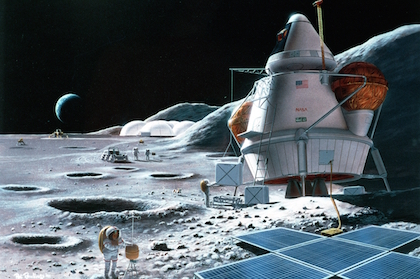
SEI_Lunar_Base_Concept01 Courtesy: NASA/SAIC/Pat Rawlings
9 August 2018

Geopolitical territoriality on the moon

Ownership of lunar artifacts – objects left behind by space missions – will become a vexing issue as the international footprint on the Moon grows. Such archaeological objects may be designated ‘national heritage’, but the site on which they exist ought to remain ‘a global common’, and not become a point of territorial contestation. The Moon needs to be managed by global consensus, prudence and realism.

Big Data - 6 Courtesy: PC Magazine
2 August 2018

Governance in the age of AI

A massive technological revolution is in the offing in the next 20 years, with its maximum impact being on the future of work. Artificial Intelligence and robotics will change how the labour market operates and governments will have to review ethical standards for emerging technologies. India can show the way in creating inclusive economic growth

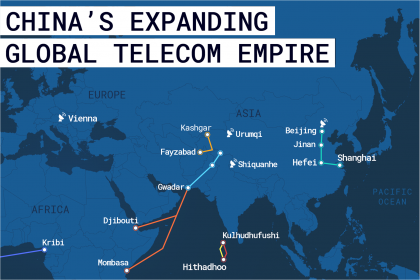
CableMap-web Courtesy: Gateway House
5 April 2018

Version 1: China’s strategic edge in covert communications

China is steadily deploying state-of-the-art communications systems to connect its strategic and economic assets in Asia. It is then linkingthe Asian mainland to Africa, and Africa to South America. The investment spree is rapidly making Beijing a major player in global telecommunications – and ‘informationisation warfare’.

Indo-Pacific Security Quad Courtesy: Indian Navy
3 January 2018

A case for the Quad’s reappearance

A noticeable feature of 2017 was China’s aggressiveness, which it deployed openly to advance its interests in the eastern rim, Southeast Asia, Central Asia and South Asia. This could well be the impetus for the consolidation of a broad front of China-wary nations in 2018

earth-1388003_960_720 Courtesy: Pixabay/Comfreak
22 November 2017

India-Japan lunar bid: targeting tech gap?

The two countries’ proposal to carry out a robotic sample-return mission to the Moon in the 2020s is a laudable attempt at catching up with Beijing’s rather more advanced lunar agenda. And there are many lessons that Japan can offer India