China in IOR: ‘peaceful rise’ no more
China has expanded its presence in the Indian Ocean Region. President Xi Jinping has abandoned Deng Xiaoping’s conciliatory posture for an aggressive, money-fuelled search for super power status

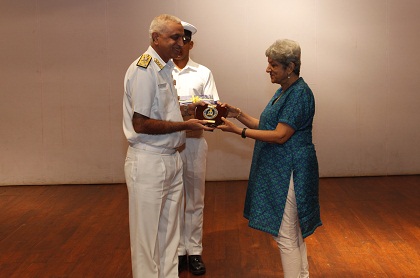 Courtesy: Western Naval Command
China has expanded its presence in the Indian Ocean Region. President Xi Jinping has abandoned Deng Xiaoping’s conciliatory posture for an aggressive, money-fuelled search for super power status
 Courtesy: Pixabay
The Indian Space Research Organisation’s (ISRO) recently announced intention to visit the planet Venus – the third celestial destination for India after the Moon and Mars – is a significant academic pursuit. But can New Delhi use this opportunity to develop cutting-edge trans-disciplinary technologies and advance its space diplomacy?
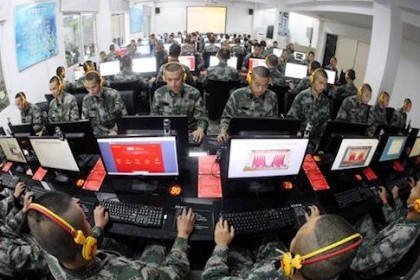 Courtesy: Associated Press
India is marching towards ever increasing digitisation of its economy and government services, but not addressing its many vulnerabilities in cyber space. This has to be rectified before escalating a response to China, an acknowledged cyber power
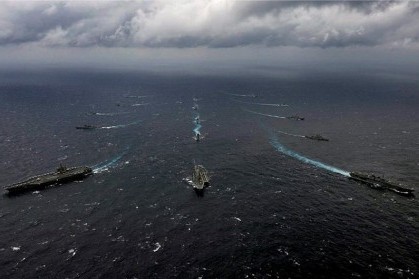 Courtesy: PTI
The historical evolution of the Malabar Exercise and the currently fraught relations between the participating countries and China created a much sharper context for the event, with the Chinese evincing a heightened interest in it
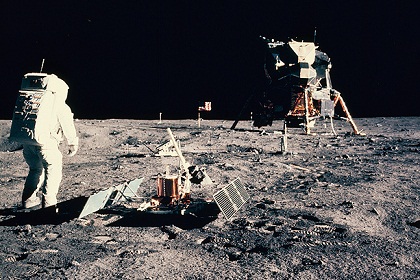 Courtesy: ngm.nationalgeographic
New Delhi’s space policy makers have been promoting the possibility of deriving Helium-3 from the Moon for Earth-based applications for over a decade—but it is not a viable proposition and it’s time they stopped placing the cart before the horse
 Courtesy: Gateway House
The two decade-old Indian Ocean Rim Association holds its first ever summit next week. Maritime safety and security in the region is a paramount concern as also enhanced trade, but will the Blue Economy be included as a priority? Another area of concern is devising modalities for cooperation with dialogue partners, such as the United States, China and Japan
 Courtesy: MEA/ Flickr
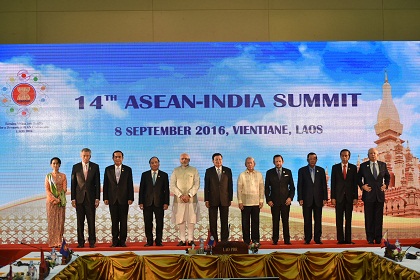
The Indo-Pacific region is home to some of the largest and most rapidly growing economies as also powerful military forces. Nuclear threats, international terrorism and climate change are some of the issues that define the region. Uncertainty dogs relations among the four nations in the top league—U.S., China, India and Japan—but what is emerging is a hawkish, policy stance from the U.S. as opposed to an isolationist outlook apprehended earlier
 Courtesy: Wikipedia
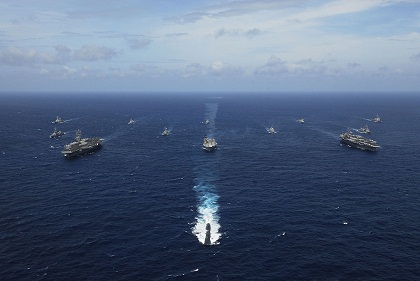
A strategic coming together of the U.S., Japan, Australia, and India was close to fruition some years ago, impelled initially by the tsunami of 2004. The spirit of the enterprise remains alive even now, and there are many merits in India joining the quad, but such an arrangement can skew existing Asian equations, jeopardising the Act East policy
 Courtesy: Northernminer
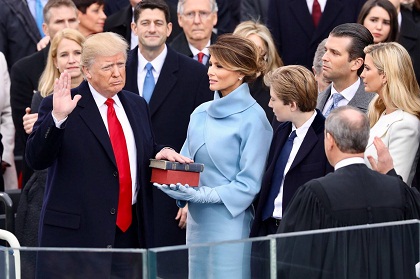
In the wake of trade-based globalisation followed by financial globalisation, a large volume of capital began moving from developing to advanced countries. This has resulted in relatively poor developing countries effectively becoming net creditors to the rest of the world. Reversing this massive outflow of capital requires governments to strengthen governance in all its dimensions and have closer international collaboration to tighten the regulatory oversight of tax havens for greater transparency
 Courtesy: Wikipedia
There is a stark divergence between how the West views the world and how those outside it do. It is possible to oversimplify the equation, to portray the West as cynically self-interested. The West and countries like India need to reach a shared understanding of how the liberal international order can be reformed so it may be salvaged