Website articles  (34) Courtesy: Gateway House
22 January 2026

Case for post-study ‘S’ visas

In recent months, visa restrictions have been imposed on foreign students particularly Indians, seeking higher education, especially in the U.S. and the UK. Post-study work opportunities, a key factor in international education choices, have also been affected. This creates an opportunity for India to step in and attract foreign students by introducing an ‘S’ visa that permits post-study work opportunity in India.
Website articles  (35) Courtesy: Getty Images
22 January 2026

Can NATO survive without Article 5?

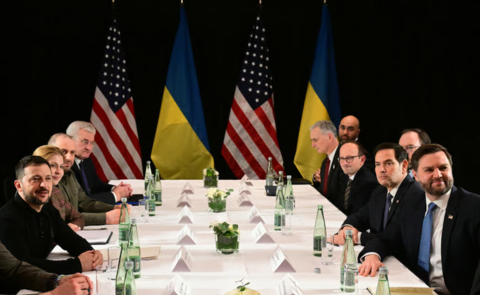
The U.S. demand for Greenland for security purposes, has alarmed Europe enough for talk of Article 5 of NATO’s collective defence agreement to be put on the discussion table. But can NATO survive without Article 5? And can Article 5 survive without the U.S. defence cover for Europe?

Website articles  (32) Courtesy: Gateway House
15 January 2026

Reviving U.S.-India high school exchange programmes

The new U.S. Ambassador to India, Sergio Gor, has much to do – and reviving high school exchange programmes stalled due to funding shortages is one important task. Students are a significant element of the bilateral: 300,000 Indian students study in the U.S., but barely 1% of that comprises U.S. students in India. The exchange programmes can bridge the gap - and India can pick up some of the tab.

Website articles  (31) Courtesy: BBC
15 January 2026

Venezuela and the Donroe Doctrine

U.S. action in Venezuela has resurrected the 200-year-old Monroe Doctrine which sought to prevent foreign interference in the Western Hemisphere. Originally intended to keep European colonial powers away, it has been reinterpreted over the years beyond that. Donald Trump has reasserted and updated it to the “Donroe Doctrine,” to revitalise U.S. regional hegemony – and through it, some reduction of Chinese and Russian influence.

Website articles  (29) Courtesy: Somaliland Presidential Office
15 January 2026

Somaliland recognition strengthens alternative diplomacy ecosystem

Israel’s recognition of Somaliland as an independent state in December 2025 is not merely a diplomatic gesture toward a long-marginalised polity; it is a strategic act with implications for Somalia’s territorial integrity, regional security dynamics, great-power competition, and the evolving politics of recognition in a fractured international order.

News on Air Courtesy: News on Air
8 January 2026

2026: India’s foreign policy challenges

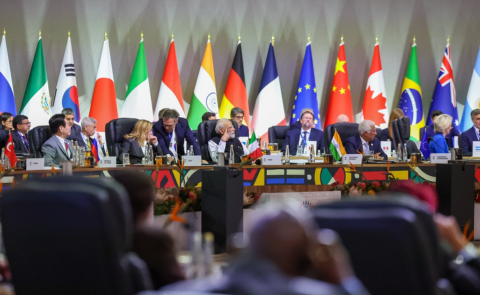
In the shifting sands of contemporary geopolitics, terms such as ‘fluid multipolarity’, ‘multiplexity’, ‘tripolarity’, and ‘bipolarity with multipolar characteristics’ are replacing the old dogmas and orders. But what is driving the world today? How does India plan to protect its vital interests in the current age of ongoing polycrisis? The road ahead is challenging, marked by risks and uncertainty.

US Embassy and Consulates in Italy Courtesy: US Embassy & Consulates in Italy
18 December 2025

U.S.’ National Security Strategy 2025

It is customary for every U.S. president to release a National Security Strategy (NSS) early in their tenure. President Trump published the NSS for his second term in November 2025. It’s a contrast from his 2017 NSS, which addressed broad threats. The 2025 version is narrower, emphasising trade over security, with the Western Hemisphere being the primary area of focus. Is the U.S.’s global role shrinking?

EU's India Strategy Courtesy: Reuters
30 October 2025

EU’s new India strategy

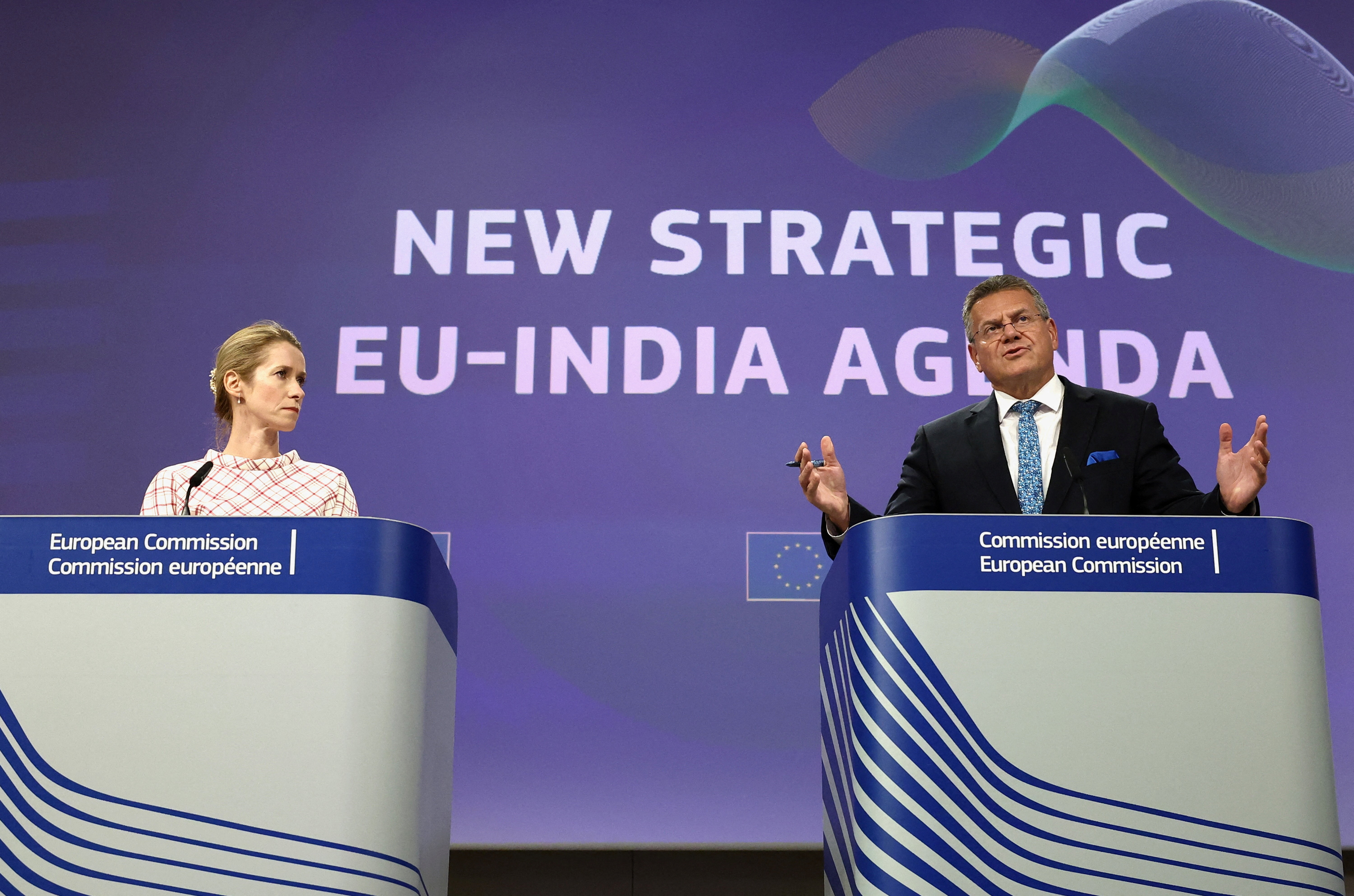
Despite over a decade of negotiations, the EU-India FTA remains stalled. The New Strategic EU–India Agenda released in October 2025 seeks to elevate ties, positioning India as central to Europe’s multipolar vision. Yet contradictions persist: Europe’s normative approach and India’s multi-alignment strategy diverge. Connectivity and infrastructure remain conceptual. Now, success depends on the EU’s ability to match rhetoric with resources, flexibility, and strategic patience. 

Koerber Stiftung (5) Courtesy: AFP
23 October 2025

India and Indonesia guide Southern Consensus

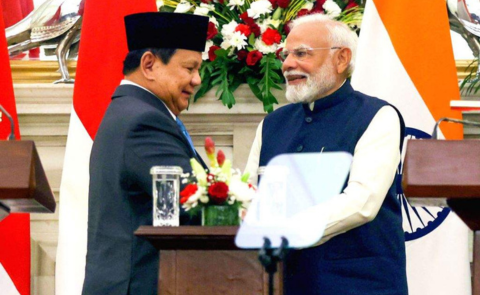
India and Indonesia sit at the heart of the Indo-Pacific, and participate  in multiple global and regional frameworks that ensure developing countries remain part of governance debates. The two countries can use these platforms to craft a southern consensus, a framework for cooperation that prioritises resilience, equality and cooperation over competition and coercion. This can reduce vulnerabilities among developing countries and strengthen them against future disruptions.

Website articles  (10) Courtesy: Metro Vaartha
9 October 2025

Unseen opportunities in UK-India trade

UK Prime Minister Keir Starmer is in India Oct 8-9, to discuss geopolitics with his Indian counterpart and also to boost bilateral trade. The UK-India Comprehensive Economic and Trade Agreement (CETA) signed in July 2025 marks a milestone in the relationship. The deal, however, omits reference to the creative industries which contribute significantly to UK GDP and play a vital role in the UK-India corridor.