Ivan Courtesy: Gateway House
8 October 2025

Unfolding Geopolitics Episode 23 | India renews engagement with Afghanistan

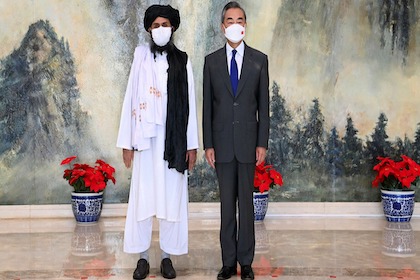
Afghanistan’s Foreign Minister Amir Khan Muttaqi will visit India on October 10, marking the first high-level Taliban visit since the group took over Kabul in 2021. Nayanima Basu discusses the purpose of this visit and the importance of engagement with Afghanistan. She explains the roles of China, which seeks business; Pakistan, which pursues political interests; and the U.S., which has a renewed interest in Bagram Air Base and its return to the country it abandoned.

Gateway House Courtesy: Gateway House
3 July 2025

China Plus One and global supply chains

A slowdown of the Chinese economy, and the shift, particularly by MNCs, from China to other more competitive locations has opened up business opportunities for latecomers to supply chains in the developing world. Evidence suggests that Southeast Asia and some South Asian countries like India, Sri Lanka, Bangladesh, could be beneficiaries of the supply chain shift, particularly in labour-intensive segments.

Getty (1) Courtesy: Gateway House
15 May 2025

The New Geopolitics and South Asia’s Trade Architecture – What Next?

Geopolitics is increasingly intertwined with the economic destiny of South Asia. Even before the U.S. tariffs were rolled out, growing polycrises had hit the global economy, which has been struggling since the pandemic. South Asia seems a relatively bright spark of regional trade and growth. This paper analyses South Asia’s trade architecture in the backdrop of a sluggish world economy in the 2020s, and makes recommendations for closer regional economic integration.

Website articles  (12) Courtesy: Gateway House
15 May 2025

U.S., global emperor of sanctions

Over two centuries, the U.S. has amassed vast economic powers across the globe during and after the two World Wars , and sanctions slowly became an effective tool it used to achieve its foreign policy goals, becoming the global emperor of sanctions.

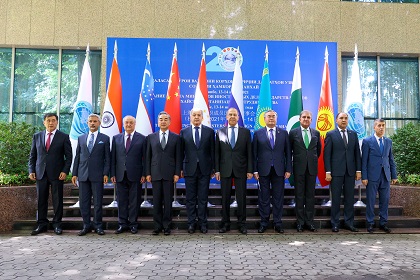
Foreign ministers and officials of the Shanghai Cooperation Organisation (SCO) pose for a group photo during a meeting in Dushanbe, Tajikistan July 14, 2021. Russian Foreign Ministry/Handout via REUTERS Courtesy: Reuters
20 April 2022

The SCO in Afghanistan

The Shanghai Cooperation Organisation has been focused on resolving the Afghan crisis. But divergent views of members and the influence of China and Pakistan have eluded a solution. This has been further impeded by the ongoing sanctions and humanitarian issues which are beyond the organisation's scope.

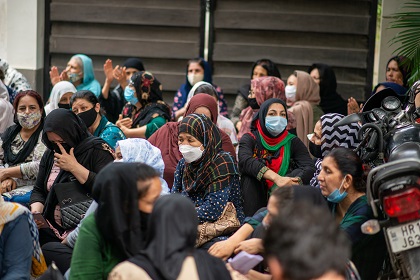
New,Delhi,,India-aug,24,2021:,Group,Of,Afghan,Women,Sitting Courtesy: Shutterstock
27 January 2022

Developing a balanced Indian refugee policy

India has seen a recent influx of refugees from Afghanistan and Myanmar. This has highlighted the absence of a concrete refugee policy in India. India must formalise its approach towards refugees. The Citizen Amendment Act of 2019, is a start. India can move this forward by learning from the examples of other democracies like the U.S., Kenya and South Korea, on how to balance international law with its national security interests.

The China-Pakistan-Taliban-Iran nexus Courtesy: Xinhua
11 November 2021

The China-Pakistan-Taliban-Iran nexus

China has followed Sun Tzu’s strategy of focussing on alliances - building its own and weakening those of its adversaries. Beijing’s carefully nurtured formations in West and Central Asia are part of this global power projection, especially with Pakistan, Iran and now, the Taliban, through projects like the Belt and Road Initiative. India must recalibrate its China policy and push for concerted regional responses to emerge as a balancing force against it.