Mecca Accord Courtesy: Gateway House
23 September 2026

Essay: Mecca Accord re-engineers regional security?

The sustainability of the Mecca Accord is determined by its response to three geopolitical challenges represented by India, Iran, and Israel. The India test centres on preventing the export of South Asian conflicts to the Gulf, the Iranian test rests on institutionalising sustainable deterrence beyond formulas of perpetual clash, and the Israeli axis tests the mechanisms for reshaping Saudi ties with American security and the future of regional normalisation.

Office of the Pakistani Prime Minister_AFP Courtesy: AFP
27 August 2026

Mecca Accord and India’s energy security

The Mecca Accord between Saudi Arabia, Turkiye and Pakistan has raised some red flags in the region, and in India. One element remains unchanged: India’s value to Riyadh as an energy importer. With demand security holding more weight than supply security in an uncertain future, a major and growing oil importer like India is more important than the cash-for-security arrangement the Kingdom has signed with Pakistan.

Website articles  (12) Courtesy: Gateway House
15 May 2025

U.S., global emperor of sanctions

Over two centuries, the U.S. has amassed vast economic powers across the globe during and after the two World Wars , and sanctions slowly became an effective tool it used to achieve its foreign policy goals, becoming the global emperor of sanctions.

Afg_Province_Poppy_cultivation hp Courtesy: UNODC
19 January 2022

Funding the insurgency: The Taliban in Afghanistan

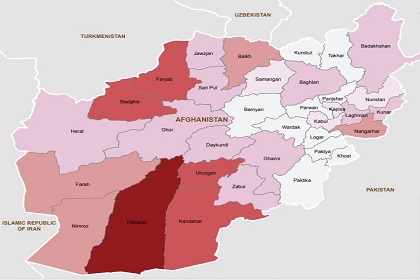
The Taliban's resurgence since 2001 has been largely funded by the creation of an opium economy and extortion. Now, with the withdrawal of U.S. troops, legitimate aid from Afghanistan and the freezing of Afghan funds abroad, the Taliban will revive its informal sources of finance to stay afloat. A look at the financing that brought the Taliban back to Kabul.

istanbul summit: last chance for afghanistan Courtesy:
26 April 2021

Istanbul Summit: Last chance for Afghanistan

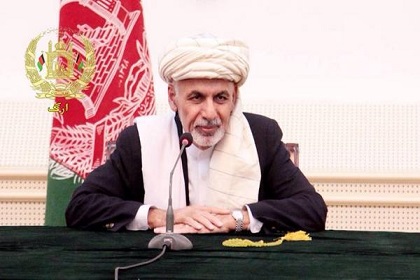
The Taliban should have been reintegrated into Afghan society several years ago. It is now probably too late to persuade them to accept anything less than a dominant role in Kabul. However, Turkey, Pakistan and the United States may have one last chance to pressure the antagonists into a negotiated settlement, perhaps along the following lines.

shutterstock_1091235845 Courtesy: Shutterstock
15 October 2020

UN: Necessary but reformed

The UN turned 75 this year but instead of grand celebrations, the world witnessed an empty UNGA with world leaders addressing it via video screening because of the pandemic. The UN is under unprecedented stress and being shown up for its inability to tackle the challenges of today like the pandemics, climate change, terrorism or global peace and security. The institution's key governing structures, especially the UN Security Council, are inadequate and demand reform. India must now use gritty resolve to ensure its place in these governing structures.

ibc-center-oil-gaz-4-696x392 Courtesy: ibctrain.com
2 April 2019

India & the influential SCO Energy Club

The main objective of the Shanghai Cooperation Organisation’s (SCO) Energy Club, when Russia formed it, was to market its member states’ substantial oil and natural gas reserves. This map shows some of the important natural gas pipelines, originating from Russia and its neighbouring countries that are not members of the SCO. What can India do to secure supplies from these abundant but currently inaccessible natural gas reserves?

04 Courtesy: Sameer Patil & Shah Maieen
8 February 2018

The Rohingyas and India’s difficult choices

A recent trip to Cox’s Bazar showed that despite numerous health, social and security challenges, the Rohingya refugees are reluctant to return to Myanmar. India will have to walk a tightrope, keeping in mind humanitarian, security, and geopolitical priorities