The Muslim News Courtesy: The Muslim News
24 December 2025

How the West cheered Dhaka’s collapse

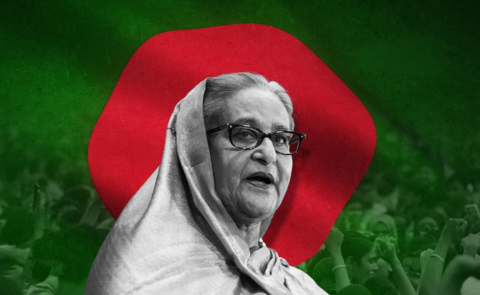
On December 18, Sharif Osman Hadi, a prominent leader of the 2024 student-led uprising, was assassinated. What began as protests against civil service quotas became a leaderless uprising. As Western powers celebrated a “democratic dawn”, Bangladesh slid into structured anarchy. Dhaka now faces two futures with terrifying clarity: one with elections skewed by military advantage and Islamist mobilisation, and the other by acknowledging that democracy cannot be airlifted.

Gateway House (2) Courtesy: Gateway House
24 December 2025

Bangladesh economy spirals downwards

Bangladesh’s economy, already weak at the time of the August 2024 coup, has been on a downward spiral since. Banks are insolvent and cannot lend, business confidence is low, and investors are staying out. These issues will worsen the ongoing radicalisation, extremism and violence in the country. 

61XgnQBhwiL._SY425_ Courtesy: Amazon India
27 November 2025

Indo-Pacific Strategic Churn: Challenges and State Responses

Rajiv Bhatia explains how this book brings together perspectives on the geostrategy, geopolitics, and geoeconomics of the Indian and Pacific Oceans. Edited by Chintamani Mohapatra, it features 16 essays by experienced yet young academics. It highlights how the world changed after 2020, the ‘Age of Polycrisis’, COVID-19, conflicts in West Asia and Europe, and other global flashpoints. The book offers analysis that seeks to reposition the Indo-Pacific as vital to India’s strategic interests.

Gateway House Courtesy: Gateway House
3 July 2025

China Plus One and global supply chains

A slowdown of the Chinese economy, and the shift, particularly by MNCs, from China to other more competitive locations has opened up business opportunities for latecomers to supply chains in the developing world. Evidence suggests that Southeast Asia and some South Asian countries like India, Sri Lanka, Bangladesh, could be beneficiaries of the supply chain shift, particularly in labour-intensive segments.

New Spotlight Magazine Courtesy: New Spotlight Magazine
19 June 2025

A case for South Asia energy connectivity

Building a robust engagement with India on energy can help offset some of the economic and political crises that most of India’s neighbours are facing. Smaller South Asian neighbours will benefit from cheaper electricity and oil, paving the way for greater regional economic cooperation.

Myanmar article Courtesy: X /@antonioguterres
28 May 2025

Quid pro quo for Myanmar’s humanitarian corridor

A proposed humanitarian corridor from Bangladesh to Myanmar’s suffering Rakhine state is the need of the hour. But Chief Advisor Yunus has linked it with repatriation of the Rohingya refugees in Bangladesh, mixing up unrelated issues. This is a classic ploy to distract the public from his own shortcomings, and his single-minded focus to extend and legitimise his regime.

Getty (1) Courtesy: Gateway House
15 May 2025

The New Geopolitics and South Asia’s Trade Architecture – What Next?

Geopolitics is increasingly intertwined with the economic destiny of South Asia. Even before the U.S. tariffs were rolled out, growing polycrises had hit the global economy, which has been struggling since the pandemic. South Asia seems a relatively bright spark of regional trade and growth. This paper analyses South Asia’s trade architecture in the backdrop of a sluggish world economy in the 2020s, and makes recommendations for closer regional economic integration.

Website articles  (12) Courtesy: Gateway House
15 May 2025

U.S., global emperor of sanctions

Over two centuries, the U.S. has amassed vast economic powers across the globe during and after the two World Wars , and sanctions slowly became an effective tool it used to achieve its foreign policy goals, becoming the global emperor of sanctions.

PM Modi alongside other BIMSTEC leaders at 6th BIMSTEC Summit Courtesy: ANI
10 April 2025

BIMSTEC: Vision vs Reality

The 6th BIMSTEC Summit in Bangkok on April 4, 2025 saw progress for the organisation, such as the adoption of a ‘Vision 2030’ plan outlining its goals till 2030. In other areas, the grouping continues to lag. BIMSTEC must watch for potential challenges to its future as it seeks to bridge the gaps.