Website articles  (12) Courtesy: Gateway House
27 November 2025

Stepping up Kirby-Packer-Murdochs’ India legacy

Several Australian families and companies have had a deep impact on India, since the early days of its economic reformation – from telecom to entertainment. Now, with the two countries enjoined by a comprehensive bilateral trade agreement, it’s time to step it up and deepen common agendas on hard issues, from regulation on big tech to entertainment ecosystems to sports and stadium management.

Website articles Courtesy: Warung Pintar
6 November 2025

Jakarta’s bet on India’s digital playbook

The currents shaping the relationship between the Indo-Pacific’s two largest democracies are not trade winds but terabits flowing through fiber-optic cables and the instant signals of digital payments. Jakarta and New Delhi are forging a landmark digital alliance—one that goes beyond technology. At the heart of this digital handshake lies the plan to link Indonesia’s BI-Fast with India’s Unified Payments Interface.

BERNAMA Courtesy: BERNAMA
13 February 2025

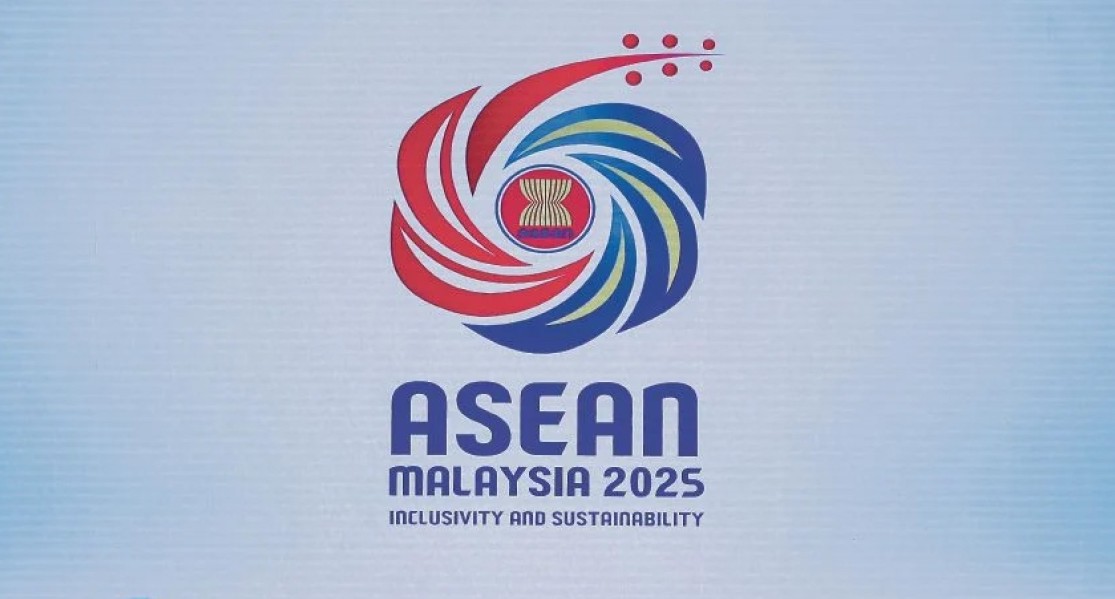
High expectations of Malaysia as ASEAN chair

Malaysia’s chairmanship of ASEAN in 2025 is pivotal. It will have to steer ASEAN toward regional peace, stability, and prosperity while reinforcing its centrality. All this during a time of heightened geostrategic rivalry, economic deglobalisation, rising protectionism, and nationalist trends.

Modi trump - Newsweek Courtesy: Newsweek
30 January 2025

What Trump 2.0 means for India

U.S. President Donald Trump is back for a second term, and India and the U.S. together have much to gain from it. The bilateral has grown tremendously over the decades, with technology, scientific and trade ties deepening and expanding. Also, both countries have a common interest in addressing the ascent and bullying tactics of China.

China-third-plenum Courtesy:
3 October 2024

China’s Third Plenum indicators

China has just announced a grand stimulus for its economy. An analysis of the outcome of the Third Party Plenum held in July, where many of these measures take birth, shows that despite the optimistic planning, China is readjusting its ambitions for future stability.

Screenshot 2024-08-29 at 10.38.15 AM Courtesy:
29 August 2024

Learning from Taiwan to Counter China’s Disinformation

Chinese state media and other outlets are increasingly using disinformation to undermine Taiwan's political stability, sway public opinion, and erode national unity. The government in Taipei mitigates this threat by employing a range of high- and low-tech solutions. Other countries will benefit by using the Taiwan model to fortify their democratic institutions and enhance their readiness against an advanced arsenal of disinformation tools.

20231118_TWLDD002 Courtesy: The Economist
4 January 2024

Reading the tea leaves for 2024

After a year affected by a sustained polycrisis, global geopolitics in 2024 remains a delicate dance between hope and realism. Ongoing conflicts in Ukraine and Gaza cast uncertain shadows, while Taiwan and the South China Sea present potential flashpoints. Indian diplomacy will have to navigate old and new challenges, while promoting India’s expertise in digital technology, as also managing its own upcoming parliamentary elections.

A man charges an electric vehicle (EV) at the charging hub of Indian ride-hailing BluSmart Electric Mobility in Gurugram, India, December 9, 2022. REUTERS/Anushree Fadnavis Courtesy: Reuters
7 December 2023

Financing Electric Mobility

The Indian electric vehicle (EV) market is anticipated to witness a remarkable compound annual growth rate of 49% between 2022 and 2030. Amit Bhandari, Senior Fellow, Energy, Connectivity, and Investment, Gateway House, spoke with CUTS International on their 'EV-olution' podcast on the significance of electric mobility in India, challenges of financing the sector and mechanisms for accelerating the adoption of EVs in India.

work visas paper Courtesy: Gateway House
2 November 2023

Internationalising Indian Education: Work Visas for Foreign Students

Indian companies are internationalising, and so should Indian education. The National Education Policy of 2020 recommends a series of policy initiatives and reforms in higher education institutes to attract foreign students to India. But making India an attractive destination for foreign students hinges on offering them the opportunity to work in the country too. Our new report shows how an expanded provision of work visas for foreign students is a progressive and natural extension of the NEP, enabling Indian campuses to internationalise, make India a global education hub and strengthen its international academic and corporate networks.