The People’s Authoritarian
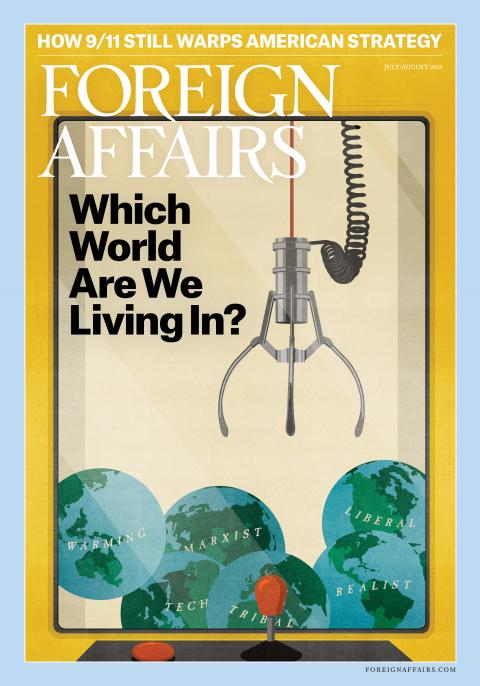
The psychology of Putin, the ideology of his regime, and the machinery received exhaustive attention in the West. The Russian people, however, remain poorly understood.

 Courtesy: Foreign Affairs
The psychology of Putin, the ideology of his regime, and the machinery received exhaustive attention in the West. The Russian people, however, remain poorly understood.
 Courtesy: Foreign Affairs
The Millennium Development Goals are set to expire at the end of 2015. The time is near for world leaders to make some hard choices, to decide on new targets which will offer the greatest returns on investment
 Courtesy: Foreign Affairs
Many eastern European states who are part of the EU and were admitted only after being deemed compliant with the Copenhagen criteria have seen political parties in these countries become increasingly illiberal
 Courtesy: Foreign Affairs
When the average growth rate in emerging markets hit over seven percent a year in the last decade, forecasters hyped its implications. Today, more than five years after the financial crisis of 2008, the euphoria seems to have waned
 Courtesy: European Southern Observatory
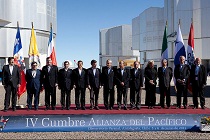
Recent developments indicate that Pacific Alliance member states have their gaze firmly set upon Asian-Pacific and ASEAN economies. Can a Pacific Alliance deal with China or ASEAN serve as a powerful incentive to force the ratification of the Trans-Pacific Partnership (TPP) through the U.S. Senate?
 Courtesy:
D. P. Satish in his review of Rahul Pandita’s latest book writes that it is a bold attempt at voicing despair about a nation that mouths lofty platitudes but does little to protect its persecuted communities.
 Courtesy: Foreign Affairs
There’s been much talk about the “the rise of the rest,” with Brazil, Russia, India, and China leading the charge. However, few countries can sustain unusually fast growth for a decade, and even fewer, for more than that. As the boom years begin to end, the international order won’t change as much as expected.
 Courtesy: World Economic Forum/Flickr
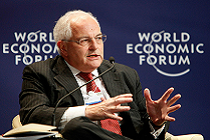
The emerging BRICS economies agree that the West should hold less sway in the global economy. But their leaders, despite regular summits, have failed to articulate a coherent vision because of divergent interests, says journalist Martin Wolf.
 Courtesy: Newsdesk
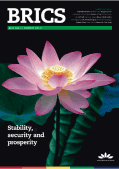
Alongside the 2012 BRICS Summit in Delhi, this special publication is a collection of articles that addresses important issues of the global agenda, the priorities of BRICS, the policies and competitive advantages of the participants, as well as BRICS institutionalization.
 Courtesy: Pragati
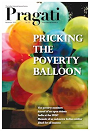
IBSA’s abstention over Syria is an argument against Security Council reform. Critics of reform have long argued that increasing the number of permanent members to include Brazil and India would lead to paralysis.