Book review: Exploring the origins of World War I
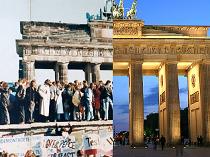
In 'The War that ended Peace: The Road to 1914', Margaret Macmillan delves into the decades leading up to 1914, as she explores why Europe abandoned years of peace to plunge into World War I
Courtesy: Random House
In 'The War that ended Peace: The Road to 1914', Margaret Macmillan delves into the decades leading up to 1914, as she explores why Europe abandoned years of peace to plunge into World War I
On January 24, Gateway House and the National Gallery of Modern Art, Mumbai, hosted a talk on ‘The Jewish community of Bombay: Diaspora, Identity and History’ by Gateway House's Mumbai History Fellow Sifra Lentin. This article, based on the talk, tells the story of the Sassoons, a prominent family of Baghdadi Jews
Courtesy: W123/WikimediaCommons
Whether backdoor geopolitics rather than careful negotiations brought about the interim agreement on Iran’s nuclear programme, the next six months will determine its fate. Reactions have ranged from a furious and mistrustful Israel to collective relief by many countries, and a worried India welcoming the agreement
Courtesy: European External Action Service
On November 24, the P5+1 and Iran reached a consensus on the interim agreement regarding Tehran’s long-disputed nuclear program. How comprehensive is this agreement, and what are its potential upshots for U.S., and West Asia – especially Israel and Saudi Arabia? More importantly, can India play a positive role?
Courtesy: epSos.de/Flickr
The foreign exchange market is considered the most liquid and transparent in the world. However, recent investigations into alleged manipulation of the foreign exchange rates is a reminder that transparent exchange-based systems alone are not enough to ensure fairness
Courtesy: Organisation for Economic Co-operation and Development/Flickr
In the face of a severe economic slowdown and an impending balance-of-payment crisis, the Indian business community has a clear opportunity to pull the country out of the current crisis. However, this can only achieved if the apex chambers of commerce restructure themselves
Courtesy: Jerchel/WikimediaCommons
India often finds itself in the right place at the wrong time or vice versa, as our dogma of non-alignment trumps honest calculations of self-interest in policy-making – rendering it unfavourable. The national interest, hence, calls for selective alignment on some issues with Washington and on others with Beijing
Courtesy: WikimediaCommons
Can the world aspire to a future where the use of force is not seen as leadership? Can the U.S. and former colonial powers like France and UK, think differently and reject the use of force as first resort? Can China and India craft alternatives?
Gateway House's Akshay Mathur interviews Benn Steil, Senior Fellow and Director of International Economics, Council on Foreign Relations (CFR), on his latest book, ‘The Battle Of Bretton Woods’ on how the IMF and the World Bank came to be.
Courtesy: Center for American Progress Action Fund/Flickr
The U.S. Secretary of State’s visit to India comes at a time when India is witnessing significant realignments in its domestic politics while the U.S. is busy tackling its cyber-spying allegations. Amidst these preoccupations, will the upcoming India-U.S. talks churn out substantive outcomes?