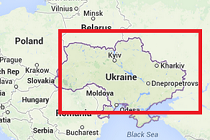
Eastern Europe Goes South
Many eastern European states who are part of the EU and were admitted only after being deemed compliant with the Copenhagen criteria have seen political parties in these countries become increasingly illiberal

 Courtesy: Foreign Affairs
Many eastern European states who are part of the EU and were admitted only after being deemed compliant with the Copenhagen criteria have seen political parties in these countries become increasingly illiberal
 Courtesy: GOV.UK/Flickr
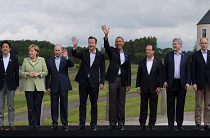
A slumped arms industry and the U.S. shale gas sector will gain from NATO’s threat of stricter sanctions and suspension of Russia from the G8. BRICS has protested, but unless we consolidate alternate international financial structures, even other big economies like India can eventually be the targets of sanctions

A new equation is emerging between the BRICS countries and the informal grouping of the most industrialized economies, called the G8. The G8 has been reduced to G7 following Russia’s suspension. Of late, BRICS have taken an assertive stand against the G8 in economic as well as the geo-political fora
 Courtesy: mac_ivan/Flickr
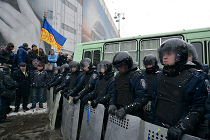
Crimea will hold a referendum this weekend on secession from Ukraine. The current crisis has brought to the fore Cold War era hostilities. However, an unstable Ukraine is in no one’s interest as it has implications for the region and the EU-Russia trade relationship
Neelam Deo, Director, Gateway House, talks about the ongoing crisis in Ukraine and its possible outcomes. In this interview, she also discusses the issues at stake for Russia and the West, the credibility of assertions made by both sides, the EU’s interests in the region, and how India should respond
 Courtesy: WikimediaCommons
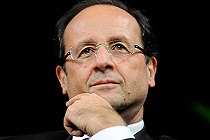
This daily column includes Gateway House’s Badi Soch – big thought – of the day’s foreign policy event. This Badi Soch analyses the implications of France’ kowtowing to Saudi Arabia and Israel’s demands in the P5+1 talks with Iran.
 Courtesy: generalising/Flickr
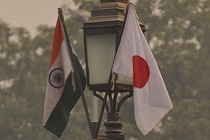
The India-Japan alliance needs to be viewed through a prism broader than that of "containing" China, and by treating the Indian and Pacific oceans as a single entity. Such an alliance has the potential to strengthen the geopolitical security of India and Japan, along with that of all their allies and associates
 Courtesy: United Nations
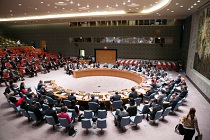
The recent UNSC Resolution, which mandates the complete destruction of Syria’s chemical weapons, demonstrates that after more than a year, a degree of international agreement on the Syrian issue has been possible. In the evolving situation, Russia will now emerge as a major player
 Courtesy: WikimediaCommons
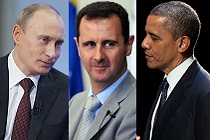
Can the world aspire to a future where the use of force is not seen as leadership? Can the U.S. and former colonial powers like France and UK, think differently and reject the use of force as first resort? Can China and India craft alternatives?
 Courtesy: Freedom House/Flickr
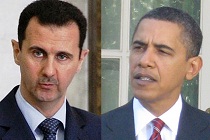
Despite rising international opposition, U.S. President Barack Obama is ready to penalise the Syrian regime for an alleged chemical attack in Ghouta, Syria, last month. The justifications given by the U.S. for an armed attack are questionable, and such retaliatory action will destabilise the entire region