Latin America Update, March 2014
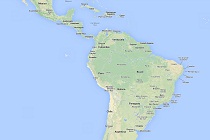
In 'Latin America Update' Gateway House lists some of the important events in Latin America over the past month
Courtesy: Google Maps
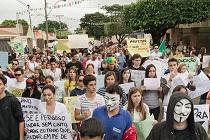
In 'Latin America Update' Gateway House lists some of the important events in Latin America over the past month
Courtesy: monotrilho|/Flickr
With elections scheduled in seven Latin American countries, 2014 will be a year of significant political developments in the region. As we enter 2014, Gateway House examines the important events that defined Latin American politics and economy in 2013
Courtesy: Sameer Patil/Gateway House
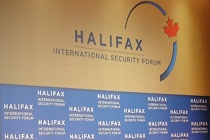
The Halifax International Security Forum, which began in 2009, hosted its fifth annual event on November 22. Gateway House’s Associate Fellow Sameer Patil, who is participating in the Forum, blogs about his impressions of the discussions, dialogues and sentiments of the participants at the event.
Courtesy: counting chest bullets/Flickr
In recent years, U.S. oil and gas imports have declined due to the development of shale resources in the country. How will the production of shale oil, increase in oil production by non-OPEC countries, supply disruptions in West Asia and economic growth in India and China impact global crude oil prices?
Courtesy: generalising/Flickr
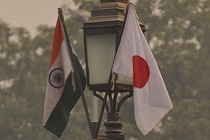
The India-Japan alliance needs to be viewed through a prism broader than that of "containing" China, and by treating the Indian and Pacific oceans as a single entity. Such an alliance has the potential to strengthen the geopolitical security of India and Japan, along with that of all their allies and associates
Courtesy: United Nations
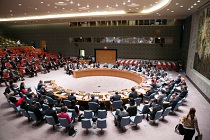
The recent UNSC Resolution, which mandates the complete destruction of Syria’s chemical weapons, demonstrates that after more than a year, a degree of international agreement on the Syrian issue has been possible. In the evolving situation, Russia will now emerge as a major player
Courtesy: WikimediaCommons
Can the world aspire to a future where the use of force is not seen as leadership? Can the U.S. and former colonial powers like France and UK, think differently and reject the use of force as first resort? Can China and India craft alternatives?
Courtesy: Freedom House/Flickr
Despite rising international opposition, U.S. President Barack Obama is ready to penalise the Syrian regime for an alleged chemical attack in Ghouta, Syria, last month. The justifications given by the U.S. for an armed attack are questionable, and such retaliatory action will destabilise the entire region
Courtesy: Asitimes/ Flickr
Indian and Chinese companies routinely bid against each other in their quest to secure oilfields and other resource pools resulting in rising prices. However, a preferable recourse would be for the nations, along with ASEAN, to collaborate as there is enough for all
Courtesy: Matanya/WikimediaCommons
Since 2002, a large amount of U.S. funds flowing into Afghanistan has been diverted to the Taliban by local strongmen, resulting in a continued presence of the militia. The challenge post-2014 will be to reverse the West’s top-down strategy, creating a grassroots-driven incentive for peace and development.