merkel cdu www.GlynLowe.com flickr Courtesy: www.GlynLowe.com/Flickr
27 September 2013

Germany after elections: Similar but not the same

It may take Chancellor Angela Merkel weeks to negotiate a new coalition, but the vote for stability means that change will only be at the margins of current domestic and foreign policy. Still, the fallout of the election in the EU and beyond, including in India, should not be underestimated

Indira Lyndon Jerchel wikimediacommons Courtesy: Jerchel/WikimediaCommons
24 September 2013

The case for India-Alignment

India often finds itself in the right place at the wrong time or vice versa, as our dogma of non-alignment trumps honest calculations of self-interest in policy-making – rendering it unfavourable. The national interest, hence, calls for selective alignment on some issues with Washington and on others with Beijing

g20akshay Courtesy: The Prime Minister's Office/Flickr
12 September 2013

G20: The new Bretton Woods?

Global institutions responsible for price discovery and speculation in commodities are suspected of fuelling price hikes. With the world experiencing turmoil in the food and energy markets, fixing the global pricing architecture for commodities should be the priority for the G20

merkey steinbruck Courtesy: WikimediaCommons
6 September 2013

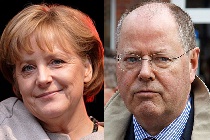
What does Germany want?

German foreign policy can be described as one anchored in the European and NATO alliance while being the economic centre of Europe. Yet, any government that comes in after the September 22 elections will be challenged by rapid developments in West Asia and elsewhere in a politically and economically turbulent world

latvia Courtesy: Courtesy: Philaweb/WikimediaCommons
5 April 2013

Latvia: Economic miracle or mangled economy?

Subsequent to the global financial crises of 2007, while several countries were still struggling with economic problems, Latvia managed to dramatically decrease its public debt, and its GDP too grew at an impressive pace. How was this success achieved and at what cost to the people of the country?

Ministry Of External Affairs, India Courtesy: Ministry Of External Affairs, India
29 March 2013

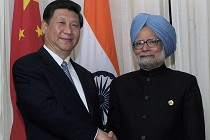
Beijing banks on BRICS

Indian foreign policy has not yet addressed the ramifications of Chinese economic dominance in BRICS. Nor have we matched China’s engagement within the group to ensure that the BRICS vision of a new international order for emerging economies actually works in their favour.

BRICS flags Courtesy: Government/ZA/Flickr
26 March 2013

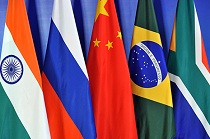
A mandate for BRICS Bank

At the 5th BRICS Summit that begins in South Africa today, the heads of state of Brazil, Russia, India, China and South Africa are expected to ratify the creation of the BRICS Bank. After discussion and study for over a year by the respective governments, the bank will be launched with seed money estimated at between $50 billion to $100 billion, and most likely an equal share of voting rights for the management of the bank. What remains

MEAIndia/Flickr Courtesy: MEAIndia/Flickr
17 January 2013

Promoting private players in ASEAN

The steps taken by the Indian government to enable private sector involvement in ASEAN have been hesitant. After the recent ASEAN summit in New Delhi, it is time for greater coordination of Indian private industry with government-to-government interaction, which will benefit all members, including India.

parliament Courtesy: Shwkyn231/Flickr
31 December 2012

India’s foreign policy: A year in review

The year 2012 has been a busy one for foreign policy: from escalating disputes in the South China Sea to alternate financial instruments from the emerging world. India’s foreign policy too has its shown strengths and weaknesses. We present our top foreign policy Hotspots, Sweet spots and Blind spots for 2012.