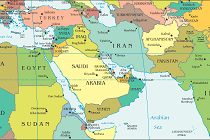
west asia Courtesy: Wikipedia.org
27 June 2014

Will ISIS redraw the West Asia map?

The rise of the militant ISIS will alter the stability and future of all West Asian countries, and can impact India in multiple ways. India must re-evaluate its West Asia policy, and address the safety of its nationals in Iraq, the security of its oil supplies, and the fallout on South Asia of this resurgence of strife
UNSC Syria UNSC Courtesy: United Nations
4 October 2013

Decoding the UNSC Resolution on Syria

The recent UNSC Resolution, which mandates the complete destruction of Syria’s chemical weapons, demonstrates that after more than a year, a degree of international agreement on the Syrian issue has been possible. In the evolving situation, Russia will now emerge as a major player

Bahrain Activist/WikimediaCommons Courtesy:
8 February 2013

India navigates the Arab Uprisings

The Arab uprisings show no sign of closure, and have become amorphous. While New Delhi has so far been immunised from the political and religious dimensions of the uprisings, the rise of political Islam, Islamic governance, and continuing instability will impact India.

Www.Oic-Oci.Org Courtesy:
23 January 2013

India and the OIC: To join or not to join?

India’s relations with Islamic nations, many of which are members of the Organisation of Islamic Cooperation (OIC), have become even more prolific over the last decade. While India does not visualise becoming a member of a religious international body, many reasons militate against our formally joining the OIC.

Courtesy: FREEDOM HOUSE2/FLICKR
24 August 2012

Syria: What next?

With the Free Syrian Army being supplied aid by the West and the Gulf Cooperation Council countries, the endgame for the Syrian regime has begun. Does Assad's exit guarantee the replacement of autocracy with democracy? What implications will it have on regional politics?

ambassador abhyankar interview Courtesy: Gateway House
8 June 2012

“We are not in the business of ‘civilizing’ nations”

Over the past year, there has been a drastic change in the political scenario in Syria, which is now engulfed with violent sectarian conflict. Gateway House speaks to former Indian Ambassador to Syria, Rajendra Abhyankar, about the changing political scenario and the implications of the ongoing conflict in Syria.

sarah chayes article Courtesy: U.S.ArmedForces/WikimediaCommons
13 September 2011

Mafia-nation: State capture by criminal syndicates

Corruption has become a galling global phenomenon: structured, vertically-integrated networks, whose objective is the extraction of resources, are forming in countries around the globe. And strikingly, these structures are masquerading as democratically-elected, seemingly-open governments.

Copy of 9,11 global event pic_210x140 india Courtesy: WTCTributeinLight/WikimediaCommons
11 September 2011

Arab Spring to Wahabbi winter

A change has come about after 9/11: the ideologies grouped as “Al Qaeda” has morphed, from a group directed by a few individuals, it is now disaggregated. Due to this change, NATO is empowering it's future foes in the Arab world by its continued belief in the camouflaged jihadis.

Opus88888 Wikipedia_0 Courtesy: Opus88888/Wikipedia
8 February 2011

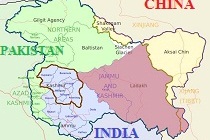
The present situation (in Kashmir) favours India

In the last few months, South Asia has gone from being just a global security headache, to a region with new possibilities. Teresita C. Schaffer, former US ambassador to Sri Lanka, and Howard Schaffer, former US ambassador to Pakistan and Bangladesh, discuss the major challenges that confront the US in South Asia.