indjap2 Courtesy: Ministry of External Affairs, India
24 January 2014

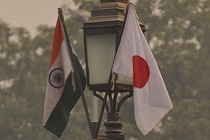
India-Japan: Alignment assured

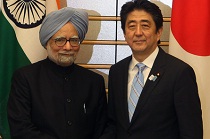
Japan’s reaching out to India, as demonstrated by the upcoming visit of Prime Minister Shinzo Abe, reflects the urgency with which Japan sees the threat of a rising China. India too has experienced Chinese aggression and must work with other democracies towards creating a multi-polar Asia
securityrisks Courtesy: Press Information Bureau/Wikimedia Commons
16 January 2014

India’s top security risks in 2014

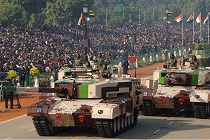
What are the implications for India of the scaling down of U.S. forces from Afghanistan, the continuing tension with China at the border, and the political turmoil in Bangladesh? How should India address these and other upheavals in its neighbourhood, which are potential challenges to the country’s security?

emperor akihito Courtesy: Ministry of External Affairs, India
6 December 2013

The Japanese emperor’s visit

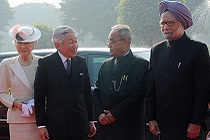
The ongoing visit to India by Emperor Akihito of Japan is a strategic milestone that can have long-term implications for the bilateral economic relationship and geopolitical engagement in a rapidly-changing Asia. Both countries must now work to sustain this momentum

ind jap Courtesy: generalising/Flickr
6 November 2013

The new Indo-Pacific core

The India-Japan alliance needs to be viewed through a prism broader than that of "containing" China, and by treating the Indian and Pacific oceans as a single entity. Such an alliance has the potential to strengthen the geopolitical security of India and Japan, along with that of all their allies and associates

corridorsmap2 Courtesy: Gateway House
11 July 2013

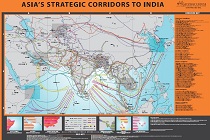
Asia’s Strategic Corridors to India

The map – Asia’s Strategic Corridors to India – has emerged from Gateway House’s study of India’s strategic links with other parts of Asia. It highlights the progress India has made in forging multiple links with six strategic regions – Central Asia, West Asia, East Africa, South-East Asia, East Asia, and our immediate neighbourhood

Li manmohan abe Courtesy: Ministry of External Affairs, India
31 May 2013

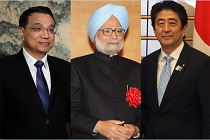
Li and Abe

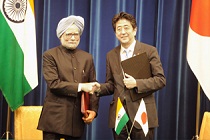
While the recent India-Japan Joint Statement contains significant breakthroughs, the China-Pakistan Joint Statement reveals the absence of warmth between India and China. With the current flurry of bilateral exchanges, India is fine-tuning its approach to emerging regional realities, as are others.

Manmohan - Abe MEA Courtesy: Ministry of External Affairs, India
30 May 2013

A new configuration to the East

During his visit to Japan, Prime Minister Manmohan Singh spoke of the need to increase bilateral consultations on strategic issues. This, and other moves, indicate new developments in India’s Look East Policy, with alternative security and economic scenarios for regional actors in the context of the rise of China