South China Sea: escalating tensions
Braving potential retaliation from China, the Philippines has now challenged Beijing’s sovereign claims over the South China Sea before a UN tribunal, and raised the stakes in a longstanding dispute

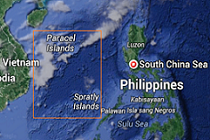 Courtesy: Google Maps
Braving potential retaliation from China, the Philippines has now challenged Beijing’s sovereign claims over the South China Sea before a UN tribunal, and raised the stakes in a longstanding dispute
 Courtesy: rajkumari1220/Flickr
India’s political and economic future will be determined over the next few weeks. Gateway House recommends a priority diplomacy agenda for the next government – one which puts economics at the heart of our foreign policy
 Courtesy: Spike Call U.S Navy/Wikimedia Commons
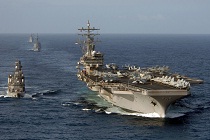
The Indian Navy, through multi-lateral exercises, is increasing its sphere of influence and becoming a regional force. Yet, it needs to be supported by policy decisions that enable it to achieve its potential as a state-of-the-art establishment and a powerful tool in India’s diplomatic repertoire
 Courtesy: generalising/Flickr
The India-Japan alliance needs to be viewed through a prism broader than that of "containing" China, and by treating the Indian and Pacific oceans as a single entity. Such an alliance has the potential to strengthen the geopolitical security of India and Japan, along with that of all their allies and associates
 Courtesy: Madhu Amodia
This report analyses the significance of expanding India’s engagement with the South Pacific in the backdrop of mounting global interest in the region
 Courtesy: Gateway House
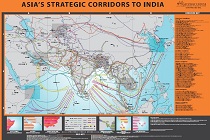
The map – Asia’s Strategic Corridors to India – has emerged from Gateway House’s study of India’s strategic links with other parts of Asia. It highlights the progress India has made in forging multiple links with six strategic regions – Central Asia, West Asia, East Africa, South-East Asia, East Asia, and our immediate neighbourhood
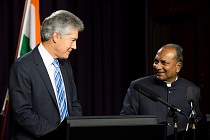 Courtesy: Australian Government Department of Defence
Defence Minister A. K. Antony’s visit to Australia this week was a significant step forward in the defence relationship. In coming years an India-Australia partnership will be important for managing maritime security in the Indian Ocean and will also have implications for security in Southeast Asia and the Pacific
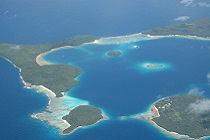 Courtesy: Jessica Taekman/Flickr
Indian Prime Minister Manmohan Singh and Japan’s Shinzo Abe are giving heft to a renewed partnership and a focus on the Indo-Pacific. Both nations must collaborate and work with South Pacific countries, especially Tonga, to counter China’s growing influence in this increasingly geopolitically important region
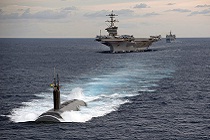 Courtesy: U.S.Navy Imagery/Flickr
An understanding between China and India not to develop a permanent presence on each other’s maritime territories may be helpful in reducing tensions between the two navies. Given the broader context of Sino-Indian strategic rivalry, however, this seems unlikely.
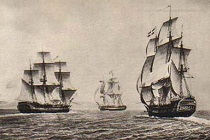 Courtesy: Furmeyer/WikimediaCommons
Maritime piracy is one of the several grave security issues faced by today’s world. This problem, however, isn’t a new phenomenon, and nations have long-battled this issue. How did piracy manifest itself in the Indian Ocean in the 19th century, and what was the nature of counter-piracy efforts during that period?