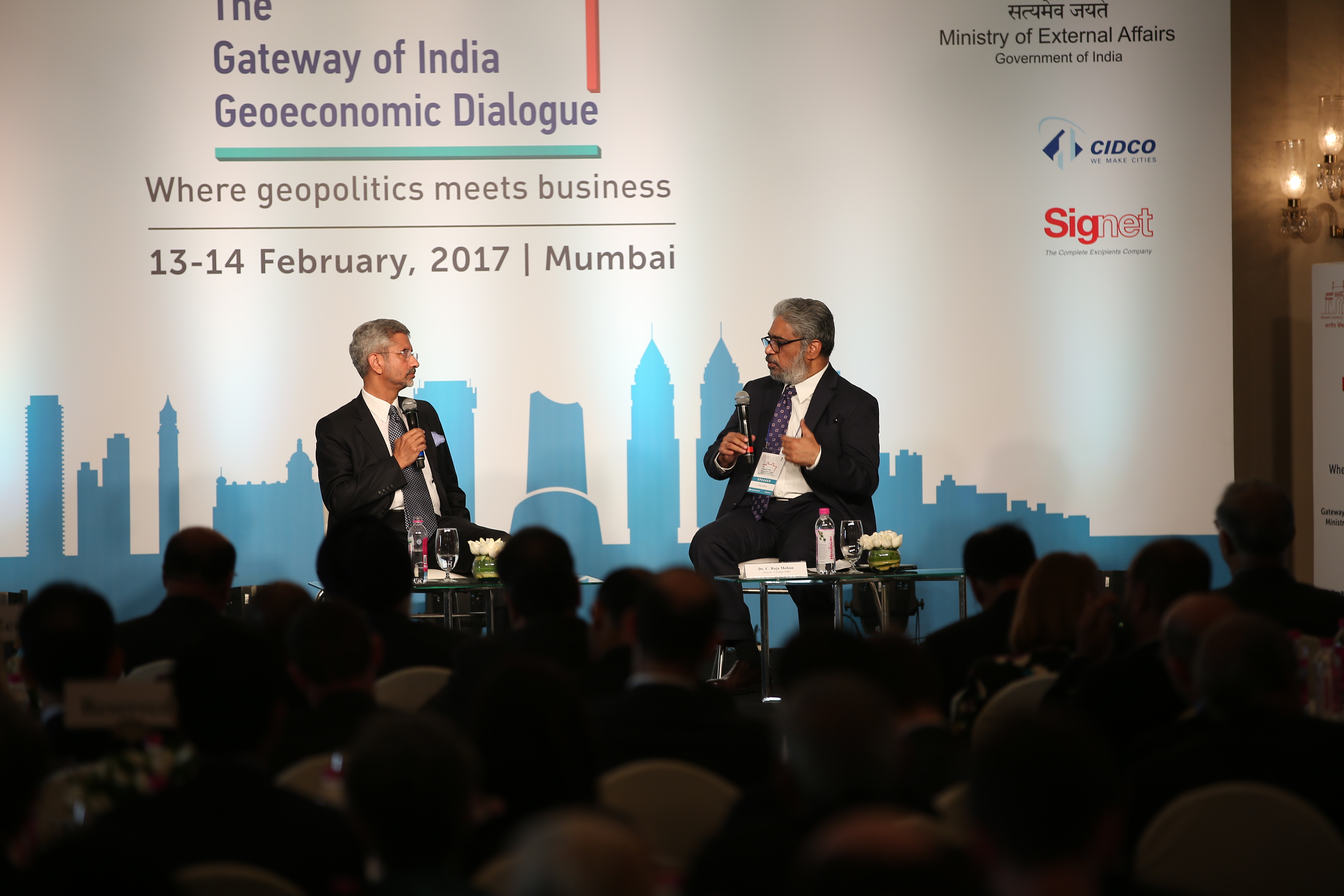
IORA photo Courtesy: Gateway House
2 March 2017

IORA summit: sharing commonalities

The two decade-old Indian Ocean Rim Association holds its first ever summit next week. Maritime safety and security in the region is a paramount concern as also enhanced trade, but will the Blue Economy be included as a priority? Another area of concern is devising modalities for cooperation with dialogue partners, such as the United States, China and Japan
28912263963_0b75893744_h Courtesy: MEA/ Flickr
14 February 2017

Indo-Pacific: a scenario of possibilities

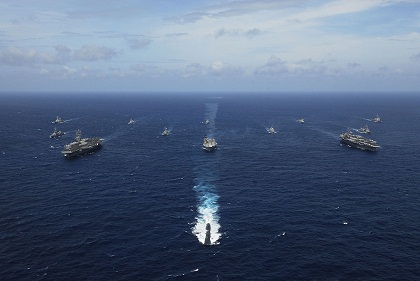
The Indo-Pacific region is home to some of the largest and most rapidly growing economies as also powerful military forces. Nuclear threats, international terrorism and climate change are some of the issues that define the region. Uncertainty dogs relations among the four nations in the top league—U.S., China, India and Japan—but what is emerging is a hawkish, policy stance from the U.S. as opposed to an isolationist outlook apprehended earlier

1200px-Malabar_07-2_exercise Courtesy: Wikipedia
14 February 2017

A democratic quadrilateral in Asia?

A strategic coming together of the U.S., Japan, Australia, and India was close to fruition some years ago, impelled initially by the tsunami of 2004. The spirit of the enterprise remains alive even now, and there are many merits in India joining the quad, but such an arrangement can skew existing Asian equations, jeopardising the Act East policy

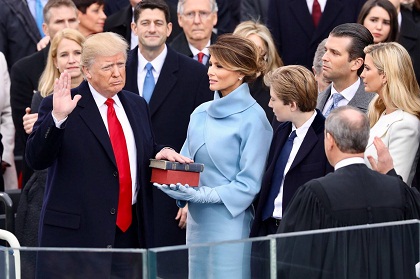
Donald_Trump_swearing_in_ceremony Courtesy: Wikipedia
9 February 2017

The West and the rest: resetting the order

There is a stark divergence between how the West views the world and how those outside it do. It is possible to oversimplify the equation, to portray the West as cynically self-interested. The West and countries like India need to reach a shared understanding of how the liberal international order can be reformed so it may be salvaged

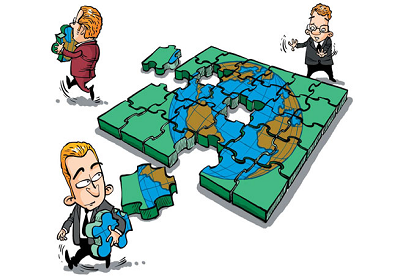
Reversal of Globalisation2 Courtesy: Systemic Alternatives
8 February 2017

Is globalisation in reverse?

The contours of globalisation are being reshaped. The Brexit vote and the election of Donald Trump mark a strong anti-globalisation sentiment even as leaders in China, India and Russia successfully marry nationalist rhetoric with a cleverly crafted overseas strategy, premised on the very tenets of globalisation. There seems to be a ‘pause’ in the unbalanced progress of globalisation of the last three decades—and this could have many positive outcomes

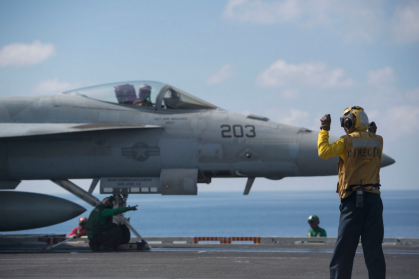
US India Navy Courtesy: Ash Carter / Flickr
16 April 2016

India-U.S.: convergence and divergence

The success of the U.S. Defense Secretary's recent visit to India is indicative of the deepening India-U.S. defence relationship. It has become clear that Indo-U.S. maritime cooperation in the Indian Ocean is steaming ahead; while other geopolitical differences, like the sale of aircraft to Pakistan, seem unlikely to disappear anytime soon.

Sagar2 Courtesy:
14 April 2016

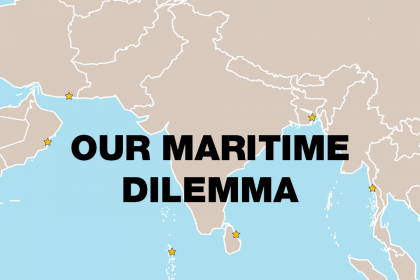
Sagarmala or SAGAR: a maritime dilemma

After decades of passivity, India is beginning to assert itself in the maritime arena. There is a whiff of salt in the usually 'sea-blind' corridors of Delhi, where the Modi government clearly sees the linkage between the possession of maritime wherewithal, both civilian and military, and the furthering of national prosperity, through ever-increasing trade.

Indian_Navy_flotilla_of_Western_Fleet_escort_INS_Vikramaditya_(R33)_and_INS_Viraat_(R22)_in_the_Arabian_Sea Courtesy: Wikipedia
7 April 2016

India’s future is sea-facing

India needs a more developed strategic focus on its eastern-western seaboards. Prime Minister Narendra Modi has taken the lead, investing considerable diplomatic capital and time in his visits to Saudi Arabia, the UAE, and island nations in the Arabian Sea. In the east, he is progressively engaging with ASEAN, Japan and Australia

SouthSouthCooperation Courtesy: Research and Information System for Developing Countries
23 March 2016

South-South Cooperation: emerging challenges

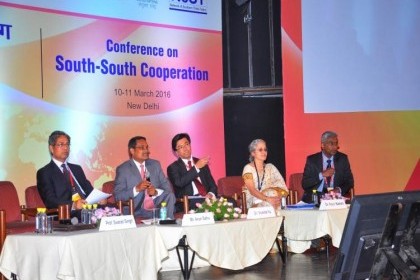
Research and Information System for Developing Countries (RIS), hosted a Conference on South-South Cooperation in New Delhi on 10-11 March, 2016. The conference, represented by about 350 delegates representing 62 countries, demonstrated both the maturity of South-South Cooperation and the creative challenges that lie ahead.