CHINA SYMPOSIUM AMB. BHATIA Courtesy: Gateway House
12 May 2022

BRICS Think Tank Symposium

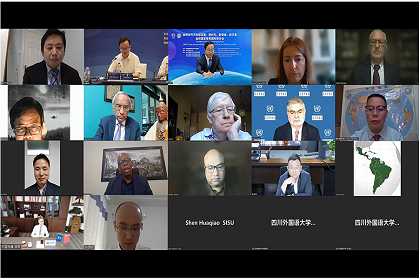
On May 6, 2022, Amb. Rajiv Bhatia presented his remarks at the BRICS Think Tank Symposium held in Chongqing, China. Ambassador Bhatia traced the Ukrainian war crisis and its linkage to the grouping, while also elucidating that the Sino-Indian stalemate on transboundary disputes, UNSC membership permanency and leadership within the global south has harmed effective resolutions in the multilateral forum.
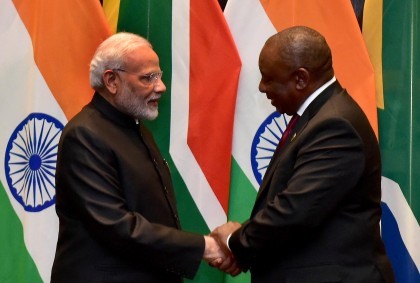
IMG-1634 Courtesy: @NarendraModi
12 May 2022

India-Africa: Changing Horizons

Africa as a zone of Sino-Indian contestation has intensified in the COVID era, where both countries extended support to the continent in diverse sectors of human security. Africa needs capacity, and building it means it will not make a choice between India and China, but it will prioritise its own needs and select separately what it needs from both countries

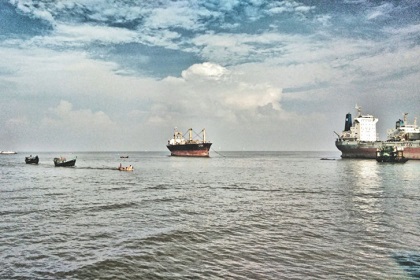
blue_economy Courtesy: Hossain Tareque-wikimedia commons
5 May 2022

A blue economy requires blue diplomacy

India has done considerable groundwork to turn into a blue economy nation through its maritime policies and active support of the Indian Ocean Rim Association. The time is right for the country to now focus on blue diplomacy, with an emphasis on maritime security and sustainable, equitable harnessing of maritime resources.

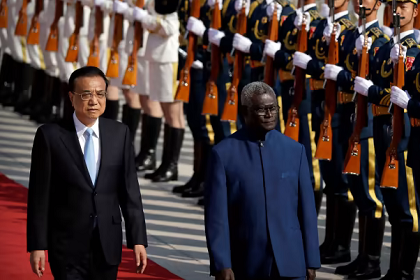
china-solomon Courtesy: Financial Times
21 April 2022

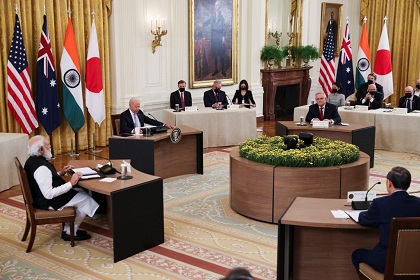
Economic and human security in the Indo-Pacific

China has established a dominant presence in the Indo-Pacific through exploitative economic engagements. This has destabilised smaller nations in the region and made them dependent on Chinese support. For a free and open Indo-Pacific, India must press its advantage in human and economic capacity building.

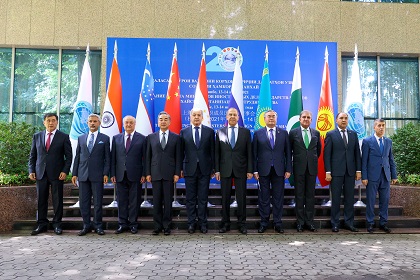
Foreign ministers and officials of the Shanghai Cooperation Organisation (SCO) pose for a group photo during a meeting in Dushanbe, Tajikistan July 14, 2021. Russian Foreign Ministry/Handout via REUTERS Courtesy: Reuters
20 April 2022

The SCO in Afghanistan

The Shanghai Cooperation Organisation has been focused on resolving the Afghan crisis. But divergent views of members and the influence of China and Pakistan have eluded a solution. This has been further impeded by the ongoing sanctions and humanitarian issues which are beyond the organisation's scope.

Untitled design (6) Courtesy: Gateway House
10 February 2022

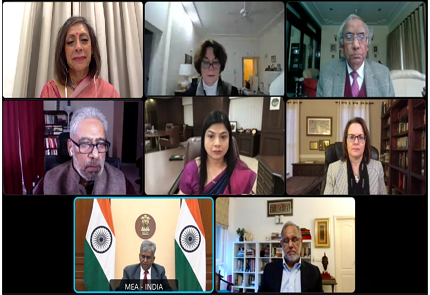
Panel Discussion on India in the Indo-Pacific

On 1 February 2022, Gateway House and the U.S. Embassy, New Delhi, co-hosted a panel discussion on India in the Indo-Pacific: Pursuing Prosperity and Security. The panelists explored the comprehensive role that India can play in the Indo-Pacific from the perspective of business, think tanks, academia and diplomacy.

today hong kong horizontal Courtesy: Macmillan
31 January 2022

Today Hong Kong, Tomorrow the World

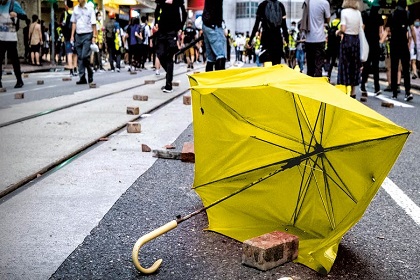
The contemporary fate of Hong Kong, which has known freedom and rule of law, offers in microcosm a glimpse of what could happen if the liberal world order is up-ended. In this book, Mark Clifford convincingly argues that what happens in Hong Kong doesn’t stay in Hong Kong, as he draws connections between the techniques used to end freedom there with China’s penetration and manipulation of open societies elsewhere.

myanmar india newsclick Courtesy: NewsClick
27 January 2022

National Security Conversation: India-Myanmar relations

Foreign Secretary Harsh Vardhan Shringla's visit to Myanmar has implications for New Delhi's recognition of the new military government in Naypyidaw. India can support ASEAN to stabilise Myanmar, while also checking Chinese influence in that country. For stability in the neighbourhood is crucial to India's own security.

B097S3RBQP.01._SCLZZZZZZZ_SX500_ Courtesy: Penguin Random House India
16 December 2021

The Long Game: How The Chinese Negotiate With India

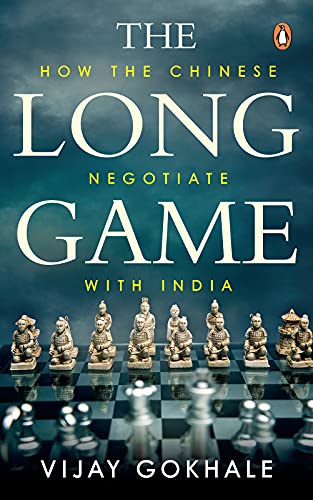
In six concise case studies, Vijay Gokhale, former Foreign Secretary of India, demystifies the Chinese style of diplomacy. The reviewer says the book makes a compelling case for how the lack of diplomatic experience of newly independent India’s leaders enabled the Chinese Communist leadership to outmatch and outmaneuver them in the early years, despite the latter playing a relatively weak hand.