26/11 Reflections
In this compendium of essays, Gateway House examines the terrorist attack carried out on Mumbai on 26 November 2008, and its aftermath.

 Courtesy: Gateway House
In this compendium of essays, Gateway House examines the terrorist attack carried out on Mumbai on 26 November 2008, and its aftermath.
 Courtesy: aloshbennett/Flickr
As events of the 26/11 attacks and similar others, retreat from the collective memory, they remain very much part of the lives of the victims and their families. How and why is it important to adopt a rights-based approach towards victims and perpetrators?
 Courtesy: Broddi SigurðarsonFlickr
Today, at the national and regional level, large loopholes still exist in the security system. On the international front, however, there have been a lot more initiatives, yet the apex body of the UN remained silent post-26/11. Were they justified in holding back?
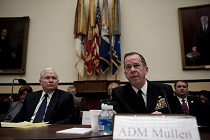 Courtesy: Chairman of the Joint Chiefs of Staff/Flickr
The 'double-dealing' of the U.S. and Pakistani army - all with the ambition of military dominance - has significantly aided various terrorist groups. After 26/11, there is no place to hide for the Mike Mullens and countless others who have been apologists for the Pakistan army and the state it controls.
 Courtesy: Kash_if/Flickr
In the aftermath of the Mumbai attacks, the Pakstani deep state role was highlighted. The U.S. has come to realise this reality too. Bilateral information sharing could prove to be vital to combat terrorism - both regionally and globally.
 Courtesy: isafmedia/Flickr
Last May, U.S. citizen David Headley confessed to being a spy for the Lashkar-e-Taiba. What no one has tackled yet is whether there are other Headleys out there whose actions threaten India, or any other country. Even with thousands of intelligence agencies scouting for terrorist activities, are we really safer?
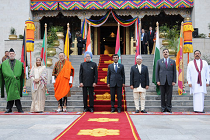 Courtesy: PMO
Creating a neighbourhood of compatible interests in South Asia isn’t easy, especially when intra-regional trade accounts for only 5% of total trade in the region. However, the region has seen considerable progress in the past year. India is well poised to lead the change, starting with the upcoming SAARC summit.
 Courtesy:
The completion of the Turkmenistan-Afghanistan-Pakistan-India (TAPI) pipeline is significant to secure a constant supply of natural gas to India. Since this pipeline passes through Afghanistan and Pakistan, both restive regions, security concerns have triggered wide debate on its viability.
 Courtesy: U.S. Navy/WikimediaCommons
In the context of security and sovereignty, India is involuntarily Pakistan-centric and Sino-deferential. India must deal with China with deference without degradation, firmness without confrontation, and raise the threshold of its defense posture in physical and policy measures, without upping the ante.
 Courtesy: PMO
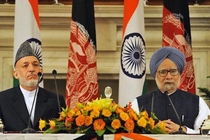
NATO’s poor strategy in Afghanistan has failed to quell the Taliban. Now, India will begin to train the Afghani military, and has proven with its light force tactics in Kashmir that it is better suited for the role than NATO forces.