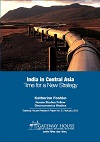
India in Central Asia: Time for a New Strategy
This paper introduces the dilemma of both India and Russia, whose state-owned energy companies are forced to operate in a region where Chinese government corporations have been dominant.

 Courtesy: Gateway House
This paper introduces the dilemma of both India and Russia, whose state-owned energy companies are forced to operate in a region where Chinese government corporations have been dominant.

Amidst myriad country groupings that already exist – BRICS, IBSA, APEC, SCO and many others – a new initiative in the Pacific is looking to integrate more powerful countries to form a multilateral free trade agreement – the Trans Pacific Partnership. How important is this towards the reshaping of trade and power?
 Courtesy: PMO
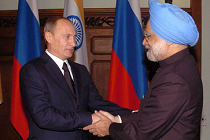
The India-Russia relationship has seen much progress over the past year - 30 MoU's were signed, two Russian nuclear reactors were set up in India and visa regimes have been eased considerably. But will this be enough to lift the relationship from the benign neglect of the past?
Gateway House’s Hari Seshasayee interviewed Nicolas Krul. A stout defender of European unity, Krul discussed the origins of the crisis, the lessons learned, possible solutions and the opportunities for the emerging world.
 Courtesy: PMO
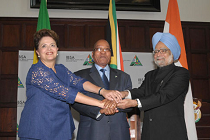
India and Brazil’s increasing engagement in Africa is a clear sign that both countries are embracing their new roles as global diplomats. By joining forces to bolster Africa’s food security, they have the chance to break ground on a tangible agenda that could have a far-reaching impact on matters of global concern
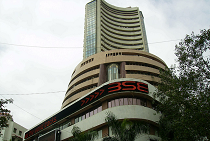 Courtesy: Niyantha/Flickr
With increasing debt and recession in the West, it seems no longer fitting for the rest of the world to follow traditional Western financial models. India’s long experience of capital markets, with its conservative and ‘inclusive’ financial regulatory system, on the other hand, makes for a compelling case study.
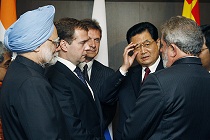 Courtesy: www.kremlin.ru/Flickr
In a reversal of historical roles, the BRICS nations may be coming to Europe’s rescue. During the Asian Financial Crisis, the International Monetary Fund (IMF) introduced structural adjustments in return for IMF loans, and many institutions and individuals went bankrupt. Will it be any different now?
India’s relations with Russia have to be set against the broader strategic landscape of India’s security issues and geopolitical priorities, especially in Central Asia and Afghanistan, where Russia is a key player. An increase in private sector initiatives can also ensure greater cooperation in the years to come.
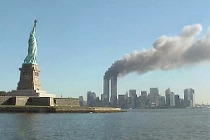 Courtesy:
A decade after 9/11, the U.S. has prevented further terrorist attacks - a major achievement. But with a $1.3 trillion budget deficit, a debt downgrade, and 24 million Americans searching for jobs, the U.S. needs to attend to matters at home rather than intervening in the world's affairs.
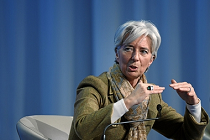 Courtesy: WorldEconomicForum/Flickr
As the new head of the IMF, Christine Lagarde’s experience in cajoling world leaders will go some way in negotiating the European bailouts. The real challenge, however, will be trying to raise funds for anything as large as Italy.