Does the WTO have a future?
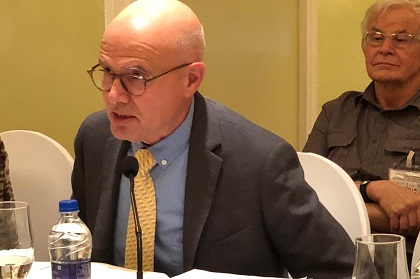
Don Stephenson, former Chief Trade Negotiator, India-Canada Comprehensive Economic Partnership Agreement, discusses how India and Canada can work together on effecting reform in the World Trade Organization

Don Stephenson, former Chief Trade Negotiator, India-Canada Comprehensive Economic Partnership Agreement, discusses how India and Canada can work together on effecting reform in the World Trade Organization
 Courtesy: MEA/Flickr
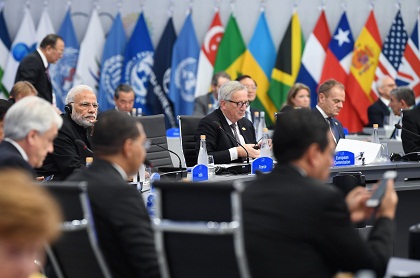
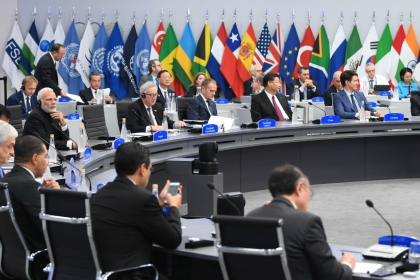
The 2019 G20 Summit in Osaka on June 28-29, is the 14th meeting of the Group of 20 leaders. The G20 is the world’s most influential economic multilateral forum. It is the agenda-setting forum that develops and guides rules of global economic governance. Under the Japanese Presidency, this summit will be the first to discuss and establish the rules for the worldwide governance of data, including current hot-button issues like data localisation and data sovereignty. India has both a preparatory and a contributory role to play in the G20 this year. For in 2022, it will be the President of the G20. India must identify its agenda early on; its a weighty responsibility but also an opportunity to set the global economic agenda.
 Courtesy:
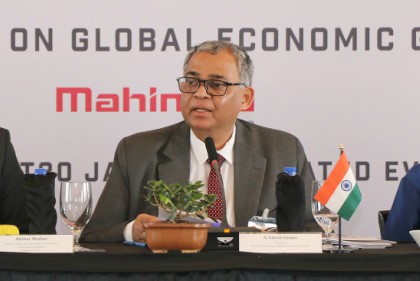
The following remarks were given by A. Gitesh Sarma, Secretary, Ministry of External Affairs, Government of India as the Keynote Speaker at the Think20 Mumbai 2019 roundtable discussion on January 28, 2019
 Courtesy: MEA Flickr
Hosting the G20 Presidency in 2022 is a welcome challenge and a fitting aspiration for India. Preparations must begin now, with an immediate upgradation of domestic intellectual, administrative and physical infrastructure
 Courtesy:
Our Director of Research, Akshay Mathur provides his views on India’s G20 presidency in 2022 in an op-ed for The Indian Express. Read the full article here.
 Courtesy: Gateway House
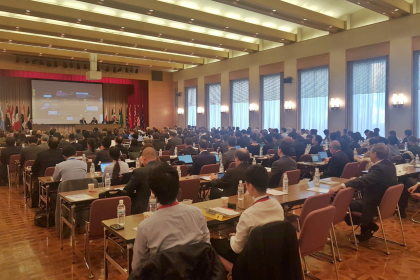
The Think20 Inception conference, held in Tokyo on December 4-5, 2018, kicked off the research process for 2019 for the leading think tanks from G20 countries that work on issues of global economic governance. The author participated in the conference as an observer.
 Courtesy: Competitive India
'Strategic OFDI’ is outward foreign direct investment made by nations in their strategic interests. China leads the way, but the U.S. has also just announced a new agency for strategic OFDI. It will now gain increasing salience in global foreign policy.
Economist Surjit S. Bhalla, who sits on the Prime Minister’s Economic Advisory Council, says all currencies, not just the rupee, have fallen against the U.S. dollar. Speaking to Gateway House’s Manjeet Kripalani, he elaborates on some diplomatic and domestic tools to stem the fall, even in an election year
 Courtesy: Global Environment Facility
Since Independence, India has been consumed by its domestic priorities. Now, with increasing integration with the world and a huge stake in global stability, it is time to focus on the global commons. India has a seat on the hightable to design and shape the rules for the governance of the global commons. In this special Independence Day Briefing, Gateway House examines India’s engagement with four global commons – technology, outer space, cyber and the oceans – and makes recommendations on how best they can be governed for our collective future.
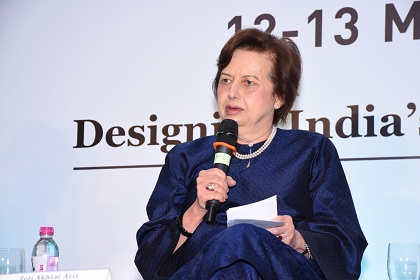
Zeti Akhar Aziz, economic advisor to newly elected Malaysian Prime Minister, Mahathir Bin Mohamad, believes that economic policy should be rooted in moral and religious ideas