Global Energy Forum Courtesy: Atlantic Council
16 January 2020

A post-Soleimani energy world

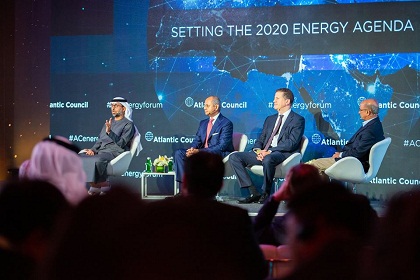
The Atlantic Council Global Energy Forum, held in Abu Dhabi on 10-12 January 2020, had the top businesses and analysts of the global energy industry. It was also part of a larger event, the annual Abu Dhabi Sustainability Week, which aims to be a global platform for sustainability in various industries
shutterstock_294753152 Courtesy: Shutterstock
9 January 2020

Conflict with Iran primes U.S. economy

Oil prices, arms exports and conflict are inter related especially when it comes to the U.S. Its arms industry grows when high prices and conflicts coincide. This has kept West Asia on a perennial geopolitical boil. This infographic charts the highs and lows of U.S. arms sales, especially in the light of conflicts centred around West Asia

shutterstock_1221395809 Courtesy: Shutterstock
19 December 2019

The mystery of Aramco’s stock price

The rise in Saudi Aramco’s stock price within two days of its IPO in November 2019, has taken the company’s market value past the $2-trillion mark. This valuation should not be taken at face value for the offering is miniscule, and closely linked to the ruler's prestige rather than stock market fundamentals

9780231179300 (1) Courtesy: Columbia University Press
24 October 2019

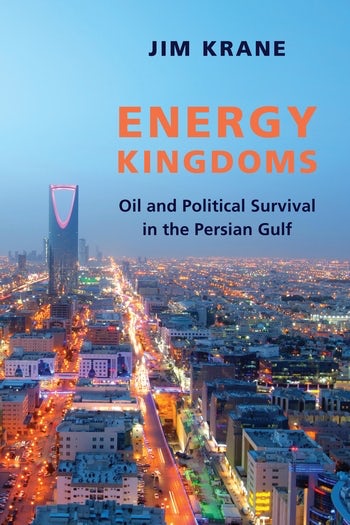
Energy Kingdoms: Oil and Political Survival in the Gulf

This book examines concisely and readably how the discovery of oil and natural gas transformed the six oil kingdoms of the Gulf, but profligate energy consumption at home challenged the basis of this very prosperity. It goes on to look at how these countries dealt with the economic crises that struck them

IMG_51561_small Courtesy: Princess Nora bint Abdul Rahman University
3 October 2019

Post-Abqaiq Saudi Arabia

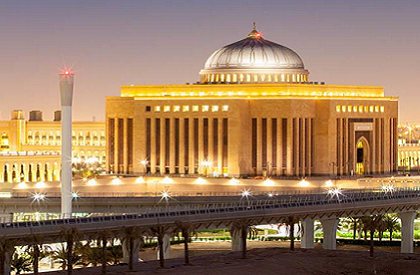
The immediate panic in the aftermath of the missile attack on Saudi Aramco’s facility at Abqaiq underlines the still-critical role of the Kingdom to the world economy. The subsequent recovery of oil production – with no disruption – showed that Saudi Arabia is a reliable partner/guarantor of energy supplies. Our Energy and Environment fellow Amit Bhandari was in Riyadh recently for a conference, and describes a post-Abqaiq Saudi Arabia

359864_3622116_akhbar Courtesy: thenews.com.pk
7 March 2019

Gwadar 2.0: Pakistan’s Saudi vs. China play

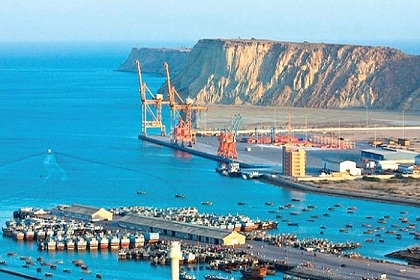
Pakistan’s aspirations for oil and gas prospecting off its Makran coast, south-western Balochistan, are diverging from those of China, which has had a nearly two-decade long presence in Gwadar as an infrastructure provider. To turn Gwadar into the petrochemical hub it desires, Pakistan has sought out other benefactors, changing geopolitical equations in the region

Bin_Salman__Reuters_ Courtesy:
9 November 2017

Saudi purge: Arab Spring 2.0?

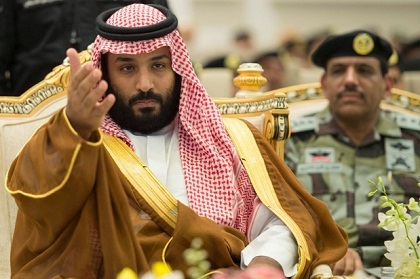
The removal of 11 top ministers in the Riyadh government last week by the young crown prince Mohammad bin Salman, is a geopolitical upheaval, the implications are serious. Domestically, the kingdom is seeking to liberalise its conservative society and move away from oil-dependency – evident from the expected listing of its crown jewel Aramco. For India, which imports oil largely from West Asia, instability could cause a spike in prices, leaving less for its ambitious reforms. Globally, there is now space for new alignments – in the Great Power plays, in the Shia-Sunni rivalry, and in the war on terrorism.

indias-global-energy-footprint Courtesy: Gateway House
14 February 2017

India’s global energy footprint

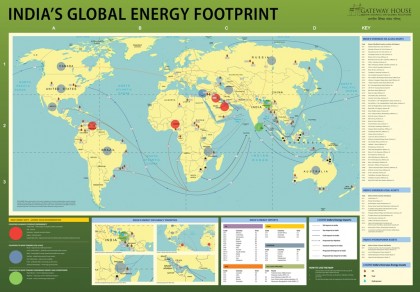
Trends in technology, geopolitics and geoeconomics have dramatically transformed the global energy scenario in the last two years. This means favourable conditions for import-dependent India, which must use the opportunities available to reduce its vulnerability to high energy prices. The jump in oil prices past the $60 mark suggests that India must act with alacrity. India’s Energy Footprint Map offers a profile of India’s global trade and investment in energy, and indicates what India can do to access cheap and reliable supplies