EVs to Hydrogen?
The embargo on rare-earth magnets by China reflects a gap in India’s critical mineral supply chain. India should reduce the need for these minerals by promoting green hydrogen.
Courtesy: shutterstock / Allahfoto
The embargo on rare-earth magnets by China reflects a gap in India’s critical mineral supply chain. India should reduce the need for these minerals by promoting green hydrogen.
Courtesy: Getty Images
The Quad Foreign Ministers’ Meeting in Washington on 1 July, 2025, underscored the importance of diversified and reliable global supply chains, especially for critical minerals. A Gateway House report shows how to strengthen supply chains for rare earths by creating deep financial markets similar to those that exist for bullion and oil.
Courtesy: Gateway House
A slowdown of the Chinese economy, and the shift, particularly by MNCs, from China to other more competitive locations has opened up business opportunities for latecomers to supply chains in the developing world. Evidence suggests that Southeast Asia and some South Asian countries like India, Sri Lanka, Bangladesh, could be beneficiaries of the supply chain shift, particularly in labour-intensive segments.
Courtesy: Gateway House
Geopolitics is increasingly intertwined with the economic destiny of South Asia. Even before the U.S. tariffs were rolled out, growing polycrises had hit the global economy, which has been struggling since the pandemic. South Asia seems a relatively bright spark of regional trade and growth. This paper analyses South Asia’s trade architecture in the backdrop of a sluggish world economy in the 2020s, and makes recommendations for closer regional economic integration.
Courtesy: Reuters
Sri Lanka is playing a balancing act as it manages its ties with India and China. It is heavily dependent on the two rival Asian giants for its economic revitalisation and future growth, but it must be strategic in its approach with both countries as it attempts to manage its foreign debt and ensure project sustainability while maintaining geopolitical neutrality.
Courtesy:
The Maritime Silk Road, the Belt and Road Initiative, and a sizeable catalogue of agreements with actors from Kabul to Tel-Aviv have been the basis for the growing presence of China spanning the military, diplomatic, economic, and political spheres in the Middle East.
Courtesy:
A decade after its launch, China’s Belt and Road Initiative has slowed down in South Asia, the result of poorly conceived projects, and irresponsible behavior from borrower and lender alike.
Courtesy: ET Insights
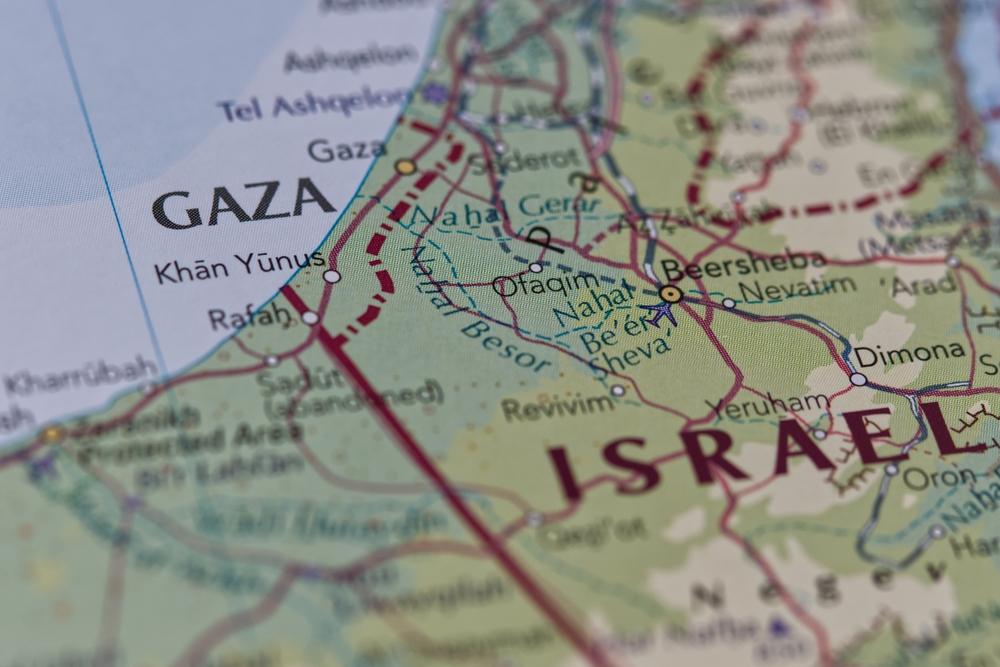
The geopoliticisation of the Israel-Hamas war has given birth to a new era of ruthlessly pragmatic and overlapping interests of multiple powers and actors. This is visible in the region of Middle Eurasia, the centre of the ongoing rearrangement of the world order.
Courtesy: Nikkei Asia
China-centric global supply chains are being disrupted by rising geopolitical tensions between the U.S. and China and multiple global shocks, forcing multinational companies to rethink are global sourcing strategies. India can leverage this moment to become a complementary manufacturing hub in Asia by reaping gains from technology transfers and creating value-adding jobs.
Courtesy: Kuwait Times
The 56th ASEAN Foreign Ministers Meeting in Jakarta reflected the grouping’s resilience amidst transformative geopolitical changes in the Indo-Pacific. Striving for unity and centrality, ASEAN tackled challenges posed by COVID-19, economic slowdown, climate change, and U.S.-China competition. However, internal differences on sensitive issues like Myanmar have tested its credibility.