Erdoğan’s Türkiye, stet
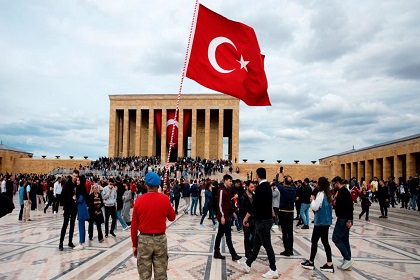
Türkiye has seen steady development under the leadership of Recep Erdoğan despite domestic and international crises and a difficult neighbourhood. It now has a solid middle class that has voted Erdoğan back as President.

 Courtesy: Hey Tripster
Türkiye has seen steady development under the leadership of Recep Erdoğan despite domestic and international crises and a difficult neighbourhood. It now has a solid middle class that has voted Erdoğan back as President.
 Courtesy: The Strategist
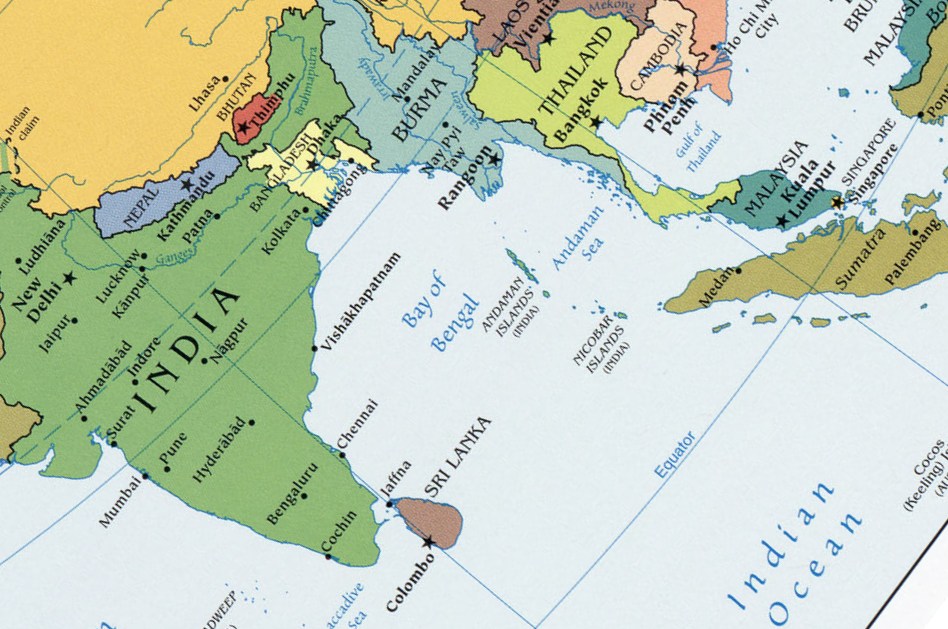
Despite its natural advantages, the Bay of Bengal region lags economically, in part due to insufficient connectivity between the member nations. Improving financial connectivity between them is the first step to easing movement of goods, services and people. Greater financial collaboration also can help the region mitigate the impact of ongoing geopolitical upheavals that have caused food and energy prices to rise.
 Courtesy: Dreamstime
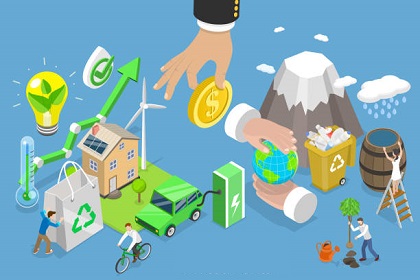
The focus on climate finance must take into account the high cost of debt, foreign exchange risk and weak public energy utilities in the developing economies. A creative and workable solution to all these issues is to establish a Global Climate Finance Agency, managed by a reputed multilateral agency with some of the capital support promised by the developed countries.
 Courtesy: Vox
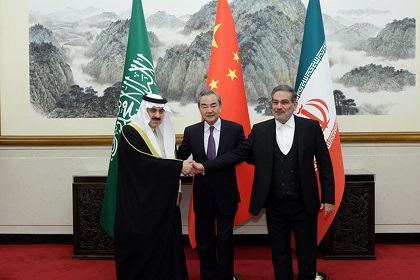
The restoration of diplomatic ties between Iran and Saudi Arabia marks the end of a seven-year marathon of indirect confrontations and impasses involving a broad spectrum of actors. It allows both to harvest economic and political benefits. Most importantly, it confirms China’s status as a significant power with influence to unlock broad and complex international agreements.
![CNBC-TV18 - Spotlight On India Hosting G20 Foreign Ministers Meeting In New Delhi Newscentre CNBC-TV18 [Su3jj5MFWkM - 853x480 - 2m05s]](https://www.gatewayhouse.in/wp-content/uploads/2023/03/CNBC-TV18-Spotlight-On-India-Hosting-G20-Foreign-Ministers-Meeting-In-New-Delhi-Newscentre-CNBC-TV18-Su3jj5MFWkM-853x480-2m05s.png) Courtesy: CNBC-TV18
Courtesy: CNBC-TV18
Gateway House’s G20 Task Force Report on Energy Transitions and Climate Finance analyses the geopolitical and geoeconomic challenges, and proposes recommendations, for green transition among the G20 countries. Task Force co-chair Nadir Godrej, Chairman and Managing Director, Godrej Industries, and Amit Bhandari, Senior Fellow, Energy, Connectivity and Investment, Gateway House discuss the report’s recommendations on climate finance, green transition, affordable access, and energy security on CNBC-TV18 with Parikshit Luthra.
 Courtesy: Getty Images
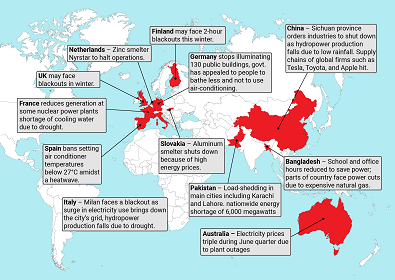
Sanctions against Russian energy, high cost fuel, heat waves and droughts all at once have raised the price of daily energy use to unprecedented levels and plunged large parts of the world into darkness.
 Courtesy: Reuters
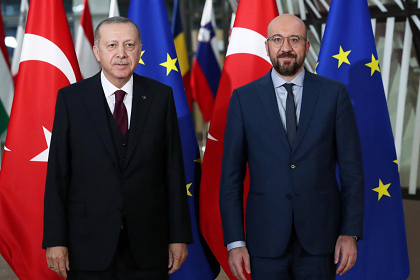
The Ukraine crisis has sent the EU scrambling for new gas supplies, generating fresh interest in gas pipelines from Central Asia and West Asia via Turkey. Practical difficulties make most of these new projects unviable.
 Courtesy: Gateway House
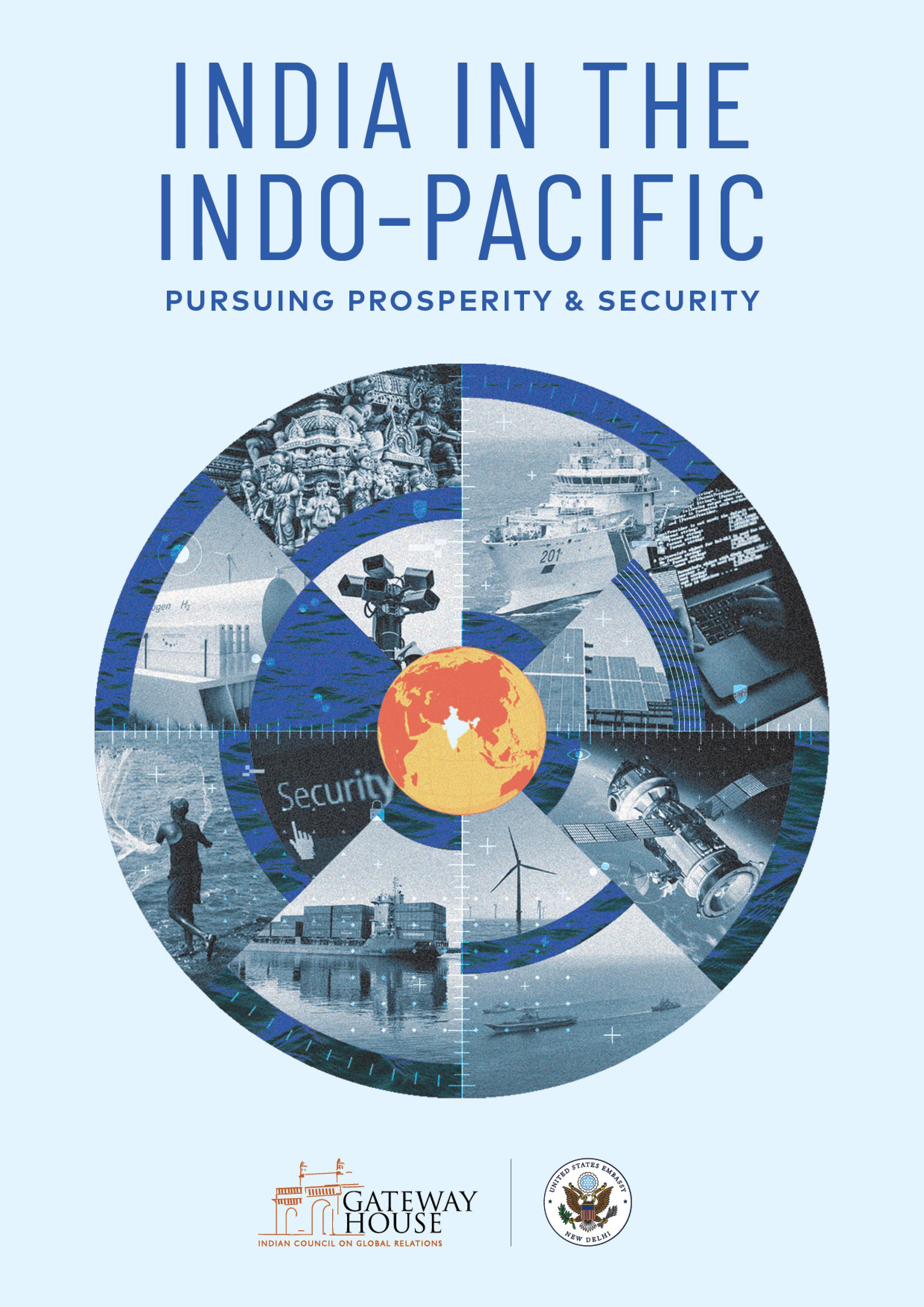
The Indo-Pacific has become an important part of global geopolitics in the recent past, with several great powers implementing concerted Indo-Pacific policies to create economic, social and security linkages with the region. India can use its development experience and futuristic technology to secure stability and prosperity. This compendium of essays explores the comprehensive role that India can play in the Indo-Pacific, from energy and environment, to trade, security, technology and a vibrant diaspora.
 Courtesy: Gateway House
India has benefited from three years of low petroleum prices. The tide is now turning, with oil moving from a benign $50 to $70 a barrel. This is a good time for it to start using financial instruments and asset purchases, as other countries do, to protect itself against further price rises
 Courtesy: Wikimedia Commons
Japanese technology giant Toshiba is sinking into a financial morass due to its near bankrupt nuclear power business, Westinghouse. India must recognise the new reality that nuclear energy is no longer financially viable