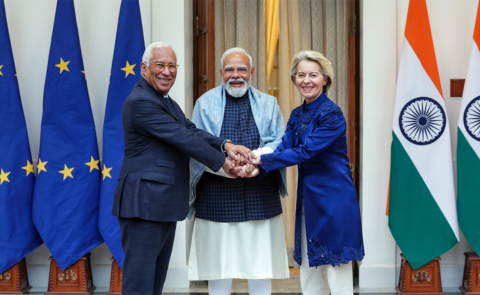
By signing the EU-India Free Trade Agreement on January 27, the ties that bind India and the European collective have been re-energised. They are now set to reach new heights, while overcoming past hesitations and divergences.
On 12 February, Bangladesh will go to the polls to choose a new leader. India should work to maintain a robust and cordial working relationship with the new regime as it did during Sheikh Hasina’s tenure. The new government in Bangladesh should prioritise eliminating anti-India sentiments before they become entrenched, to prevent security challenges for itself and the region.
The new U.S. Ambassador to India, Sergio Gor, has much to do – and reviving high school exchange programmes stalled due to funding shortages is one important task. Students are a significant element of the bilateral: 300,000 Indian students study in the U.S., but barely 1% of that comprises U.S. students in India. The exchange programmes can bridge the gap - and India can pick up some of the tab.
Cyclone Ditawah has put a serious dampener on Sri Lanka’s rosy post-budget economic outlook. Sri Lanka can help itself by using available national resources, but India can help too, by partnering with multilateral development banks to manage the post-Cyclone Ditwah reconstruction implementation strategy. It can also share its experience of implementing gradual economic reforms and policy planning under Niti Ayog to support Sri Lanka’s efforts.
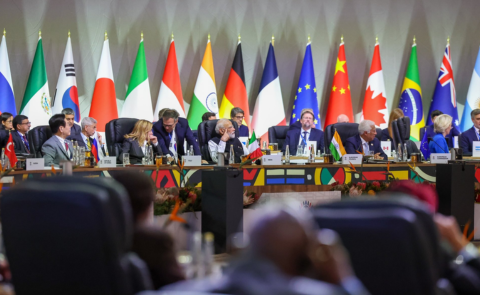
In the shifting sands of contemporary geopolitics, terms such as ‘fluid multipolarity’, ‘multiplexity’, ‘tripolarity’, and ‘bipolarity with multipolar characteristics’ are replacing the old dogmas and orders. But what is driving the world today? How does India plan to protect its vital interests in the current age of ongoing polycrisis? The road ahead is challenging, marked by risks and uncertainty.
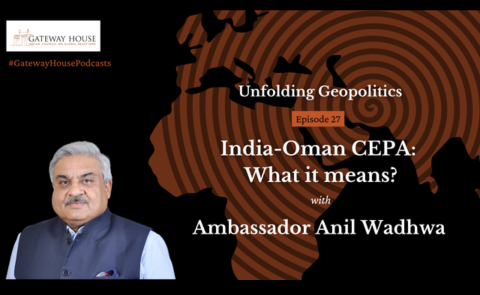
India and Oman signed the Comprehensive Economic Partnership Agreement (CEPA) on December 18, 2025. The agreement reflects India’s approach to engaging with trusted partners while rediscovering its historic trading ties. Ambassador Anil Wadhwa explains what CEPA means for India: it is less about becoming a global gateway and more about anchoring a strategic economic partnership in a geopolitically sensitive region.
On December 18, Sharif Osman Hadi, a prominent leader of the 2024 student-led uprising, was assassinated. What began as protests against civil service quotas became a leaderless uprising. As Western powers celebrated a “democratic dawn”, Bangladesh slid into structured anarchy. Dhaka now faces two futures with terrifying clarity: one with elections skewed by military advantage and Islamist mobilisation, and the other by acknowledging that democracy cannot be airlifted.
Bangladesh’s economy, already weak at the time of the August 2024 coup, has been on a downward spiral since. Banks are insolvent and cannot lend, business confidence is low, and investors are staying out. These issues will worsen the ongoing radicalisation, extremism and violence in the country.
Ethiopia's importance as an African country that has played a vital role in advancing the vision of African unity and integration, and as a nation that killed its own demons of dictatorship to emerge as a successful democracy, is remarkable. In this upgraded frame, Prime Minister Modi’s visit to Addis Ababa is significant, with India as a partner offering economic and technological engagement.
Renewable energy adoption will be much slower than what was being projected earlier, and China’s curbs on rare-earth magnets will slow down the adoption of electric vehicles. Oil will continue to fuel India’s economy in 2026 and beyond.