Website articles  (44) Courtesy: Indian Navy
26 February 2026

Indian Navy advances ambitions, enhances diplomacy

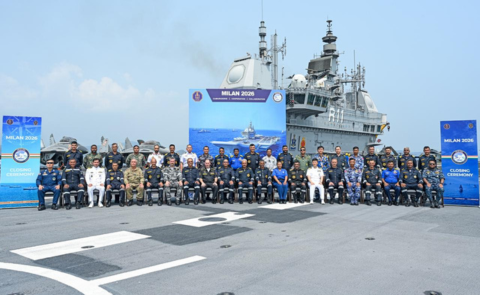
Over the last two decades, the Indian Navy has taken a quantum leap in modernising its fleet with stealth frigates, warships, submarines, and fighter planes. Its goal is to be the net security provider and first responder securing Sea Lines of Communication in the region. But it is still lagging behind its Indo-pacific naval partners and most important, its regional rival, China.

Website articles  (29) Courtesy: Somaliland Presidential Office
15 January 2026

Somaliland recognition strengthens alternative diplomacy ecosystem

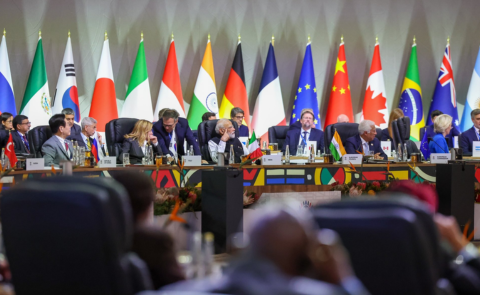
Israel’s recognition of Somaliland as an independent state in December 2025 is not merely a diplomatic gesture toward a long-marginalised polity; it is a strategic act with implications for Somalia’s territorial integrity, regional security dynamics, great-power competition, and the evolving politics of recognition in a fractured international order.

News on Air Courtesy: News on Air
8 January 2026

2026: India’s foreign policy challenges

In the shifting sands of contemporary geopolitics, terms such as ‘fluid multipolarity’, ‘multiplexity’, ‘tripolarity’, and ‘bipolarity with multipolar characteristics’ are replacing the old dogmas and orders. But what is driving the world today? How does India plan to protect its vital interests in the current age of ongoing polycrisis? The road ahead is challenging, marked by risks and uncertainty.

Gateway House Courtesy: Gateway House
3 July 2025

China Plus One and global supply chains

A slowdown of the Chinese economy, and the shift, particularly by MNCs, from China to other more competitive locations has opened up business opportunities for latecomers to supply chains in the developing world. Evidence suggests that Southeast Asia and some South Asian countries like India, Sri Lanka, Bangladesh, could be beneficiaries of the supply chain shift, particularly in labour-intensive segments.

Getty (1) Courtesy: Gateway House
15 May 2025

The New Geopolitics and South Asia’s Trade Architecture – What Next?

Geopolitics is increasingly intertwined with the economic destiny of South Asia. Even before the U.S. tariffs were rolled out, growing polycrises had hit the global economy, which has been struggling since the pandemic. South Asia seems a relatively bright spark of regional trade and growth. This paper analyses South Asia’s trade architecture in the backdrop of a sluggish world economy in the 2020s, and makes recommendations for closer regional economic integration.

CRN_Services_Portfolio_Technology_696 Courtesy: CRN India
1 June 2022

Emerging and Critical Technologies in the Indo-Pacific: Opportunities and Challenges

On 31 May 2022, Amb. Rajiv Bhatia delivered keynote address at the panel discussion on Emerging and Critical Technologies in the Indo-Pacific: Opportunities and Challenges, organised by the Kalinga Institute of Indo-Pacific Studies. Amb. Bhatia elucidates on usage of technology in modern warfare, especially the Ukrainian war, while also stressing those critical technologies in the Indo-Pacific can provide a fillip to sustainable development in the region.

Bhatia article image Courtesy: Gateway House
17 February 2022

Has global geopolitics turned multipolar?

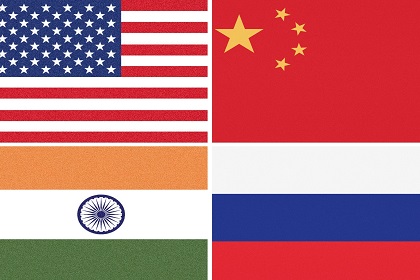
The Quad Foreign Ministers' meeting held on February 11 is the latest example of growing geopolitical cooperation. Several loci of power have emerged, indicating the end of the post-Cold War western hegemony. China's rise and alliance with Russia hints at a bipolar tendency in this nascent global multipolarity. India must ensure power distribution in Asia by sharpening its diplomacy to achieve its own interest - true multipolarity in Asia.