Website articles  (62) Courtesy: Gateway House
26 March 2026

Arctic politics: between competition and cooperation

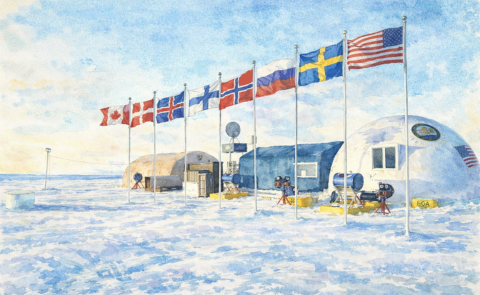
The Arctic region is at the crossroads of the dramatic environmental shifts and heightened conflict that are shaping global politics today. In the region, major geopolitical events and enduring rivalries necessitate a logic of competition, yet coordination on transboundary issues remains important. This echoes the challenges facing oceans, ecosystems and planetary problems in global governance more broadly, in which political efforts yield frustratingly incremental, yet indispensable, results.
2 (12) Courtesy: Ingram Pinn
19 February 2026

Managing multipolarity in a multilateral world

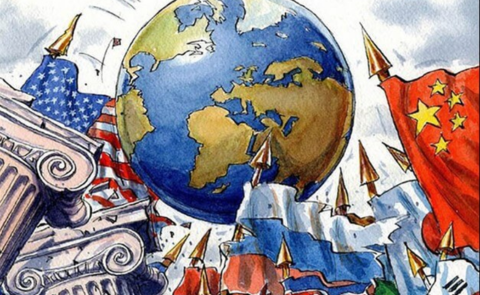
Multipolarity indicates who holds power, while multilateralism is about how states choose to cooperate. In today’s world, power is diffusing and interdependence is deepening simultaneously. A multipolar world creates fluid alignments and strategic competition, but multilateralism manages interdependence through rules and institutions. The world is becoming both, simultaneously, requiring states to manage competition, preserve cooperation, and stabilise an increasingly complex global landscape. That is easier said.

Website articles  (35) Courtesy: Getty Images
22 January 2026

Can NATO survive without Article 5?

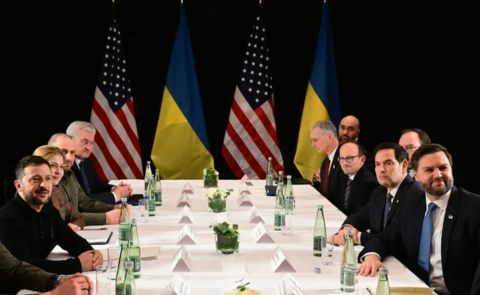
The U.S. demand for Greenland for security purposes, has alarmed Europe enough for talk of Article 5 of NATO’s collective defence agreement to be put on the discussion table. But can NATO survive without Article 5? And can Article 5 survive without the U.S. defence cover for Europe?

News on Air Courtesy: News on Air
8 January 2026

2026: India’s foreign policy challenges

In the shifting sands of contemporary geopolitics, terms such as ‘fluid multipolarity’, ‘multiplexity’, ‘tripolarity’, and ‘bipolarity with multipolar characteristics’ are replacing the old dogmas and orders. But what is driving the world today? How does India plan to protect its vital interests in the current age of ongoing polycrisis? The road ahead is challenging, marked by risks and uncertainty.

Screenshot 2025-10-13 103335 Courtesy: Körber-Stiftung
13 October 2025

Bandung at 70: Multilateralism in a New Era of Multi-Alignment

The world is facing multiple crises which are shaking the foundations of multilateralism. The West’s structures are faltering, and the need for effective and equitable cooperation is greater than ever. Seventy years after the 1955 Bandung Conference, its principles of sovereignty, territorial integrity, cooperation and solidarity remain vital. This report revisits Bandung’s relevance for today’s reform efforts, urging renewed Global South–Europe collaboration for a sustainable global future.

VOA Courtesy: VOA
2 October 2025

Time to re-burnish Global South credentials

The year 2025 is often compared to the Bandung moment of 1955, and for good reason. With the U.S. reordering traditional relationships, the opportunity for greater emphasis on the Global South is now. It is therefore time for India, Africa and ASEAN among others to re-burnish their Global South credentials and use that identity as a platform to engage each other more deeply.

GH in the G20 & T20 Courtesy: Gateway House
16 December 2022

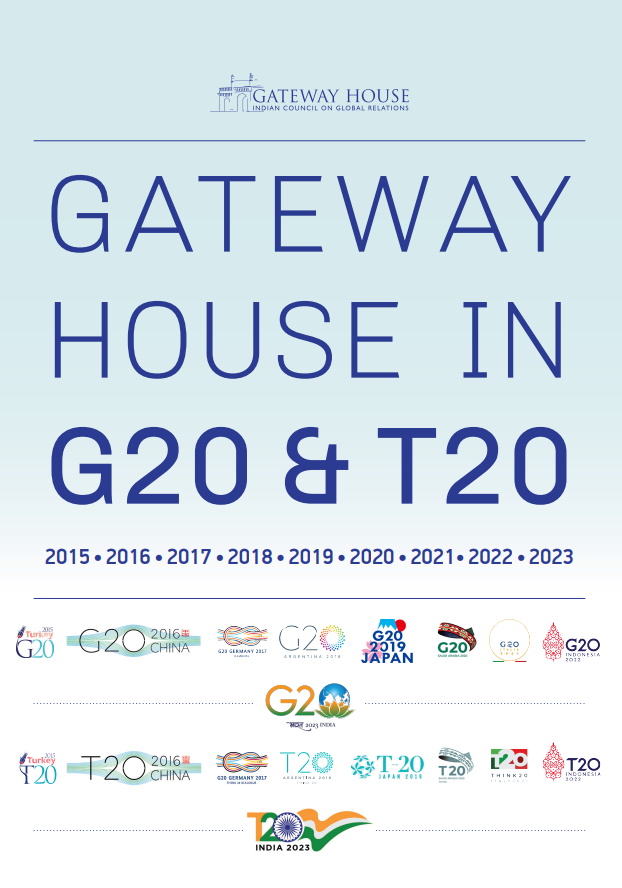
Gateway House in G20 & T20

Gateway House is the only institution in India that has hosted official and independent meetings under the annual G20 process since 2015. In October 2022, Gateway House initiated an independent G20 Task Force on Energy Transitions and Climate Finance, the first task force of India's G20 Presidency of 2023. In this compendium of reports, Gateway House assesses and includes its engagement with this influential multilateral through task forces, research and meetings of the last nine G20 Presidencies.

Modi In G20 Courtesy: Narendra Modi/Facebook
25 August 2022

Geopolitics, G20 and India’s Choices

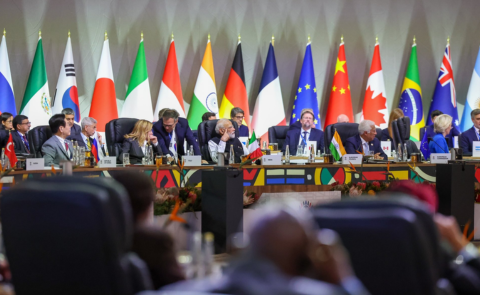
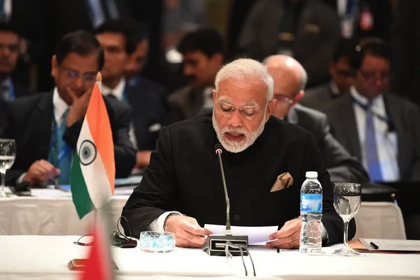
India will be president of the G20 in 2023. The world’s most influential economic governance body is facing an existential crisis, where the major powers have fallen out. With geopolitical currents redefining geo-economics, India needs to be ready to emerge as the chief global diplomat.

G7GS Courtesy: telegraphindia.com
13 July 2022

The G7 woos the global south

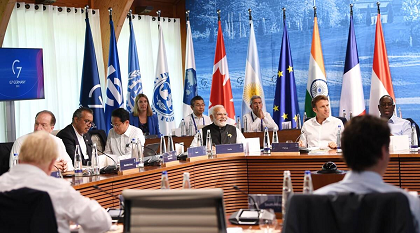
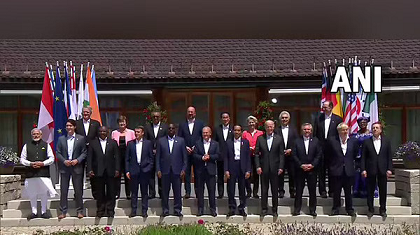
The G7 has reached out to emerging economies which have, of late, been facing challenges on the economic front, brought on by the lingering pandemic and the mismanagement of the Ukraine crisis. They are also seeking, from the global south, a broader acceptance of their world view. Will it be forthcoming?

G7s1 Courtesy: The Print
4 July 2022

What did the G7 achieve?

The shadow of the Ukrainian war was visible at the G7 summit. Anti-Russian formations were expected, but the extensive reference to China drew attention. The leaders did their part by extensively discussing challenges relating to climate, energy, environment, health, and food security. It is now for the G7 governments to deliver, to be taken seriously.