Europe - IP Courtesy: Club of Three
18 November 2021

Indo-Pacific through the European prism

The EU's Indo-Pacific strategy, released in September, set the tone for a renewed focus on the region. Europe's Asia connect is rich, strong and multi-layered, laying the foundation for an advantageous position for the EU in the Indo-Pacific. This can be achieved if the EU is more candid with itself, more assertive with China, and more cooperative with India.
bcim corridor Courtesy: Institute of Peace and Conflict Studies
9 November 2021

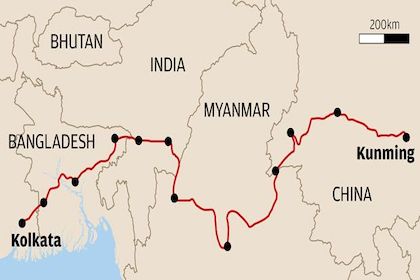
Physical connectivity in the Bay of Bengal

China is a clear winner in the physical connectivity stakes in the Bay of Bengal, and there's a reason a why: Its projects are connected to one another, from rail to road to port. While India also has some successful cross-border road and rail infrastructure projects, they are often an extension of an existing railway line or highway, not specific to the connectivity needs of the region. India can win by focussing instead on building infrastructure to maximise the vast maritime potential of the Bay of Bengal, especially the Andaman and Nicobar Islands that give India access to critical sea channels and trade routes.

G20 Rome summit, marching ahead Courtesy: G20
4 November 2021

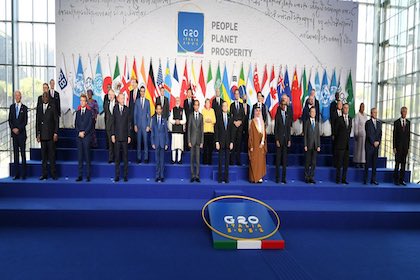
G20 Rome summit, marching ahead

The Oct 30-31 G20 Leaders’ Summit in Rome took several important steps to accelerate economic recovery and health security. In the absence of several Eurasian leaders, India played a significant role especially on climate and energy. The G20 will now acquire greater salience in India's foreign policy, as it readies to lead the grouping in 2023.

Demystifying Maritime Lawfare Courtesy: Shutterstock
2 September 2021

Demystifying Maritime Lawfare

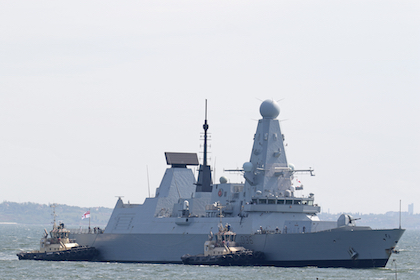
A new maritime law in China allows it to supervise all foreign vessels which appear in the country's "territorial waters" - many parts of which are internationally disputed. Nationalistic maritime actions such as China’s aggression in the South China Sea and Russia’s actions in the Black Sea, has revived international focus on maritime law. In this podcast, Dr Stefan Talmon, professor and co-director at the Institute of International Law, University of Bonn, interprets maritime law in the two hotly contested seas.

Countering China's Maritime Greyzone activities Courtesy:
22 July 2021

Countering China’s Maritime Grey Zone Activities

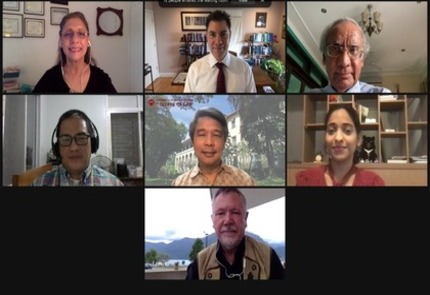
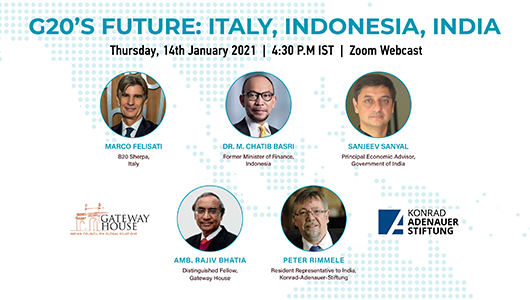
On 15 July, Gateway House co-hosted a webcast with Konrad-Adenauer-Stiftung (KAS) on 'Countering China’s Maritime Grey Zone Activities'. The panel discussed the potential strategies that smaller nations in the region can adopt to overcome the challenges of Chinese maritime grey zone activities, and the role of regional maritime powers in capability-building of maritime law enforcement agencies.

Securing India's energy needs Courtesy: Shutterstock
8 July 2021

Securing India’s energy needs

India’s oil consumption and imports are likely to resume their upward trajectory as the economy opens up, after a temporary drop due to the pandemic. To secure its energy needs, the country should shift course from investing in oil and gas assets of emerging economies to those of developed nations. The oil-rich Organisation for Economic Co-operation and Development (OECD) countries, such as Canada, Norway, and the U.S. can be given special consideration.

four dimensions of the quad Courtesy: Shutterstock
10 June 2021

Four dimensions of the Quad

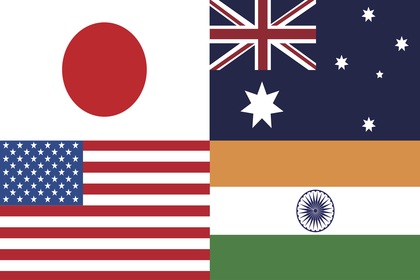
The Quad countries are preparing for an autumn summit in Washington, which will provide an opportunity to discuss multilateral cooperation in various sectors. Four dimensions which merit closer attention and are crucial to the group's future are the Indo-Pacific strategies of European countries and the EU, partnerships with ASEAN and its members, closer India-U.S. ties and maritime security issues in the Pacific.

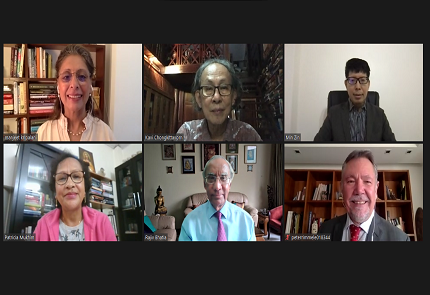
Myanmar event Courtesy: Gateway House
20 May 2021

Myanmar: Hundred days after the coup

We hosted a webcast with Konrad-Adenauer-Stiftung on, Myanmar: Hundred days after the coup on 13 May 2021 at 5:30 PM IST. This webcast discussed the conflict in Myanmar, the pulse of the protesters’ fight for democracy, the ominous presence of China as well as Russia and multilateral measures that the neighbouring countries including India can take towards restoring democratic processes in Myanmar.