PIB Courtesy: PIB
4 September 2025

What the China-India readouts mean

Chinese Foreign Minister Wang Yi’s visit to India comes after three years, and the outcomes from it throw up interesting issues. Three read-outs issued from this visit. One from the Chinese side and two from the Indian side. The diverse nature of the India and Chinese read-outs is striking. Certainly the visit yielded benefits; the test lies in the deliverables.

X  @Narendra Modi Courtesy: X / @narendramodi
4 September 2025

Modi in Japan: a larger Asia mission

Prime Minister Narendra Modi’s visit to Japan is significant for India domestically and its extended Asian influence. His visit, just prior to the SCO Summit in China, represents a shrewd endeavour at balancing the several priorities of Indian foreign policy

G20.Org Courtesy: G20.org
28 August 2025

Appraising Brazil’s G20 Presidency

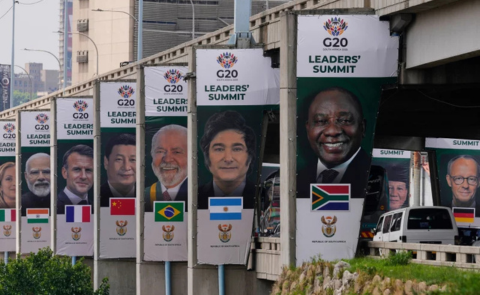
The G20’s current cycle is unique, with four Global South nations presiding consecutively: Indonesia, India, Brazil, and now South Africa. Brazil’s 2023-24 presidency exhibited both achievements and struggles, prioritising social inclusion, hunger, energy transition, and governance reform. The handover to South Africa marks a significant milestone in G20 history. Will the momentum be followed by the U.S., the next G20 president but also a G20 sceptic?

Website articles Courtesy: Gateway House
4 August 2025

Unfolding Geopolitics Episode 21 | Analysing the Thai-Cambodia border conflict

A decades-old dispute has escalated into a conflict along the Thai-Cambodia border. It centres around the archaeological sites of Hindu temples, and are emblematic of a deeper and layered contestation rooted in three key issues: French colonial cartography, political use of history and heritage, and interests of Thai and Cambodian military and political elite. Dr. Thanachate Wisaijorn, Head of Government, Faculty of Political Science at Ubon Ratchathani University in Thailand is an expert on the borderlands of the Thai region, with Cambodia, Thailand and Laos. He has been closely watching the unfolding issues on the Thai-Cambodia border. He speaks to Manjeet Kripalani of Gateway House, about the history of the conflict, its current status and its potential resolution.

indo pacific  (2) Courtesy: Getty Images
24 July 2025

India’s footprint in the Indo-Pacific region

India is strategically expanding its influence across the Indo-Pacific region, positioning itself as a key player in regional affairs. Three elements anchor the effort: development aid, trade and the diaspora. The country now has 20 Free Trade Agreement partners in the Indo-Pacific. The 21.8 million-strong Indian diaspora across the region is a significant source of soft power for India.

trump - japan Courtesy: Kent Nishimura/Reuters
24 July 2025

The Trump effect in Japan

The political setback by the ruling coalition in Japan in the July 20 Upper House elections reflects growing frustration with the mainstream political parties. Young people frustrated with high costs have resulted in a fragmentation of Japan’s political landscape, and the rise of the right. The “Trump effect” has found fertile ground in Japan’s political soil.

Website articles  (22) Courtesy: Getty Images
3 July 2025

Diversifying supply chains for critical minerals

The Quad Foreign Ministers’ Meeting in Washington on 1 July, 2025, underscored the importance of diversified and reliable global supply chains, especially for critical minerals. A Gateway House report shows how to strengthen supply chains for rare earths by creating deep financial markets similar to those that exist for bullion and oil.

Gateway House Courtesy: Gateway House
3 July 2025

China Plus One and global supply chains

A slowdown of the Chinese economy, and the shift, particularly by MNCs, from China to other more competitive locations has opened up business opportunities for latecomers to supply chains in the developing world. Evidence suggests that Southeast Asia and some South Asian countries like India, Sri Lanka, Bangladesh, could be beneficiaries of the supply chain shift, particularly in labour-intensive segments.

Getty (1) Courtesy: Gateway House
15 May 2025

The New Geopolitics and South Asia’s Trade Architecture – What Next?

Geopolitics is increasingly intertwined with the economic destiny of South Asia. Even before the U.S. tariffs were rolled out, growing polycrises had hit the global economy, which has been struggling since the pandemic. South Asia seems a relatively bright spark of regional trade and growth. This paper analyses South Asia’s trade architecture in the backdrop of a sluggish world economy in the 2020s, and makes recommendations for closer regional economic integration.

Website articles  (12) Courtesy: Gateway House
15 May 2025

U.S., global emperor of sanctions

Over two centuries, the U.S. has amassed vast economic powers across the globe during and after the two World Wars , and sanctions slowly became an effective tool it used to achieve its foreign policy goals, becoming the global emperor of sanctions.