TDB_car_151021 Courtesy: TDB
24 February 2022

Enhancing Regional Financial Intermediation in the Indo-Pacific

Financial intermediaries are critical lubricants for business, growth and development. The Indo-Pacific countries are industrializing, but smaller nations lag behind economically. The Quad countries can aid the advancement of the financial architecture in the Indo-Pacific by helping to develop an ecosystem, modelled on the examples of Japan and India.

india central asia Courtesy: ANI
25 January 2022

Quantum leap forward with Central Asia

India hosted a summit with five Central Asian states on January 27, marking 30 years of diplomatic relations with the region, and an important step forward to pursue greater connectivity between India and Central Asia. New Delhi's engagement holds promise for ambitious bilateral agendas including security in Afghanistan, the revival of dormant projects, and potential collaboration in renewable energy, space and information technology.

Afg_Province_Poppy_cultivation hp Courtesy: UNODC
19 January 2022

Funding the insurgency: The Taliban in Afghanistan

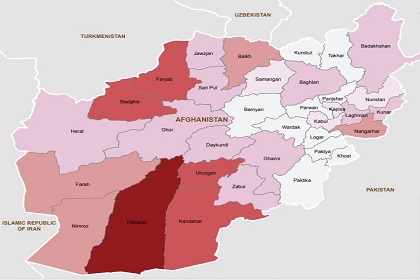
The Taliban's resurgence since 2001 has been largely funded by the creation of an opium economy and extortion. Now, with the withdrawal of U.S. troops, legitimate aid from Afghanistan and the freezing of Afghan funds abroad, the Taliban will revive its informal sources of finance to stay afloat. A look at the financing that brought the Taliban back to Kabul.

The China-Pakistan-Taliban-Iran nexus Courtesy: Xinhua
11 November 2021

The China-Pakistan-Taliban-Iran nexus

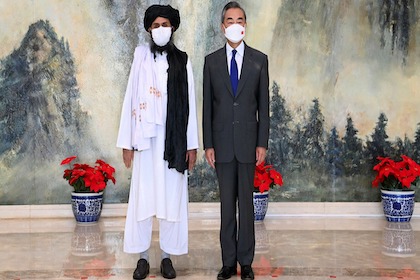
China has followed Sun Tzu’s strategy of focussing on alliances - building its own and weakening those of its adversaries. Beijing’s carefully nurtured formations in West and Central Asia are part of this global power projection, especially with Pakistan, Iran and now, the Taliban, through projects like the Belt and Road Initiative. India must recalibrate its China policy and push for concerted regional responses to emerge as a balancing force against it.

afghanistan airport Courtesy: Haroon Sabawoon
13 August 2021

Afghanistan: Limited options for regional powers

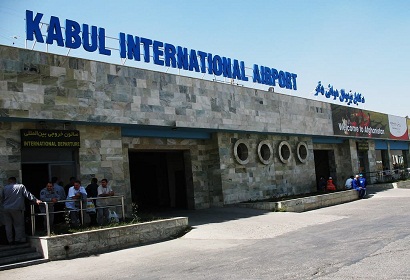
The Taliban’s rapid advance towards Kabul shows clear signs of learning from previous failures. The chances of a revival of the old Northern Alliance are minimal. Regional powers are left with the option of maintaining diplomatic contact with the Taliban whilst not taking any assurances on trust.

2019-06-14T000000Z_1951021920_RC-2 Courtesy: SCO, Russia (2020)
22 July 2021

China’s quad?

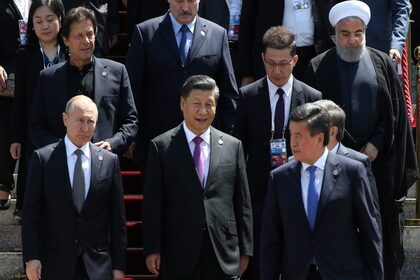
A potential anti-Quad formation of China, Russia, Iran and Pakistan is in the making, and can pose risks to the Quadrilateral Security Dialogue. However, a close analysis of China's bilateral relationship with each country shows that this is a flawed grouping, formed on limited common interests and rivalries.

sanctions and counter-sanctions Courtesy: Shutterstock
15 July 2021

Sanctions and counter-sanctions

For years, Western countries have used sanctions as a means of economic warfare against their adversaries. Now, China and Russia are utilising the same tactic against the West. The United Nations Security Council is paralysed by differences between the five permanent members, leaving the tools of unilateral sanctions and counter-sanctions to proliferate at the cost of UN-approved multilateral sanctions.

istanbul summit: last chance for afghanistan Courtesy:
26 April 2021

Istanbul Summit: Last chance for Afghanistan

The Taliban should have been reintegrated into Afghan society several years ago. It is now probably too late to persuade them to accept anything less than a dominant role in Kabul. However, Turkey, Pakistan and the United States may have one last chance to pressure the antagonists into a negotiated settlement, perhaps along the following lines.

international criminal court: jurisdiction over non-members Courtesy: Shutterstock
8 April 2021

The ICC’s jurisdiction conundrum

On 3 March 2021, the Office of the Prosecutor at the International Criminal Court (ICC) at the Hague, commenced an official investigation into Israel and Palestinian Armed Groups' alleged war crimes committed in the occupied territories of Palestine since July 2014. Palestine, which referred the case, is a member of the ICC, but Israel is not. Does the ICC have any jurisdiction in these cases? Will US support for Israel play a role? The three instances in the table show precedents in similar matters.