The Irony of American Strategy
A decade ago, the U.S. immersed itself in the greater Middle East with its wars on Afghanistan and Iraq. Will the current economic scenario force it to turn away from this region?

 Courtesy: Foreign Affairs
A decade ago, the U.S. immersed itself in the greater Middle East with its wars on Afghanistan and Iraq. Will the current economic scenario force it to turn away from this region?
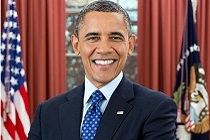 Courtesy: Pete Souza/The White House
The announcement of the Pacific pivot by the U.S. in 2001 has led to several nations making bold political moves. However, the U.S. isn’t yet ready to be a regional protector against China. What does Washington have to do to prepare itself for the Pivot?
 Courtesy:
Overall, the U.S.-Pakistan alliance hasn't been pleasant. Despite their growing mutual distrust for each other, which has become evident in the past few years, the alliance still continues. Is it worth all the troubles it comes with?
 Courtesy: Matanya/WikimediaCommons
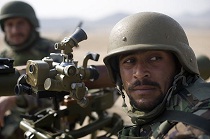
Since 2002, a large amount of U.S. funds flowing into Afghanistan has been diverted to the Taliban by local strongmen, resulting in a continued presence of the militia. The challenge post-2014 will be to reverse the West’s top-down strategy, creating a grassroots-driven incentive for peace and development.
 Courtesy: U.S. Department of Defense
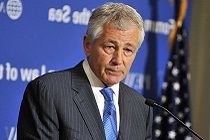
The nomination of Chuck Hagel for the post of the U.S. Defense Secretary has garnered severe criticism from Israel and the Jewish lobby. Given the geopolitical changes unfolding in the Middle East and the rest of Asia, what will Hagel’s assumption of office mean for Israel, India and the rest of the world?
 Courtesy: Officer/WikimediaCommons
U.S. Senator John Kerry will officially take office as the Secretary of State, later this month, replacing Hillary Clinton. Given his background of foreign policy, and his proven competency in related matters, what can India and South Asia look forward to, during his term in his new office?
 Courtesy: Shwkyn231/Flickr
The year 2012 has been a busy one for foreign policy: from escalating disputes in the South China Sea to alternate financial instruments from the emerging world. India’s foreign policy too has its shown strengths and weaknesses. We present our top foreign policy Hotspots, Sweet spots and Blind spots for 2012.
 Courtesy: U.S. Navy
U.S. President Barack Obama will certainly have the benefit of continuity in his second term, but he has a range of impending crises to address immediately - be it to avert the so-called fiscal cliff before the end of the year when automatic cuts kick in or plan for the military drawdown from Afghanistan.
 Courtesy: Isafmedia/Flickr
As the NATO troops prepare to pull out of Afghanistan in 2014, India is already positioned to take on a larger, pro-active role, which can radically alter the balance of power in South Asia. However, what will determine the future of security in the region, is how India and Afghanistan deal with Pakistan.
 Courtesy: VOA/WikimediaCommons
In a recent speech, U.S. Presidential candidate Mitt Romney criticised incumbent President Barack Obama's foreign policies, and called for U.S. supremacy. However, it seems apparent that Romney wouldn’t usher in a foreign policy revolution if elected.