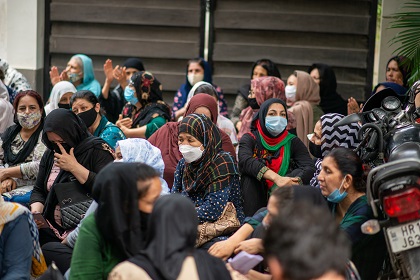
New,Delhi,,India-aug,24,2021:,Group,Of,Afghan,Women,Sitting Courtesy: Shutterstock
27 January 2022

Developing a balanced Indian refugee policy

India has seen a recent influx of refugees from Afghanistan and Myanmar. This has highlighted the absence of a concrete refugee policy in India. India must formalise its approach towards refugees. The Citizen Amendment Act of 2019, is a start. India can move this forward by learning from the examples of other democracies like the U.S., Kenya and South Korea, on how to balance international law with its national security interests.
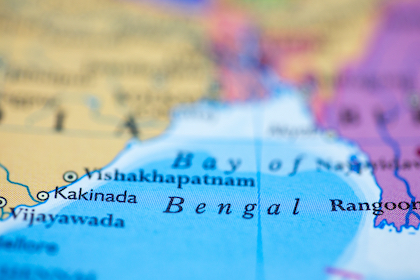
The Bay of Bengal: The next battle Courtesy: Shutterstock
28 October 2021

Bay of Bengal: Building tech connectivity

The Bay of Bengal is a natural bridge between South and South-East Asia, which New Delhi seeks to optimise. But progress on India's Act East policy has been slow, creating a space for China's Belt and Road Initiative to step into. While India cannot match China’s cheque-book diplomacy, it can use its start-up industry to pursue a combination of physical, technological and financial projects to improve regional connectivity.

Quad amidst a geopolitical flux Courtesy: Twitter | @narendramodi
23 September 2021

Quad amidst a geopolitical flux

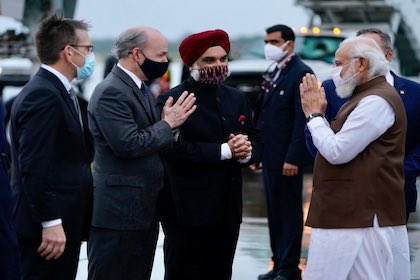
On September 24, the Quad leaders will attend the first in-person summit of the grouping in Washington DC. There is much to discuss for the four leaders, given recent developments: the Taliban takeover of Afghanistan, the Australia-UK-US (AUKUS) security partnership and the EU's new Indo-Pacific strategy. The Quad also needs to focus on long term goals like institutionalising itself and devising a strategy to counter the China challenge.

20 years after 9/11, has the U.S. learnt from its mistakes? Courtesy: The New York Times
16 September 2021

U.S. 2001-21: Of Friends and Foes

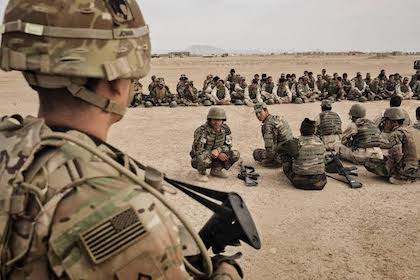
After 9/11, the threats to America are right where they were 20 years ago: still in Afghanistan, and now backed by the strength of a state. What happened to America, that “shining city on a hill” that beckoned brightness to its shores and won allies? Some self-delusion, a belief that it was still the global monarch after World War II and the inability to distinguish between friends and foes.

afghanistan airport Courtesy: Haroon Sabawoon
13 August 2021

Afghanistan: Limited options for regional powers

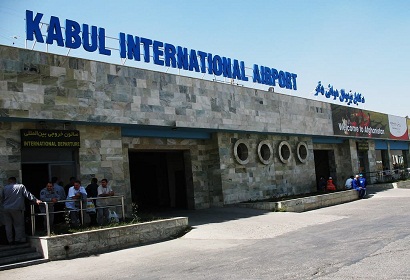
The Taliban’s rapid advance towards Kabul shows clear signs of learning from previous failures. The chances of a revival of the old Northern Alliance are minimal. Regional powers are left with the option of maintaining diplomatic contact with the Taliban whilst not taking any assurances on trust.

2019-06-14T000000Z_1951021920_RC-2 Courtesy: SCO, Russia (2020)
22 July 2021

China’s quad?

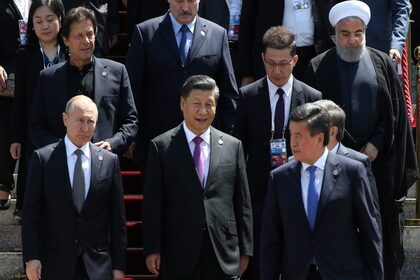
A potential anti-Quad formation of China, Russia, Iran and Pakistan is in the making, and can pose risks to the Quadrilateral Security Dialogue. However, a close analysis of China's bilateral relationship with each country shows that this is a flawed grouping, formed on limited common interests and rivalries.

sanctions and counter-sanctions Courtesy: Shutterstock
15 July 2021

Sanctions and counter-sanctions

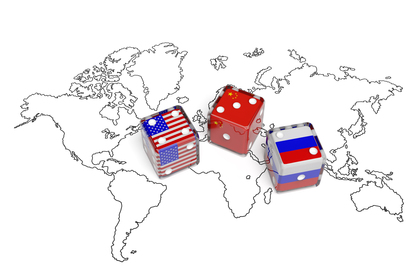
For years, Western countries have used sanctions as a means of economic warfare against their adversaries. Now, China and Russia are utilising the same tactic against the West. The United Nations Security Council is paralysed by differences between the five permanent members, leaving the tools of unilateral sanctions and counter-sanctions to proliferate at the cost of UN-approved multilateral sanctions.

Source: Shutterstock Courtesy: Shutterstock
3 June 2021

The Quad hits its stride

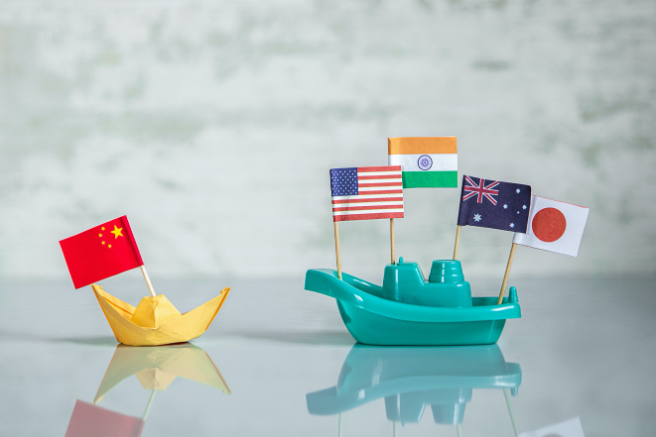
As China’s global competitive edge is sharpening across the military, economic, diplomatic, and technological domains, it is clear that the extent to which the Quad countries (Australia, India, Japan, and the United States) can collaborate across all four domains will be an important factor in determining whether China’s hegemonic designs on the Indo-Pacific will succeed.