India’s options post-Uri
In the aftermath of the terrorist attack on the Indian Army brigade headquarters in the town of Uri, Jammu and Kashmir, Gateway House has compiled potential policy options for India.

 Courtesy: Gateway House
In the aftermath of the terrorist attack on the Indian Army brigade headquarters in the town of Uri, Jammu and Kashmir, Gateway House has compiled potential policy options for India.
 Courtesy: The Wire
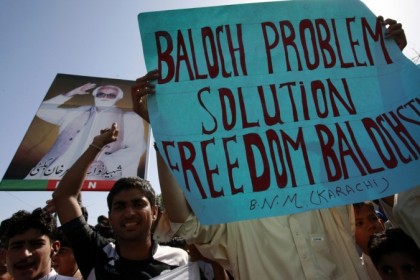
Prime Minister Modi’s reference to Balochistan in his Independence Day speech, which coincided with the Kashmir unrest, sparked speculations of this being smartly retaliatory. But the province’s geo-strategic complexities mean that New Delhi will have to play the ‘human rights’ card carefully.
 Courtesy: A Salute to the Sword Arm
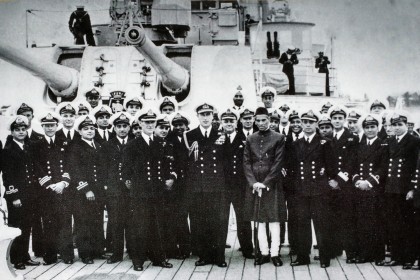
15 August 1947 saw the division of more than a country. There were other spoils that were split: the Royal Indian Navy was one of them. This included not just a division of assets, but also of staff, whom the British Royal Navy had trained. This led to a piquant situation
 Courtesy: Indian Express
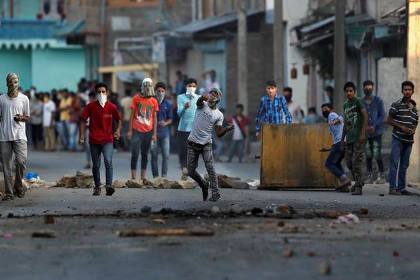
The recent unrest in Kashmir has once again vilified the Indian Army, be it the accusation of murder, or the imposition of the Armed Forces Special Powers Act, all of it seems to be the fault of the Army. It's time for a reality check.
 Courtesy: Sameer Patil
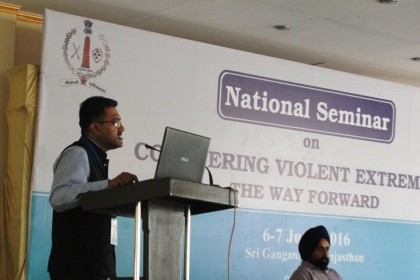
A recent seminar on ‘Countering Violent Extremism’ (CVE) offered a platform for law enforcement agencies to understand technological, social media and other propaganda strategies used by cross-border terrorist groups. The seminar’s location in Sri Ganganagar, the northern-most town of Rajasthan, served as a gentle reminder of challenges specific to security agencies on the India-Pakistan border.
 Courtesy: Gateway House
Kiren Rijiju, Minister of State for Home Affairs, delivered the keynote speech during the Evening Dialogue on Cybersecurity and Terrorism at the Gateway of India Dialogue held in Mumbai last June, organised in cooperation with the Ministry of External Affairs. The speech outlined the relationship between cybersecurity and terrorism, counter-measures already put in place by the Indian Government, and areas for improvement and progress in the future.
 Courtesy: Wikipedia
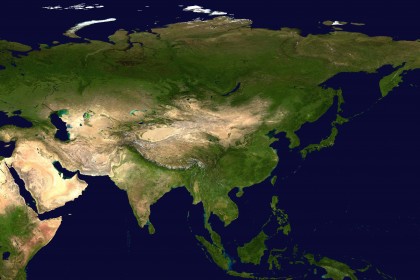
Prime Minister Modi’s term has been marked by a resolve to improve cooperation among South Asian nations. These proactive efforts can bear rich fruit if the Modi government promotes the concept of geoeconomic and geopolitical equations being seen through the lens of bioregions. There are significant precedents which the Modi government can build upon
 Courtesy: Wikipedia
Does India plan to remodel its Andaman & Nicobar Islands as a launching pad for future security operations to check growing Chinese inroads in the Indian Ocean Region? Development of the islands has long been ignored to India’s detriment, and their strategic position in the Indian Ocean, underutilised.
 Courtesy: Ash Carter / Flickr
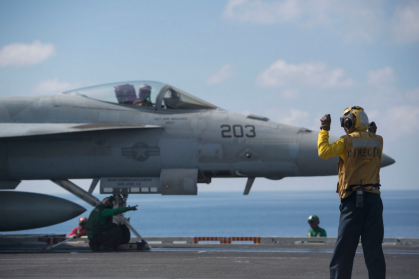
The success of the U.S. Defense Secretary's recent visit to India is indicative of the deepening India-U.S. defence relationship. It has become clear that Indo-U.S. maritime cooperation in the Indian Ocean is steaming ahead; while other geopolitical differences, like the sale of aircraft to Pakistan, seem unlikely to disappear anytime soon.
 Courtesy: MEA / Flickr
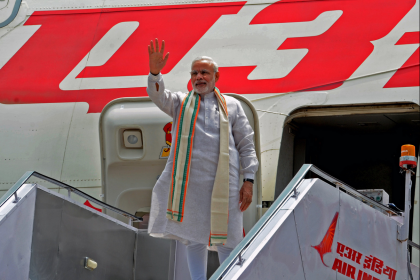
The talking points for Prime Minister Modi's upcoming visit to Saudi Arabia will include the obvious: oil, diaspora and economic engagement. What remains to be seen is how both countries differing relations with Iran and Pakistan might affect the dialogue.