28912263963_0b75893744_h Courtesy: MEA/ Flickr
14 February 2017

Indo-Pacific: a scenario of possibilities

The Indo-Pacific region is home to some of the largest and most rapidly growing economies as also powerful military forces. Nuclear threats, international terrorism and climate change are some of the issues that define the region. Uncertainty dogs relations among the four nations in the top league—U.S., China, India and Japan—but what is emerging is a hawkish, policy stance from the U.S. as opposed to an isolationist outlook apprehended earlier

1200px-Malabar_07-2_exercise Courtesy: Wikipedia
14 February 2017

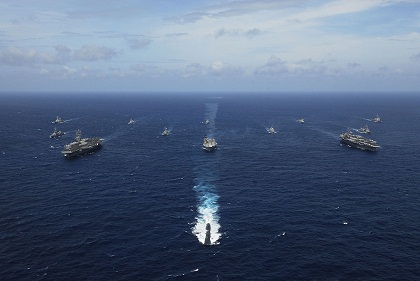
A democratic quadrilateral in Asia?

A strategic coming together of the U.S., Japan, Australia, and India was close to fruition some years ago, impelled initially by the tsunami of 2004. The spirit of the enterprise remains alive even now, and there are many merits in India joining the quad, but such an arrangement can skew existing Asian equations, jeopardising the Act East policy

3W7A0670 Courtesy: Gateway House
14 February 2017

Reversal of brain-drain and the importance of Innovations Clusters

Clas Neumann in his interview envisions the new type of globalisation that the digital economy has created. The increase in distribution of work and revolution of global supply chains. He discusses the winners and losers of the changes in the H1B visa systems, specifically the brain drain reversal, and the alterations the Indian business model needs to make to adjust to these changes. He further emphasises on the idea that for technology companies to foster and develop, their closeness to "innovation clusters" is most important. And describes the role of governments in enabling the cultivating of digital spaces and digital cities.

uae prince india Courtesy: MEA/Flickr
25 January 2017

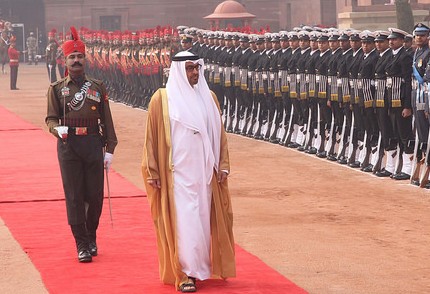
India-UAE: time to foster mutual interests

The West Asian monarchies are being forced to ‘look East’ due to a range of factors: the rise of the Islamic State, their need to boost falling oil revenues and doubts about the United States continuing to remain a guarantor of regional stability. Quite coterminously, India is looking towards the Gulf for energy security besides fulfilling other geostrategic goals: this is an ‘East’ and ‘West’ where the ‘twain will meet

Shinzō_Abe_and_Donald_Trump_(1) Courtesy: Wikipedia
16 January 2017

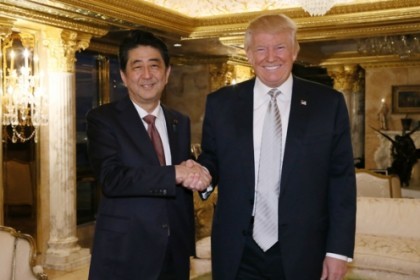
A more robust Asia policy expected?

Trump’s cabinet has a preponderance of China hardliners, which has wider implications for the Asia Pacific region while some of its members view Narendra Modi as Reaganesque and a man of the times

28909667344_cad7ec10cc_k Courtesy: MEA/flickr
4 January 2017

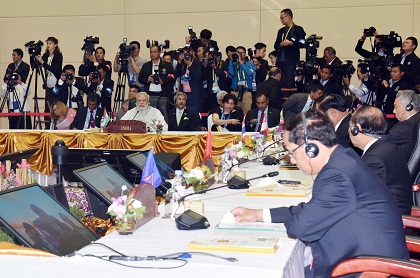
Acting East: what does 2017 hold in store?

The year 2017 may change some equations in the East Asian region. Will the near parity that the U.S. and China currently share turn into a keener contest? Will strained relations between India and China persist? Donald Trump’s election as the next U.S. president casts the spotlight squarely on these inter-state relationships

IMG_9941 Courtesy: The Economist
6 December 2016

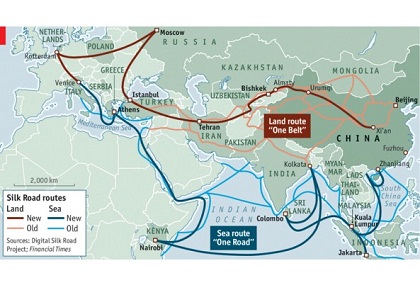
Geoeconomic dilemma in realigning Asia

India may be less dependent on the Chinese market than some other countries in the region, but it too wants Chinese investment—and this ambivalence has been evident in India’s varying approach to the AIIB and OBOR. To balance this dilemma in an increasingly complex Asia, India must work with others, in particular with European countries

China-SriLanka-Title Card Courtesy: Gateway House
1 December 2016

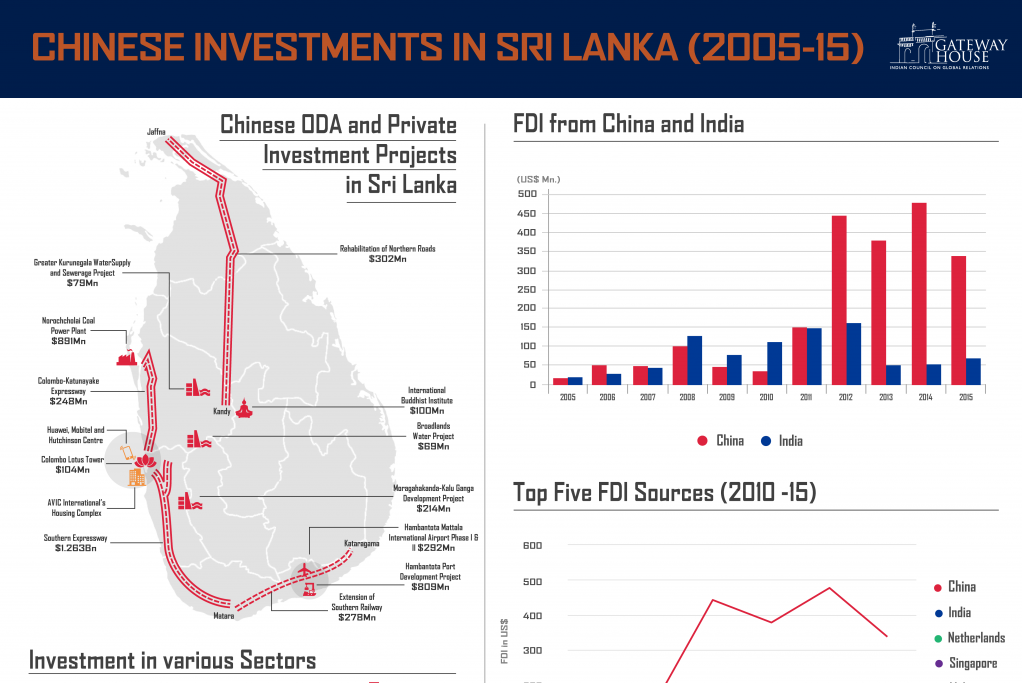
Chinese investments in Sri Lanka

China is the largest investor in Sri Lanka today, with funding and investment of nearly $15 billion. Gateway House tracks the Chinese money trail to Sri Lanka-- where it lands, where it stays--and assesses its depth. This is the second in the Gateway House Series on Chinese investments in South Asia.

tpp-map Courtesy: United States Trade Representative
23 November 2016

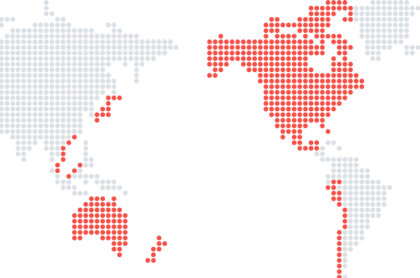
A world divided by trade deals?

Amid the debate of a U.S.-centric TPP template or a China-led RCEP model, it is important to consider if such trade agreements are building blocks or stumbling blocks to global free trade. With the passage of the TPP still uncertain in the U.S. Congress, and the RCEP unlikely to be acceptable to the U.S., the more likely global trade scenario will be fragmentation