indias-global-energy-footprint Courtesy: Gateway House
14 February 2017

India’s global energy footprint

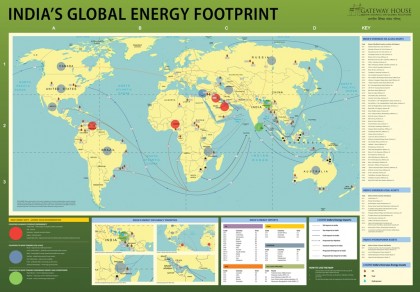
Trends in technology, geopolitics and geoeconomics have dramatically transformed the global energy scenario in the last two years. This means favourable conditions for import-dependent India, which must use the opportunities available to reduce its vulnerability to high energy prices. The jump in oil prices past the $60 mark suggests that India must act with alacrity. India’s Energy Footprint Map offers a profile of India’s global trade and investment in energy, and indicates what India can do to access cheap and reliable supplies
28912263963_0b75893744_h Courtesy: MEA/ Flickr
14 February 2017

Indo-Pacific: a scenario of possibilities

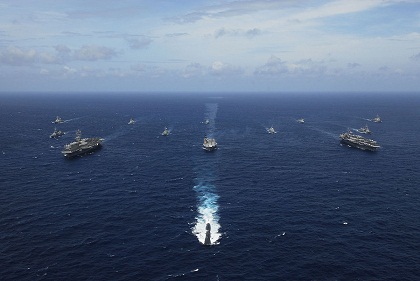
The Indo-Pacific region is home to some of the largest and most rapidly growing economies as also powerful military forces. Nuclear threats, international terrorism and climate change are some of the issues that define the region. Uncertainty dogs relations among the four nations in the top league—U.S., China, India and Japan—but what is emerging is a hawkish, policy stance from the U.S. as opposed to an isolationist outlook apprehended earlier

1200px-Malabar_07-2_exercise Courtesy: Wikipedia
14 February 2017

A democratic quadrilateral in Asia?

A strategic coming together of the U.S., Japan, Australia, and India was close to fruition some years ago, impelled initially by the tsunami of 2004. The spirit of the enterprise remains alive even now, and there are many merits in India joining the quad, but such an arrangement can skew existing Asian equations, jeopardising the Act East policy

3W7A1026 Courtesy: Gateway House
14 February 2017

“We will work with India to accommodate India’s desires”

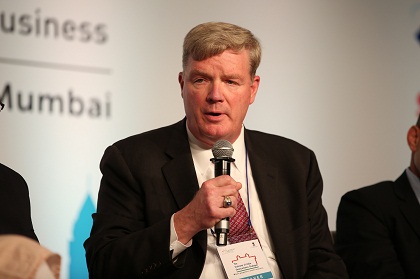
Gateway House interviewed U.S. Vice Admiral Barry McCullough on defense partnerships between Lockheed Martin and India, including cybersecurity, transfer of technology and India’s need for tactical aircrafts such as the F-16. He also voiced Lockheed Martin’s interest in investing in India while ensuring India’s development needs are met.

Neelam 1 Courtesy: Gateway House
25 January 2017

How Trump will reconfigure geopolitics

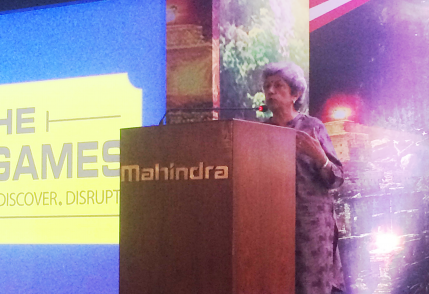
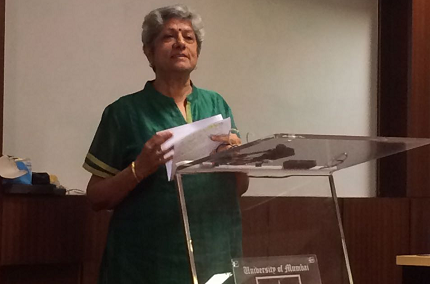
Ambassador Neelam Deo delivered this speech at the grand finale of ‘The Mind Games’ – a platform for talent development & idea generation at Mahindra Partners on January 18, 2017. Ambassador Deo’s speech focuses on the disruption of the post-Cold War global framework to be caused by Trump’s foreign policy changes

Shinzō_Abe_and_Donald_Trump_(1) Courtesy: Wikipedia
16 January 2017

A more robust Asia policy expected?

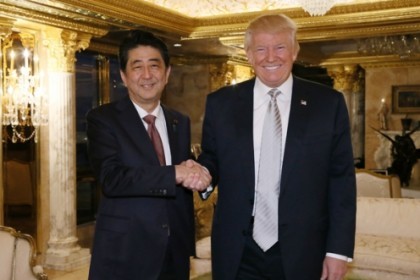
Trump’s cabinet has a preponderance of China hardliners, which has wider implications for the Asia Pacific region while some of its members view Narendra Modi as Reaganesque and a man of the times

28909667344_cad7ec10cc_k Courtesy: MEA/flickr
4 January 2017

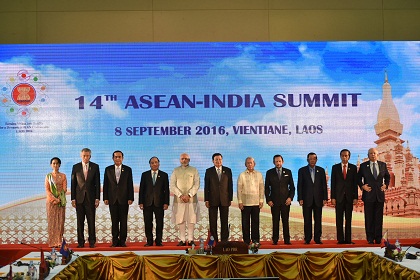
Acting East: what does 2017 hold in store?

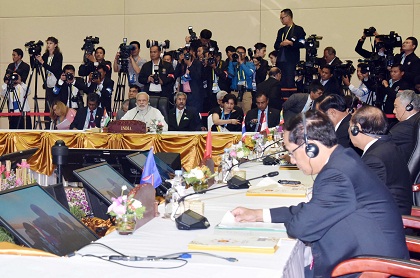
The year 2017 may change some equations in the East Asian region. Will the near parity that the U.S. and China currently share turn into a keener contest? Will strained relations between India and China persist? Donald Trump’s election as the next U.S. president casts the spotlight squarely on these inter-state relationships

gghhh Courtesy: Gateway House
21 December 2016

Security: intrinsic to foreign policy interests

Security studies provides the framework for anticipating and analysing threats. While foreign policy offers fitting strategies to respond to these threats and address potential issues. Both contribute fundamentally to the other, making it important for both fields to be developed and studied.