Website articles  (71) Courtesy: Iran Front Page
2 April 2026

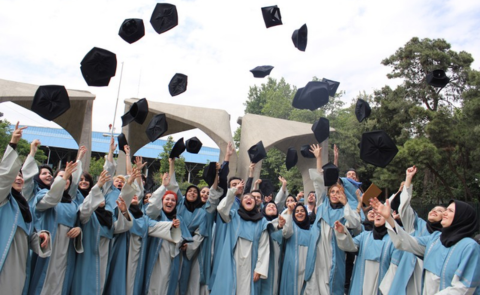
The siege of Iranian higher education

The transformation of higher education and research in Iran over the last twenty years is a cautionary tale in cultural sociology and political economy. Iran has transitioned from a global colleague with high rates of international collaboration to an isolated, ideologically purged state that has pivoted its innovation engine toward survival. The outward migration of talented Iranians is a terminal threat to the nation’s long-term prosperity.
af880793-acd2-761f-53db-1b11c34691bf Courtesy: Gateway House
16 October 2025

The unbreakable Indonesia-India bond

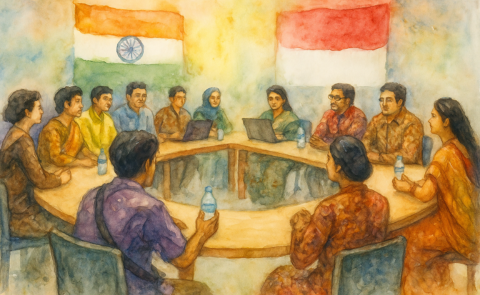
India and Indonesia are bound by history, culture, trade, and shared values. Their relationship must now add a new dimension — higher education and research. Both nations have long relied on outdated Western models. With a tech-savvy generation and receding colonial memory, the two largest democracies must build research bridges and empower students to become the leaders, innovators and humanitarians of tomorrow.

VOA Courtesy: VOA
2 October 2025

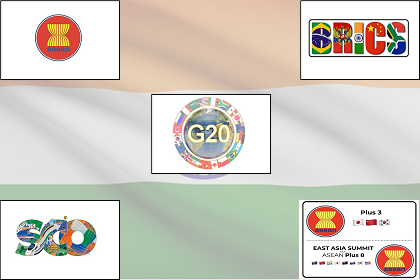
Time to re-burnish Global South credentials

The year 2025 is often compared to the Bandung moment of 1955, and for good reason. With the U.S. reordering traditional relationships, the opportunity for greater emphasis on the Global South is now. It is therefore time for India, Africa and ASEAN among others to re-burnish their Global South credentials and use that identity as a platform to engage each other more deeply.

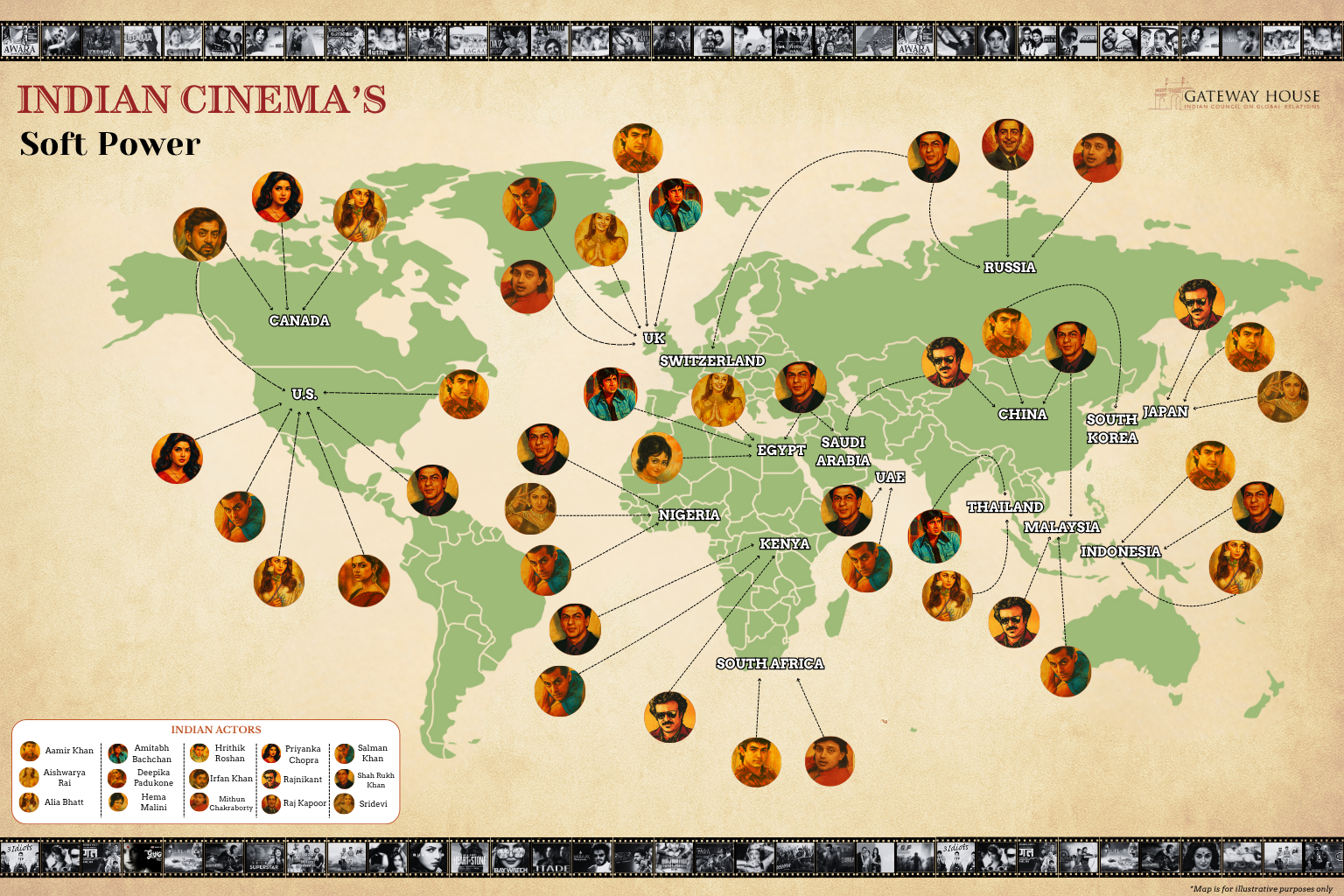
Most popular Indian actors worldwide Courtesy: Gateway House
1 October 2025

Indian Cinema as Economic Catalyst

As India seeks leadership in a multipolar world, cultural credibility is as vital as economic clout. Cinema gives India an edge with vivid storytelling, music, and empowering narratives, fostering understanding in a polarised world. Its popularity correlates with trade, as seen in the U.S., Russia, and Middle East. The more popular the cinema, the bigger the boost to trade.

U.S. Tariffs on Brics+ countries Courtesy: Gateway House
25 September 2025

U.S. Reciprocal Tariffs on BRICS+ countries

Under U.S. President Donald Trump’s reciprocal trade policy, the original five BRICS member countries account for the highest U.S. tariffs globally. India and Brazil are facing the highest tariffs of 50%, while China follows with a tariff of 34%, down from 145% earlier in the year. This infographic details the U.S. reciprocal tariff rates for each BRICS+ member and the sectors that are impacted.

ANI Courtesy: ANI
11 September 2025

India and Indonesia reconnect 

India and Indonesia are two Asian leaders and democracies which are reconnecting after decades, even centuries – in a world rife with new volatility and uncertainty. Both countries can collaborate and learn: Indonesia is an adept trading nation and India is a powerful tech player. The two governments are on a mission to deepen and diversify their relationship, stepping out of their past, and bringing fresh thinking.

G20.Org Courtesy: G20.org
28 August 2025

Appraising Brazil’s G20 Presidency

The G20’s current cycle is unique, with four Global South nations presiding consecutively: Indonesia, India, Brazil, and now South Africa. Brazil’s 2023-24 presidency exhibited both achievements and struggles, prioritising social inclusion, hunger, energy transition, and governance reform. The handover to South Africa marks a significant milestone in G20 history. Will the momentum be followed by the U.S., the next G20 president but also a G20 sceptic?

Amb Gurjit Singh Courtesy: ANI
17 August 2022

75 years of development cooperation

Since 1947, India has had a proud record of development cooperation. It began even though it was newly independent and itself developing, but created a camaraderie with movements in other emerging countries. Now after 75 years, its time to move toward an FDI-led model, which will particularly help reduce the rising indebtedness in the developing world.

7396fefe-aba2-49fe-a3e5-33b8cea9ebf1 Courtesy: WWF
30 June 2022

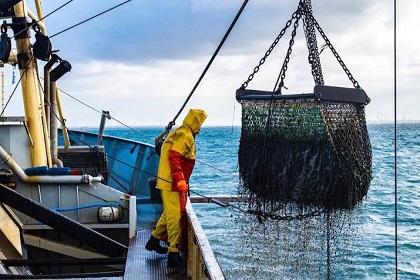
Can the WTO Agreement Stop Unsustainable Fishing?

Hailed as historic, the new global rules to curb harmful fishing subsidies is a step towards sustainable fishery practices. The negotiated deal, however, is fraught with concerns over overcapacity in fisheries, deep-sea fishing legislations, and blue finance. It may be better for developing countries to formulate their own regulations and set up mechanisms to prevent illegal fishing within their territorial waters – and hold the WTO agreement to its word.