Ivan Courtesy: Gateway House
8 October 2025

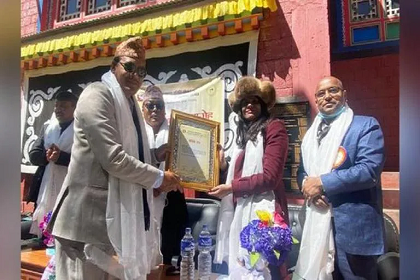
Unfolding Geopolitics Episode 23 | India renews engagement with Afghanistan

Afghanistan’s Foreign Minister Amir Khan Muttaqi will visit India on October 10, marking the first high-level Taliban visit since the group took over Kabul in 2021. Nayanima Basu discusses the purpose of this visit and the importance of engagement with Afghanistan. She explains the roles of China, which seeks business; Pakistan, which pursues political interests; and the U.S., which has a renewed interest in Bagram Air Base and its return to the country it abandoned.

President of Russia Courtesy: President of Russia
2 October 2025

Valdai frames Russia’s global doctrine

Each autumn, Russia convenes its flagship Annual Summit — a gathering of global leaders, business elites and intellectuals. Often compared in scale to Davos or Shangri-La, what sets Valdai apart is President Vladimir Putin’s extended, unscripted dialogue with the audience. Over the years, India has moved to the centre of this dialogue, reflecting its strategic weight and offering rare insight into Moscow’s evolving worldview.

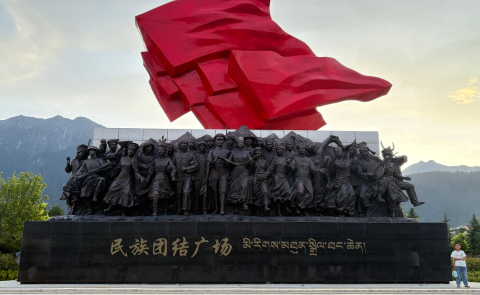
A community park in Nyingchi Courtesy: Nayanima Basu
4 September 2025

Talk Tibet, with candour

Today’s Lhasa is far from being a forbidden land where oracles are more common than human beings. It is a modern Chinese city, with swish hotels, art galleries and businesses. The transformation – and Sinicisation - of Tibet has accelerated under Chinese President Xi Jinping. The selection of the next Dalai Lama will cement the Chinese hold over that land

X  narendramodi Courtesy: X / Narendra Modi
22 August 2025

India-China risky boundary early harvest

Chinese Foreign Minister Wang Yi's two-day visit to India achieved a significant goal: to resolve the bilateral border dispute and ensure Prime Minister Narendra Modi’s presence at the Shanghai Cooperation Organisation summit. It’s not a reaction to the U.S.-India tariff tensions, but a realistic policy compulsion felt by India.

Pashtuns Devasher Courtesy: HarperCollins Publishers India
10 January 2023

Tangled history: the Pashtun

Tilak Devasher's book The Pashtuns: A Contested History delves into the Pashtun tribe, highlighting its geopolitical significance and far-reaching consequences in the South Asian region. Reviewer Tim Willasey-Wilsey says the book brilliantly explains how the Pashtuns were strong-armed into joining Pakistan and why the prospect of Pashtun unity poses a threat to security in Pakistan and the entire region.

Pashtun Book 12 Courtesy: HarperCollins Publishers India
3 November 2022

The Pashtuns: A Contested History

Tilak Devasher’s book on the Pashtuns brings out the dynamics of the Pashtun, their code, their relationship with Islam and with Pakistan. It contextualizes the current geo-political challenges in South Asia, making it required reading for those who want to understand not only the Pashtuns but regional strategic and security dynamics.

Amb Gurjit Singh Courtesy: ANI
17 August 2022

75 years of development cooperation

Since 1947, India has had a proud record of development cooperation. It began even though it was newly independent and itself developing, but created a camaraderie with movements in other emerging countries. Now after 75 years, its time to move toward an FDI-led model, which will particularly help reduce the rising indebtedness in the developing world.

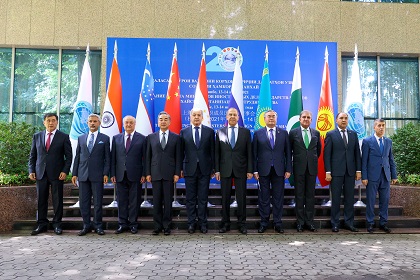
Foreign ministers and officials of the Shanghai Cooperation Organisation (SCO) pose for a group photo during a meeting in Dushanbe, Tajikistan July 14, 2021. Russian Foreign Ministry/Handout via REUTERS Courtesy: Reuters
20 April 2022

The SCO in Afghanistan

The Shanghai Cooperation Organisation has been focused on resolving the Afghan crisis. But divergent views of members and the influence of China and Pakistan have eluded a solution. This has been further impeded by the ongoing sanctions and humanitarian issues which are beyond the organisation's scope.

india central asia Courtesy: ANI
25 January 2022

Quantum leap forward with Central Asia

India hosted a summit with five Central Asian states on January 27, marking 30 years of diplomatic relations with the region, and an important step forward to pursue greater connectivity between India and Central Asia. New Delhi's engagement holds promise for ambitious bilateral agendas including security in Afghanistan, the revival of dormant projects, and potential collaboration in renewable energy, space and information technology.

shutterstock_1091235845 Courtesy: Shutterstock
15 October 2020

UN: Necessary but reformed

The UN turned 75 this year but instead of grand celebrations, the world witnessed an empty UNGA with world leaders addressing it via video screening because of the pandemic. The UN is under unprecedented stress and being shown up for its inability to tackle the challenges of today like the pandemics, climate change, terrorism or global peace and security. The institution's key governing structures, especially the UN Security Council, are inadequate and demand reform. India must now use gritty resolve to ensure its place in these governing structures.