India-Latin America Engagements, September 2013
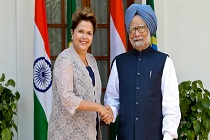
In 'India-Latin America Engagements', the Latin America Desk at Gateway House presents a selection of news of India’s engagement with the region during the previous month

 Courtesy:
In 'India-Latin America Engagements', the Latin America Desk at Gateway House presents a selection of news of India’s engagement with the region during the previous month
 Courtesy:
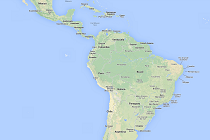
In 'Latin America Update' Gateway House lists some of the important events in Latin America over the past month
 Courtesy: Harry S. Truman Library and Museum/ Wikimedia Commons
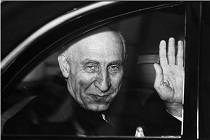
This daily column includes Gateway House’s Badi Soch – big thought – of the day’s foreign policy events. This Badi Soch deliberates on the timing of the CIA’s admission of involvement in overthrowing Iran’s Prime Minister Mohammed Mossadegh in 1953 and the implications of this disclosure
 Courtesy: UK Ministry of Defence/Flickr
The war on terror and the global financial crisis have tilted the balance of authority on the side of the state, which the liberating forces of cyber space have only partially counteracted. Can the forces of liberalisation prevail over the forces of incipient oppression?
Gateway House's Akshay Mathur interviews Benn Steil, Senior Fellow and Director of International Economics, Council on Foreign Relations (CFR), on his latest book, ‘The Battle Of Bretton Woods’ on how the IMF and the World Bank came to be.
 Courtesy: Zeinab Mohamed/Flickr
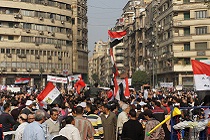
Today, the role Wahabbism plays in geopolitics poses a severe security risk not just to the West but also to the Muslim world. The West needs to rethink its strategy of promoting Wahabbi International, and realise that Wahabbism cannot be a moderated geopolitical asset
 Courtesy: Asitimes/ Flickr
Indian and Chinese companies routinely bid against each other in their quest to secure oilfields and other resource pools resulting in rising prices. However, a preferable recourse would be for the nations, along with ASEAN, to collaborate as there is enough for all
 Courtesy: Ministry of External Affairs, India
Although the office of the U.S. vice president seldom plays a role in defining the country’s foreign policy, the recently concluded visit of Vice President Joe Biden to India – the first such visit in nearly three decades – has thrown open several questions, answers to which hold upshots for India and her neighbours. Chintamani Mahapatra blogs
 Courtesy: Ministry of External Affairs
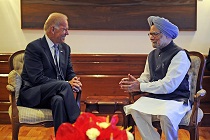
Policy-making in India remains haphazard, and in the name of ‘strategic autonomy’ New Delhi is scuttling its own rise. Biden’s visit underlines India’s importance in the U.S.’ strategic calculus. India must now decide what role it sees for the U.S. in its foreign policy matrix and for itself in the global order
 Courtesy: Ministry of External Affairs, India
U.S. Vice President Joe Biden’s visit to India this week comes at a time when the India-U.S. bilateral relationship has gone seemingly adrift. Can this visit, which comes just months ahead of the Indian general elections, rejuvenate the relationship which is rooted in long-term common strategic interests?