Trump: blunt to NATO, cosy with Saudis
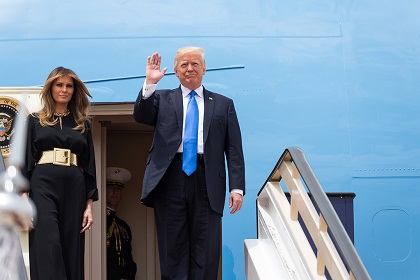
Trump’s first foreign visit to West Asia and Europe brought home what the president means by “America First” even as he stands accused of committing two major foreign policy transgressions

 Courtesy: The White House/Flickr
Trump’s first foreign visit to West Asia and Europe brought home what the president means by “America First” even as he stands accused of committing two major foreign policy transgressions
 Courtesy: Wikipedia
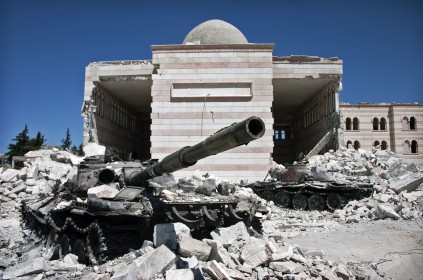
With a cessation of hostilities been brokered by Russia and the United States, the conflict in Syria has entered a tense pause. India has had a bystander attitude to the conflict in Syria. However, with the truce expected to be short, does India have the incentive or the option to depart from its current position, and deepen its engagement in Syria?
 Courtesy: Dawn Endico
Today ISIS is the gravest international security threat. To defeat ISIS, the world should pay heed to India’s experience of the need to isolate state sponsors of terrorism. Ultimately, only when Saudi Arabia acknowledges the danger to its own survival from past policies of alleged support to extremist groups, can it be a reliable partner in the fight against ISIS.
 Courtesy: Wikipedia
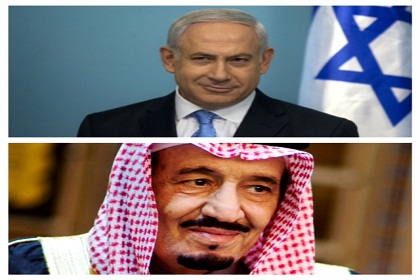
The announcement in June of a Saudi-Israeli alliance against Iran has to be seen in the context of the strategic dimensions of India’s relations with Saudi Arabia, Israel, Iran, and the U.S. And it has far-reaching implications for India’s policy towards West Asia
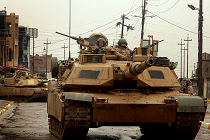 Courtesy: U.S. Staff Sergeant Aaron Allmon
Obama’s strategy to target the IS in Syria within the framework of a U.S.-led international coalition has met with a tepid response. There are reports that the U.S may offer India a non-NATO ally status during Modi’s upcoming visit in a bid to seek greater support – a gesture that India will do well to disregard.
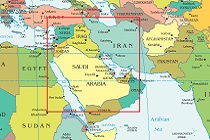 Courtesy: W123/WikimediaCommons
Whether backdoor geopolitics rather than careful negotiations brought about the interim agreement on Iran’s nuclear programme, the next six months will determine its fate. Reactions have ranged from a furious and mistrustful Israel to collective relief by many countries, and a worried India welcoming the agreement
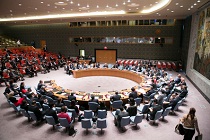 Courtesy: United Nations
The recent UNSC Resolution, which mandates the complete destruction of Syria’s chemical weapons, demonstrates that after more than a year, a degree of international agreement on the Syrian issue has been possible. In the evolving situation, Russia will now emerge as a major player
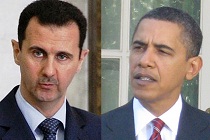 Courtesy: Freedom House/Flickr
Despite rising international opposition, U.S. President Barack Obama is ready to penalise the Syrian regime for an alleged chemical attack in Ghouta, Syria, last month. The justifications given by the U.S. for an armed attack are questionable, and such retaliatory action will destabilise the entire region
 Courtesy: The White House
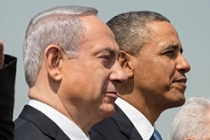
During his visit to Israel, U.S. President Barack Obama spoke in favour of both the Israelis’ right to security and the Palestinians’ right to sovereignty. The issue of settlements, however, remains unresolved and it is unlikely that Israel will make concessions when its neighbours are in turmoil.
 Courtesy: U.S. Department of Defense
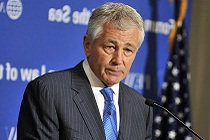
The nomination of Chuck Hagel for the post of the U.S. Defense Secretary has garnered severe criticism from Israel and the Jewish lobby. Given the geopolitical changes unfolding in the Middle East and the rest of Asia, what will Hagel’s assumption of office mean for Israel, India and the rest of the world?