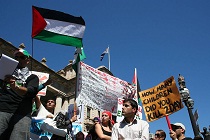
West Asia Courtesy: takver/WikimediaCommons
3 December 2012

Prioritizing West Asia

India is tied to West Asia by economic, religious and political threads. The ongoing social and political flux in the region can have adverse consequences for India and requires a serious rethink of its foreign policy priorities. How can India insert itself usefully into this geopolitical cauldron?
Courtesy: Gigi Ibrahim/WikimediaCommons
27 November 2012

Israel-Hamas: Only an intermission

The series of Israeli offensives against Gaza, which began on November 4, ended when Egypt's new President Mohamed Morsi brokered a ceasefire between Hamas and the Israeli government on November 13. The possibility of this ceasefire holding up, however, seems remote.

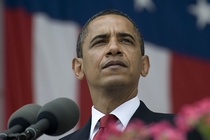
obama second term_0 Courtesy: U.S. Navy
10 November 2012

The second term

U.S. President Barack Obama will certainly have the benefit of continuity in his second term, but he has a range of impending crises to address immediately - be it to avert the so-called fiscal cliff before the end of the year when automatic cuts kick in or plan for the military drawdown from Afghanistan.

Courtesy: FREEDOM HOUSE2/FLICKR
24 August 2012

Syria: What next?

With the Free Syrian Army being supplied aid by the West and the Gulf Cooperation Council countries, the endgame for the Syrian regime has begun. Does Assad's exit guarantee the replacement of autocracy with democracy? What implications will it have on regional politics?

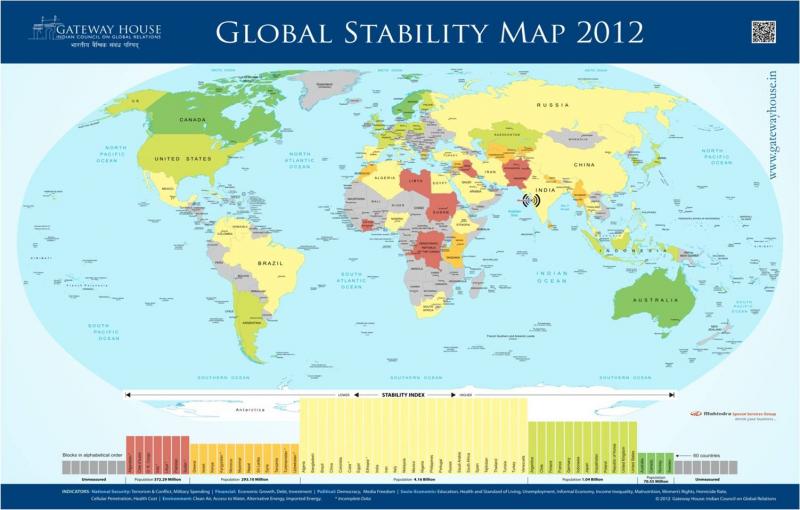
Global Stability Map Courtesy: Gateway House
1 August 2012

Global Stability Map 2012

Gateway House prepared a Global Stability Map, using 20 differing indicators, to analyze the stability of 60 countries around the world. Using criteria that are important to the emerging economies of the world, the map provides an Indian perspective of the world today.

IMG_4820 Courtesy: Gateway House
20 April 2012

Deciphering today’s Middle East

What are the implications for India if Iran is attacked? How effective has the response been by gulf nations to their own protests? Ambassador Talmiz Ahmad, India’s former Ambassador to Saudi Arabia, discusses the dynamics of West Asia with Gateway House’s Alisha Pinto and Azadeh Pourzand.

anna hazare 2 Courtesy: nazeah/Wikimediacommons - Ramesh Lalwani/Flickr
30 December 2011

2011’s Top Foreign Policy Cheers and Jeers

The year 2011 saw various events - the Arab Spring, anti- corruption protests, Europe's sovereign debt crisis - transform countries and reshape the world order. Gateway House takes a look at what these events mean for India, and presents India's top foreign policy cheers and jeers for the year.

reasserting Courtesy: PMO
26 September 2011

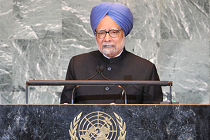
Reasserting India’s independence

Indian Prime Minister Manmohan Singh’s speech at the UN General Assembly has put Indian perceptions on the record and clearly outlined India’s independent foreign policy. India came out unequivocally in support of the Palestinian struggle & reiterated its traditional stance of respecting countries’ sovereignty.

mahmoud abbas and obama Courtesy: www.whitehouse.gov/WikimediaCommons
26 September 2011

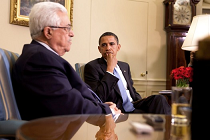
Obama loses high ground on Middle East

Repeated applause greeted Palestinian Authority President Mahmoud Abbas' speech to the UN General Assembly, asking for support for the “establishment of Palestine.” But with the U.S. backing Israel, under almost all circumstances, will Abbas' proposal be able to bring about any change?

sarah chayes article Courtesy: U.S.ArmedForces/WikimediaCommons
13 September 2011

Mafia-nation: State capture by criminal syndicates

Corruption has become a galling global phenomenon: structured, vertically-integrated networks, whose objective is the extraction of resources, are forming in countries around the globe. And strikingly, these structures are masquerading as democratically-elected, seemingly-open governments.