News on Air Courtesy: News on Air
8 January 2026

2026: India’s foreign policy challenges

In the shifting sands of contemporary geopolitics, terms such as ‘fluid multipolarity’, ‘multiplexity’, ‘tripolarity’, and ‘bipolarity with multipolar characteristics’ are replacing the old dogmas and orders. But what is driving the world today? How does India plan to protect its vital interests in the current age of ongoing polycrisis? The road ahead is challenging, marked by risks and uncertainty.

US Embassy and Consulates in Italy Courtesy: US Embassy & Consulates in Italy
18 December 2025

U.S.’ National Security Strategy 2025

It is customary for every U.S. president to release a National Security Strategy (NSS) early in their tenure. President Trump published the NSS for his second term in November 2025. It’s a contrast from his 2017 NSS, which addressed broad threats. The 2025 version is narrower, emphasising trade over security, with the Western Hemisphere being the primary area of focus. Is the U.S.’s global role shrinking?

shutterstock_1091235845 Courtesy: Shutterstock
15 October 2020

UN: Necessary but reformed

The UN turned 75 this year but instead of grand celebrations, the world witnessed an empty UNGA with world leaders addressing it via video screening because of the pandemic. The UN is under unprecedented stress and being shown up for its inability to tackle the challenges of today like the pandemics, climate change, terrorism or global peace and security. The institution's key governing structures, especially the UN Security Council, are inadequate and demand reform. India must now use gritty resolve to ensure its place in these governing structures.

shutterstock_44385856 Courtesy: Shutterstock
2 January 2020

India’s diplomatic agenda in 2020

India will host four prestigious international conferences, such as the India-Africa Forum Summit and the subsidiary SCO Summit in the course of the next three years. These are historic opportunities for the country to show global leadership and fulfil a diplomatic agenda that involves handling strategic competition and advancing partnerships

modi-768x432 Courtesy: CNBC TV18
28 May 2019

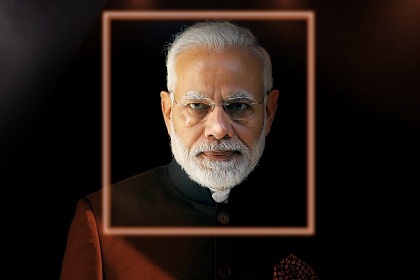
PM Modi’s foreign policy 2.0

India's foreign policy under the second Modi government will take account of a turbulent world in which the old verities are disappearing and domestic political compulsions exert overwhelming influence on external postures

2-8-18 CableMap-02 - Copy Courtesy: Gateway House
2 August 2018

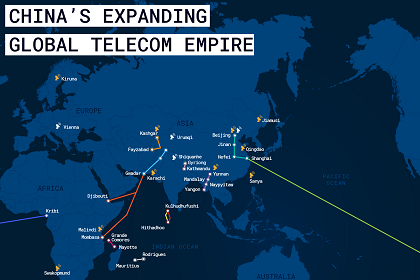
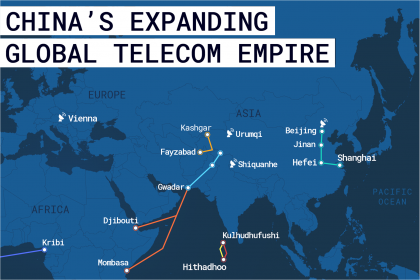
Version 2: Mapping China’s global telecom empire

This version of the Gateway House Map on China’s Expanding Global Telecom Empire identifies some more telecommunication assets -- optic-fibre and satellite ground stations -- that Beijing is working on in South and Central America, Africa, Myanmar, the Indian Ocean Region and mainland China besides the existing ones, such as the Pakistan East Africa Cable Express (PEACE). It shows the direction China’s investment is taking, its diplomatic overtures and the larger geopolitical implications of its growing telecom empire

lok sabha tv Courtesy:
2 August 2018

Global Review: Pakistan Elections, BRICS Summit

Our Distinguished Fellow in Foreign Policy Studies, Amb. Rajiv Bhatia, was a guest on Lok Sabha TV’s ‘Global Review’ hosted by Sachin Chaturvedi, discussing recent elections in Pakistan as well as the BRICS Summit. Watch the full programme here.

CableMap-web Courtesy: Gateway House
5 April 2018

Version 1: China’s strategic edge in covert communications

China is steadily deploying state-of-the-art communications systems to connect its strategic and economic assets in Asia. It is then linkingthe Asian mainland to Africa, and Africa to South America. The investment spree is rapidly making Beijing a major player in global telecommunications – and ‘informationisation warfare’.