Amb Gurjit Singh Courtesy: ANI
17 August 2022

75 years of development cooperation

Since 1947, India has had a proud record of development cooperation. It began even though it was newly independent and itself developing, but created a camaraderie with movements in other emerging countries. Now after 75 years, its time to move toward an FDI-led model, which will particularly help reduce the rising indebtedness in the developing world.
Parameters-for-developing-cross-border-infrastructure_Jyotsna-Bapat_2020_Final3508-01 Courtesy: Gateway House
3 December 2020

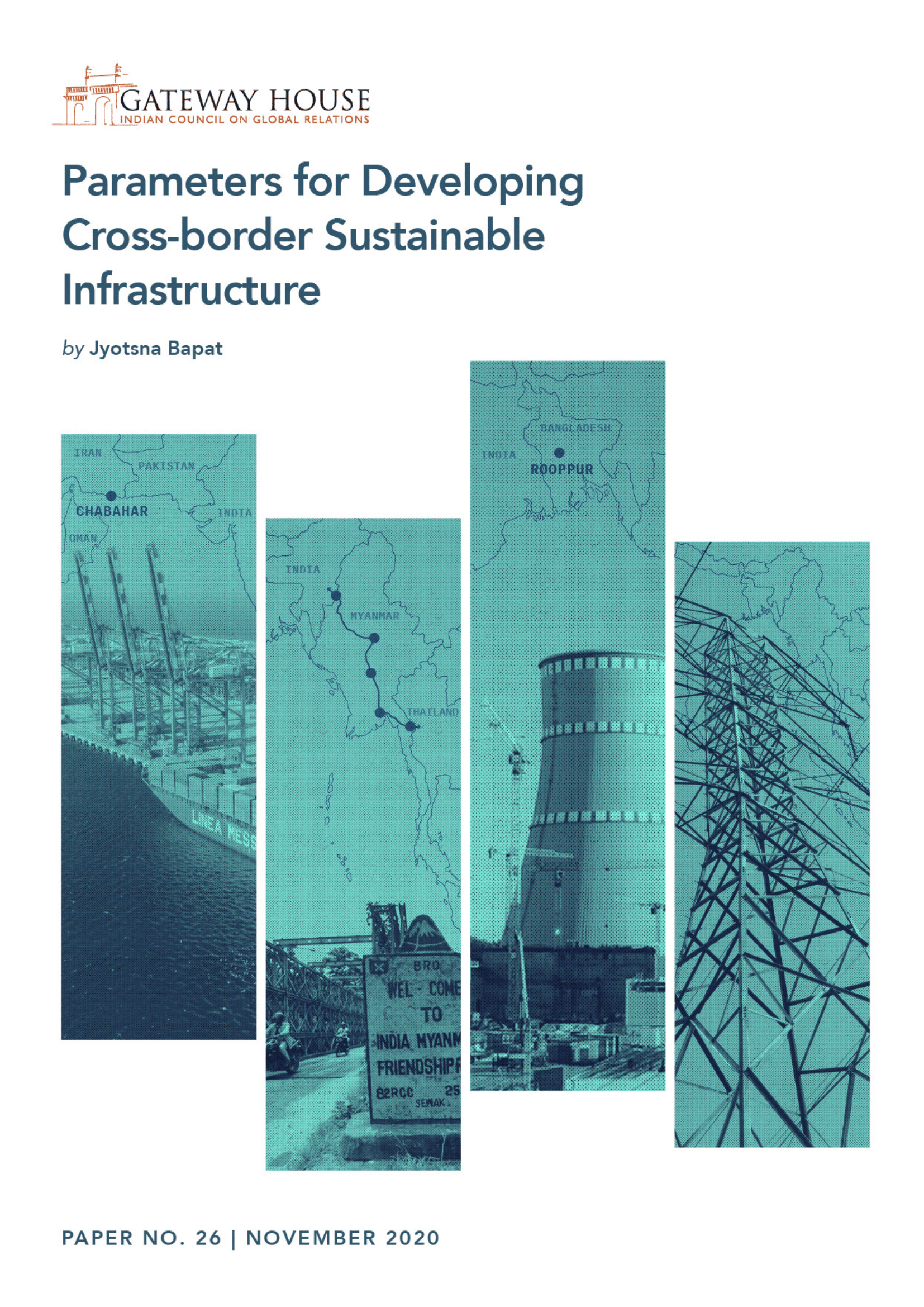
Parameters for Developing Cross-border Sustainable Infrastructure

Cross-border infrastructure has been influencing the geopolitics of Asia, specifically South Asia. Since 2014, India has been investing in trilateral and multilateral infrastructure projects, in its coastal and inland neighbourhood. This paper argues that making environmental security a parameter for developing cross border sustainable infrastructure, will provide a unique opportunity for India to develop norms for environmental and social security policy, training assistance, and capacity-building in the projects it funds abroad.

shutterstock_1091235845 Courtesy: Shutterstock
15 October 2020

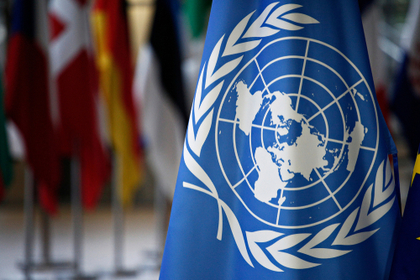
UN: Necessary but reformed

The UN turned 75 this year but instead of grand celebrations, the world witnessed an empty UNGA with world leaders addressing it via video screening because of the pandemic. The UN is under unprecedented stress and being shown up for its inability to tackle the challenges of today like the pandemics, climate change, terrorism or global peace and security. The institution's key governing structures, especially the UN Security Council, are inadequate and demand reform. India must now use gritty resolve to ensure its place in these governing structures.

modi-768x432 Courtesy: CNBC TV18
28 May 2019

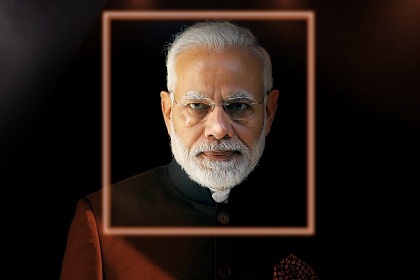
PM Modi’s foreign policy 2.0

India's foreign policy under the second Modi government will take account of a turbulent world in which the old verities are disappearing and domestic political compulsions exert overwhelming influence on external postures

SLPres-ChinaP Courtesy: MEA Flickr
6 November 2018

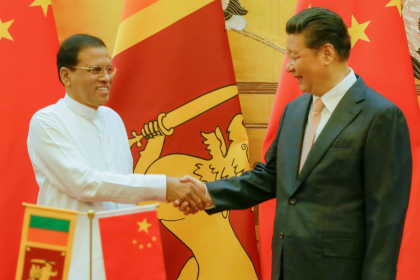
Regime change with Chinese characteristics

The current political unrest in Sri Lanka and coups in Maldives and Zimbabwe bear a Chinese imprint. China’s use of strong-arm tactics smacks of the very behaviour that it had earlier criticised in former colonial powers

_MG_8960 Courtesy: Western Naval Command
28 September 2017

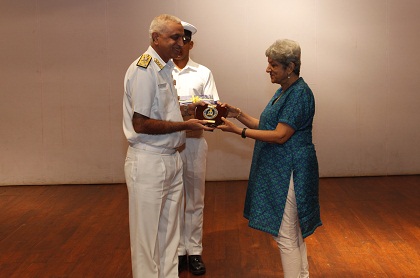
China in IOR: ‘peaceful rise’ no more

China has expanded its presence in the Indian Ocean Region. President Xi Jinping has abandoned Deng Xiaoping’s conciliatory posture for an aggressive, money-fuelled search for super power status

indias-global-energy-footprint Courtesy: Gateway House
14 February 2017

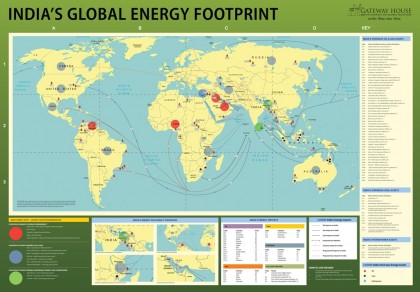
India’s global energy footprint

Trends in technology, geopolitics and geoeconomics have dramatically transformed the global energy scenario in the last two years. This means favourable conditions for import-dependent India, which must use the opportunities available to reduce its vulnerability to high energy prices. The jump in oil prices past the $60 mark suggests that India must act with alacrity. India’s Energy Footprint Map offers a profile of India’s global trade and investment in energy, and indicates what India can do to access cheap and reliable supplies

510896-16pti-pti10162016000263a Courtesy: MEA India / Flickr
27 October 2016

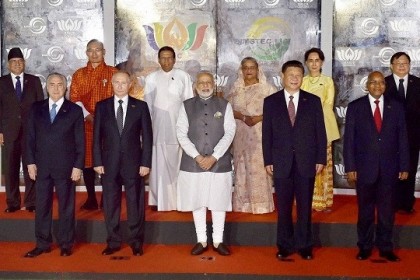
BRICS/BIMSTEC: activity or achievement?

Perhaps South Block did not gain as much as it had hoped to: there was a gulf in member states’ perceptions. One takeaway, therefore, for policy makers was that while noise has its uses, it is now time for some quiet diplomacy

obama Courtesy: Ministry of External Affairs
11 January 2014

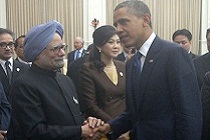
U.S: Losing friends, gaining nothing

Following Indian diplomat Devyani Khobragade’s expulsion, ties between India and the U.S. have hit a new low. This comes at a time when the two countries should be working closely to address the changing security matrix in Asia

corridorsmap2 Courtesy: Gateway House
11 July 2013

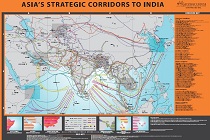
Asia’s Strategic Corridors to India

The map – Asia’s Strategic Corridors to India – has emerged from Gateway House’s study of India’s strategic links with other parts of Asia. It highlights the progress India has made in forging multiple links with six strategic regions – Central Asia, West Asia, East Africa, South-East Asia, East Asia, and our immediate neighbourhood